






Definition and Meaning of the New Jersey Residential Lease Agreement
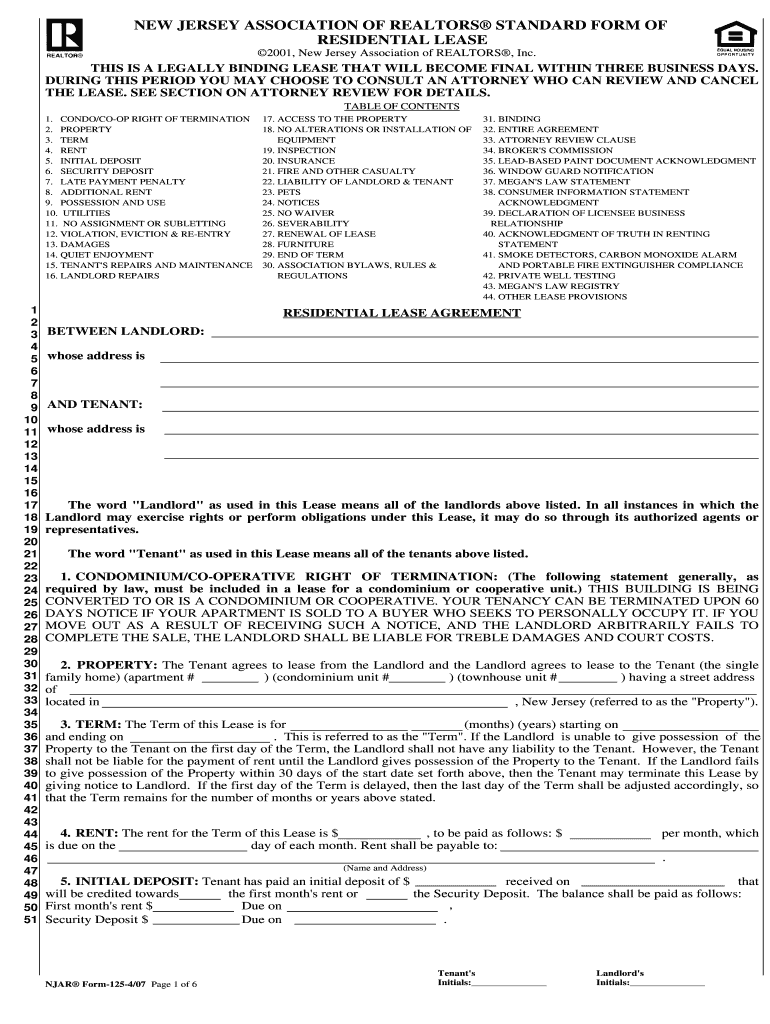
The New Jersey Residential Lease Agreement is a legally binding contract used between landlords and tenants in the state of New Jersey. This agreement outlines the terms and conditions of renting residential property, providing a clear framework for both parties regarding their rights and responsibilities. This document typically includes essential information such as the rental amount, duration of the lease, and the obligations of both the landlord and tenant.
- Purpose: Serves as a formal agreement to ensure the tenant has a legal right to reside in the rental property for a specified term, often including the method of payment and conditions under which the lease can be terminated or extended.
- Important Sections: Common sections include rent details, security deposit requirements, maintenance responsibilities, and rules regarding property usage.
- Legal Importance: Recognized by New Jersey law, this document helps prevent disputes, as it clearly details the expectations from both parties.
How to Use the New Jersey Residential Lease Agreement
The use of the New Jersey Residential Lease Agreement involves several steps to ensure clarity and legal compliance for both the landlord and the tenant.
- Preparation: Both parties should read and understand the terms outlined in the agreement. It is advisable to seek legal counsel if any aspect of the document is unclear.
- Customization: Landlords should customize the lease to include specific terms that apply to their property, such as rules for pets or additional maintenance charges.
- Signing: Both parties must sign the lease to acknowledge their agreement to the terms. This step ensures the document holds legal weight and binds both parties to their responsibilities.
- Key Considerations: Ensure all sections are properly filled out, including the tenant’s name, rental address, and payment details. Unfilled sections could lead to legal disputes.
- Execution: After signing, both parties should keep a copy of the lease for their records. The tenant should receive a copy before the move-in date.
Steps to Complete the New Jersey Residential Lease Agreement
Completing the New Jersey Residential Lease Agreement requires thorough attention to detail to ensure that all necessary information is accurate.
- Collect Required Information: Gather details about the tenant, property, rental terms, and security deposit.
- Fill Out Tenant Information: Include the full name of the tenant(s), contact information, and any co-signers.
- Outline Lease Terms: Specify the lease duration, monthly rental amount, due date, and late fee policies.
- Property Details: Accurately describe the rental property, including its address and condition at the time of lease commencement.
- Conditions and Clauses: Clearly state any rules regarding noise, property modifications, or subleasing.
- Finalize and Sign: Review the document for errors or omissions before both parties sign and date the lease.
Key Elements of the New Jersey Residential Lease Agreement
A comprehensive description of various critical components that constitute the New Jersey Residential Lease Agreement enhances the understanding of the document.
- Rent Payment Details: Include the rental price, payment method, and due date.
- Security Deposit: Specify the amount, its use, and conditions for return post-tenancy.
- Maintenance Responsibilities: Detail who is responsible for property upkeep and repairs.
- Termination Conditions: Outline the conditions under which either party may terminate the lease, including notice periods and penalties for early termination.
- Pet Policy: Clear guidelines on allowing pets and any associated fees or deposits.
Who Typically Uses the New Jersey Residential Lease Agreement
This agreement is primarily used by landlords and tenants within New Jersey but is also applicable for property management companies and real estate agents.
- Landlords: Use the document to formalize the rental relationship and protect their property interests.
- Tenants: Enter into the agreement to secure legal occupancy and understand their rights and obligations.
- Property Managers: Utilize the agreement for standardized rental arrangements across multiple properties.


Legal Use of the New Jersey Residential Lease Agreement
The legal framework surrounding the New Jersey Residential Lease Agreement ensures it is enforced correctly and legally.
- Compliance with State Laws: Must conform to New Jersey state regulations governing rental agreements, including landlord-tenant laws.
- Legal Recourse: Provides a basis for legal action if either party breaches the terms, such as non-payment of rent or failure to make necessary repairs.
- Landlord's Duty: The document specifies the landlord's responsibility in maintaining habitability standards as mandated by state law.
State-Specific Rules for the New Jersey Residential Lease Agreement
Understanding the state-specific guidelines that influence the New Jersey Residential Lease Agreement is crucial for both landlords and tenants.
- Rent Control and Stabilization: Some areas within New Jersey may have local ordinances affecting rental rates or increases.
- Eviction Process: Detailed in state statutes, ensuring landlords follow legal procedures for eviction and tenants have protection against wrongful eviction.
- Security Deposit Limitations: New Jersey law caps the security deposit at one-and-a-half times the rent price and outlines how these deposits must be handled.
Examples of Using the New Jersey Residential Lease Agreement
Real-world scenarios demonstrate how the New Jersey Residential Lease Agreement is utilized in property rental situations.
- Residential Homes: Used when a homeowner rents out a house to individuals or families, recording agreement terms that dictate the living arrangements.
- Apartment Complexes: Property management companies use this document to lease individual units while maintaining consistent terms across all tenants.
- Subleasing Agreements: Tenants with landlord permission can use the lease agreement framework to sublease to another tenant, detailing the relationship and responsibilities.