






Definition & Purpose of IRS Form 4506-C
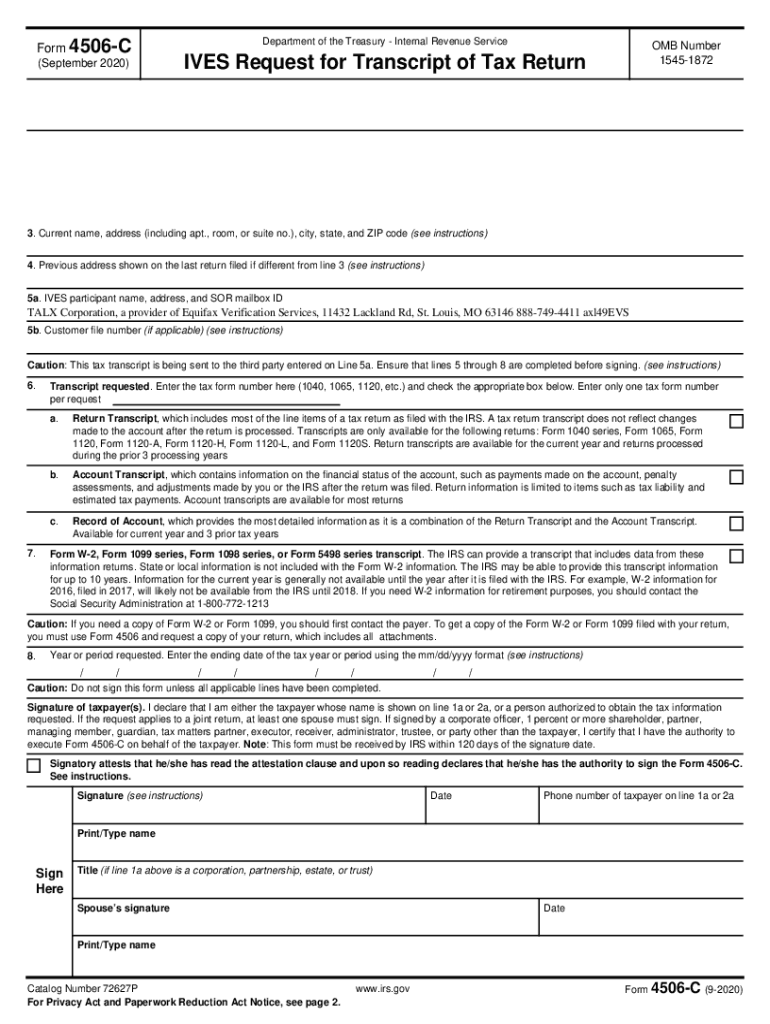
IRS Form 4506-C, also known as the IVES Request for Transcript of Tax Return, is a document used by authorized third parties to obtain a taxpayer's transcript from the Internal Revenue Service. This form is primarily utilized in the lending process, allowing lenders to verify income information provided by the borrower through the taxpayer’s IRS data.
Companies, such as mortgage lenders, tax professionals, and financial institutions, commonly use Form 4506-C to confirm the financial details of applicants and clients. The form ensures that the provided financial information matches the IRS records, maintaining accuracy in financial assessments.
Steps to Complete the IRS Form 4506-C
-
Fill Out Personal Information:
- Enter the taxpayer's name, social security number, and contact details.
- Include the spouse's information if applicable and filing jointly.
-
Provide Transcript Details:
- Specify the type of transcript needed, such as return transcript or account transcript.
- Clearly mark the tax year or period for which the transcript is required.
-
Third-Party Information:
- Enter the details of the third-party recipient authorized to receive the transcript.
- Ensure the correct name and address to facilitate proper delivery.
-
Consent and Signature:
- The taxpayer or their authorized representative must sign the form.
- Include the date and any relevant identification details for verification.
-
Submission:
- Send the completed form to the specified IRS address or fax number.
- Ensure all sections are complete to avoid processing delays.
Who Uses IRS Form 4506-C
Typically, IRS Form 4506-C is used by lending institutions, such as banks and mortgage companies, to verify borrowing applicants’ income details through the IRS. It is also used by tax professionals who require verification for financial assessments or auditing purposes. Additionally, businesses involved in financial transactions may request transcripts to ensure compliance with financial reporting obligations.
Obtaining the IRS Form 4506-C
To obtain IRS Form 4506-C, visit the IRS website where the form is available for download in PDF format. Ensure to have the latest version of the form, as updates may include critical changes in requirements or submission guidelines. You can also request the form through IRS customer services or authorized tax professionals.
Legal Use and Compliance of the IRS Form 4506-C
The legal use of Form 4506-C aligns with the regulatory requirements under the Internal Revenue Code. The form must be used for authorized purposes only, such as income verification by third parties in financial and lending contexts. Ensure compliance with IRS guidelines to avoid legal repercussions, including penalties and potential audits.
Required Documents for IRS Form 4506-C Submission
When submitting Form 4506-C, ensure that necessary identification documents are provided. This includes any authorization letters if someone other than the taxpayer signs the form. Retain copies of previously filed tax returns that correspond to the transcript requested for ensuring accurate completion and processing.
IRS Guidelines and Deadlines for IRS Form 4506-C
The IRS provides specific guidelines on the completion and submission of Form 4506-C. Timely submission is essential to align with IRS processing schedules, especially in financial transactions with specified deadlines. Processing typically takes up to ten business days, so ensure all submissions account for the necessary timeline to avoid disruptions.
Digital vs. Paper Version of IRS Form 4506-C
The IRS accommodates both digital and paper submissions of Form 4506-C. Digital submissions can expedite processing, especially when facilitated by authorized e-services users. Paper submissions remain effective for traditional processes and users without access to digital services. Understanding the applicable method is vital for efficient form handling.
Security and Privacy Considerations for Form 4506-C
Ensuring security and privacy when handling IRS Form 4506-C is paramount. The form contains sensitive taxpayer information, thus encrypted transfer methods should be employed whenever possible. Adhere to IRS security protocols and ensure stored data is adequately protected to prevent unauthorized access or data breaches.