






Definition & Meaning
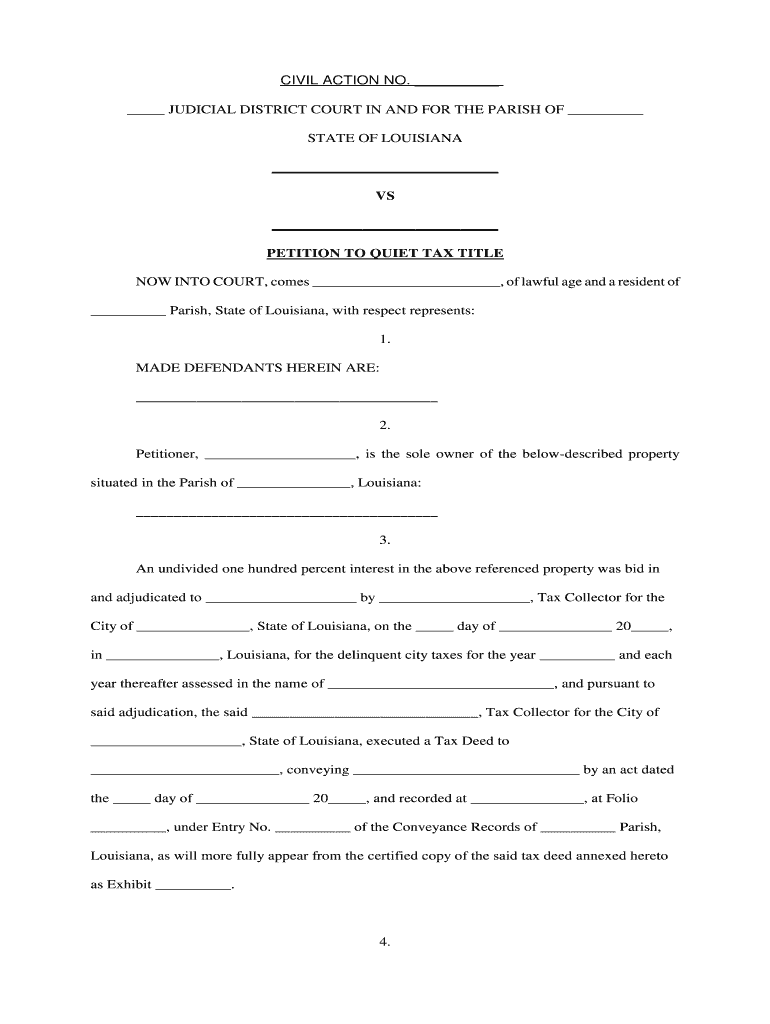
A "quiet title form" is a legal document used to resolve disputes over the ownership of real property. It essentially clarifies and confirms the ownership of a property by removing any challenges or claims against it. This process is often utilized when there are conflicting claims of ownership, unresolved property liens, or unclear heirs. The term “quiet” refers to the act of quieting or settling the title disputes to ensure clear and undisputed property ownership. Understanding this form is crucial for property owners, real estate professionals, and anyone involved in a real property transaction.
How to Use the Quiet Title Form
To effectively use a quiet title form, individuals need to follow certain steps. Initially, the form is filed in a court where the property's jurisdiction is established. The petitioner must compile and present evidence supporting their claim to the property, which may include deeds, wills, tax documents, and other relevant materials. Notifications are then sent to potential claimants or parties involved, affording them an opportunity to contest or respond to the filing. Effectively utilizing this form requires adherence to legal procedures, often necessitating the assistance of a legal professional to navigate complexities and enhance the likelihood of a favorable outcome.
Steps to Complete the Quiet Title Form
Completing the quiet title form involves multiple detailed steps:
-
Gather Documentation: Collect all necessary documents that prove your property ownership and any related claims. These might include past deeds, tax records, and any existing title documents.
-
Fill Out the Form: Provide detailed information about the property and all interested parties. This includes personal information, property description, and details of any known claims.
-
File with the Court: Submit the completed form to the correct court jurisdiction for your property. Court fees or filing fees may be applicable and must be paid upon submission.
-
Notify Interested Parties: Serve notice to all parties who might have a legal interest in the property. This is typically required to give them an opportunity to contest or affirm the title claim.
-
Attend Court Proceedings: Prepare to attend court hearings where evidence will be presented and reviewed. This may involve responding to counterclaims or additional legal challenges.
-
Await Judgment: After all evidence is considered, the court will issue a ruling. If favorable, an order quieting the title will be granted, which definitively resolves property disputes.
Legal Use of the Quiet Title Form
The legal use of a quiet title form is primarily geared towards resolving disputes related to property ownership. It serves as a definitive legal mechanism for property owners to eliminate any ambiguities over rightful ownership. Courts ultimately determine the legitimacy of ownership claims, and the form formalizes the process by which potential encumbrances or claims against the property are resolved. This legal procedure is crucial in situations such as settling boundary disputes, clearing property liens, resolving claims between heirs, and confirming ownership after tax sales or foreclosure.
Important Terms Related to Quiet Title Form
Understanding terms related to the quiet title form can aid in navigating this legal process effectively:
- Plaintiff: The person or entity initiating the action to clear the title.
- Defendant: Any party who may have a vested interest in the property or contest the title claim.
- Encumbrance: Any claim or lien on a property which may affect ownership.
- Title Search: A process of investigating public records to determine the history of property ownership and identify any potential title defects.
- Lien: A legal right or interest that a lender has in the borrower's property, granted until the debt obligation is satisfied.
Who Typically Uses the Quiet Title Form
Typically, property owners facing disputes concerning their title would use a quiet title form. Real estate investors, attorneys, and potential buyers or sellers involved in complex property transactions may also initiate this process to confirm ownership or eliminate potential legal complications. Additionally, agencies or financial institutions with vested interests in property rights or ownership integrity may engage in quiet title actions to enforce or confirm property rights effectively.


State-Specific Rules for the Quiet Title Form
Different states have unique legal frameworks and requirements regarding the filing and processing of quiet title actions. While the overarching goal remains the same, variations might exist in terms of required documentation, filing fees, court procedures, and notification requirements. Some states may also enforce particular statutes of limitations or additional civil codes that govern these proceedings. As such, consulting local laws or legal advice specific to the state in which the property resides is imperative for compliance and successful execution of quiet title actions.
Examples of Using the Quiet Title Form
Real-world cases illustrate various scenarios where a quiet title form could be utilized effectively:
-
Boundary Disputes: A homeowner discovers a neighbor's fence encroaches on their property due to unclear boundary lines. A quiet title action could resolve and affirm ownership boundaries.
-
Unpaid Taxes: After acquiring a property in a tax foreclosure sale, the new owner may need to file a quiet title action to clear previous tax liens and confirm undisputed ownership.
-
Heirship Issues: Inheritances often result in disputes among potential heirs. A quiet title form can help resolve conflicts and confirm rightful succession and ownership.
Such examples underscore the versatile utility of quiet title forms in various property-related disputes.
Required Documents
Successfully filing a quiet title form necessitates gathering and submitting a range of documents as evidence of ownership and title claims:
- Current Deed: Valid ownership documentation detailing the property's present title holder.
- Previous Deeds or Transfer Documents: History of ownership transfers that establish lineage of property rights over time.
- Tax Records: Proof of tax payment history on the property to demonstrate active ownership.
- Lien Release Certificates: Documentation that all known liens have been resolved or appropriately addressed.
Having these documents ready can significantly streamline the filing process and substantiate ownership claims effectively.
Form Submission Methods (Online / Mail / In-Person)
Depending on the jurisdiction, quiet title forms can often be submitted through various channels:
- In-Person: Visit the respective county or state court to submit the form and any associated documentation.
- Mail: Some jurisdictions allow for filing by mail, where documents are sent directly to the court's address for processing.
- Online: Increasingly, courts offer online submission portals to file quiet title actions, allowing for digital document uploads and fee payments.
Selecting the appropriate submission method involves considering court preferences, convenience, and available resources to ensure compliance.
These sections provide a comprehensive overview of the quiet title form, addressing its meaning, purpose, and essential processes involved.