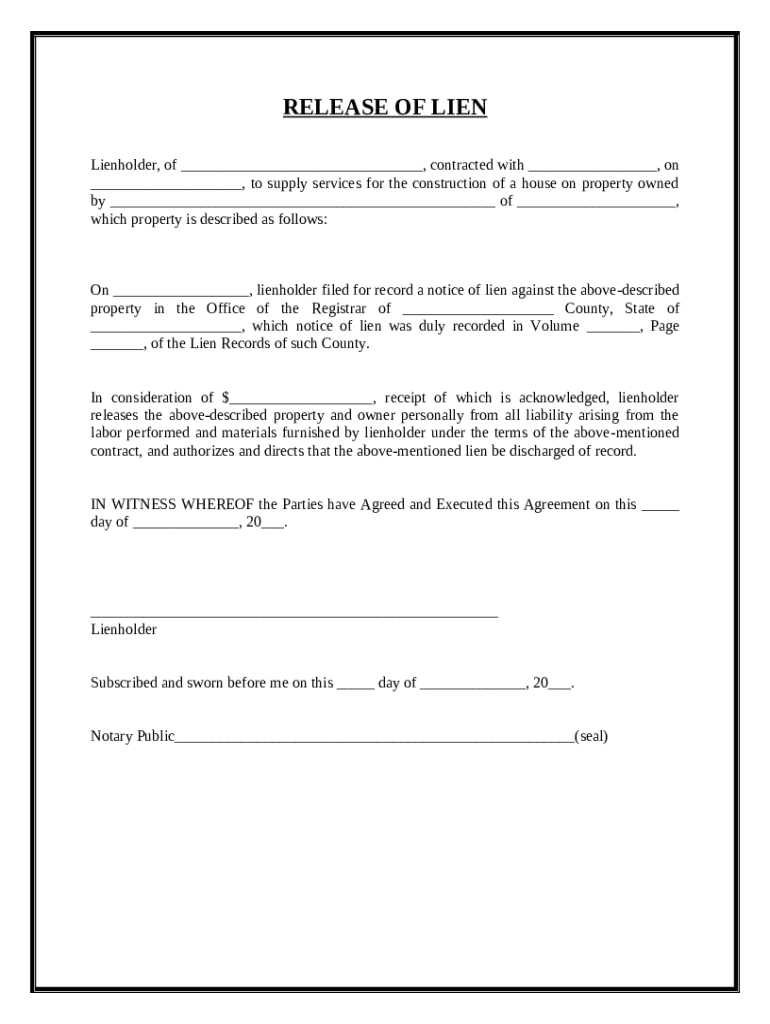







Definition and Meaning of the Release of Lien Form
A Release of Lien Form is a legal document used primarily in the construction and real estate industries. It signifies that a lienholder, such as a contractor or supplier, relinquishes any claim to a property after receiving full payment for services rendered or materials supplied. By filing this form, the property owner is freed from any debt obligations related to that specific lien, allowing the clear sale or refinancing of the property. This document ensures that the property title is unencumbered by claims, thereby facilitating transactions and transfers.
Types of Liens Covered
- Mechanic's Lien: Typically used by contractors, subcontractors, or suppliers.
- Judgment Lien: Imposed following a legal judgment, often due to unpaid debts.
- Tax Lien: Placed on a property due to unpaid property taxes.
Importance of the Form
- Ensures the property owner’s title is clear.
- Facilitates the sale or refinancing process.
- Protects lienholders by formally acknowledging payment.
Steps to Obtain the Release of Lien Form
Acquiring a Release of Lien Form involves several well-defined steps, and it's crucial to execute them meticulously to ensure the validity of the release.
- Identify the Lienholder: Ascertain who has the right to file a claim against the property.
- Gather Documentation: Collect all invoices, payment receipts, and other relevant documents proving that all obligations have been met.
- Request the Form: Contact the lienholder or download from a trusted platform, ensuring it meets state-specific legal requirements.
- Negotiate and Settle Debts: Confirm all payments are complete, including any interest or fees.
Document Essentials
- Proof of payment (e.g., canceled checks, bank statements).
- A copy of the original lien notice, if applicable.
Additional Tips
- Always verify the legitimacy of the lienholder before making payments.
- Consult a legal professional if you’re unsure about the process.
How to Complete the Release of Lien Form
Filling out the Release of Lien Form accurately is crucial to its enforcement. The form must be comprehensive and leave no room for ambiguity.
- Include Basic Information: Add names, addresses, and contact details of both the property owner and the lienholder.
- Thorough Description of the Property: Specify the property’s legal description to avoid any confusion.
- State the Amount Paid: Clearly indicate the total amount that has been settled to release the lien.
- Effective Date: Mention the date on which the release becomes effective.
Notarization
- Most forms require notarization to confirm authenticity. Verify if your state mandates this step.
Additional Considerations
- Double-check all entries to prevent errors.
- Keep a copy for your records before submission.
Legal Implications of Using a Release of Lien Form
Releasing a lien carries significant legal ramifications. It must be completed correctly to prevent future disputes or claims.
- Claims Nullification: A properly filled form nullifies any legal claim the lienholder might have on the property.
- Legal Protection for Property Owners: Ensures the property is free of legal encumbrances.
- Prevents Future Disputes: Clear documentation and completion protect against future legal arguments.
Expert Involvement
- Consulting with a legal expert may be prudent, especially in complex or disputed cases.
State-Specific Rules for the Release of Lien Form
Requirements for the Release of Lien Form can vary significantly from state to state. Understanding these differences is crucial to ensure compliance.
- Filing Requirements: Some states have specific deadlines and filing locations for submission.
- Form Variations: Each state may have different formatting or content requirements.
- Notification Process: Certain states require notifying other interested parties.
Key State Examples
- California: Requires preliminary notice before lien placement.
- Texas: Mandates sending a copy to the claimant before filing with the county clerk.
Key Elements of the Release of Lien Form
Certain components are indispensable for the Release of Lien Form to ensure that it is both comprehensive and legally binding.
- Lienholder’s Signature: Indicates acknowledgment of the lien release.
- Verification Clause: Confirms receipt of all due payments.
- Release and Waiver Language: Clearly states that the lien is lifted and no future claims will be made on the property.
Detailed Breakdown
- Date of Execution: Must match the date funds were fully received.
- Contractor or Company Details: Includes legal entity name and registration details.
Examples of Using the Release of Lien Form
Real-world applications underscore the practical utility of the form in a variety of scenarios.
Use Cases
- Homeowners: Securely remove claims after paying contractors for home improvements.
- Real Estate Transactions: Facilitates the sale by clearing any title questions.
- Commercial Developers: Ensures no delayed projects due to lien issues post-payment.
Example Scenario
- John, a homeowner, hires a contractor for a kitchen remodel. Post-completion, he pays in full, and the contractor signs a Release of Lien Form. This ensures that when John sells the property, the title is clear and free of contractor claims.
Who Typically Uses the Release of Lien Form
Various stakeholders engage with this form, each with specific reasons and expectations.
- Property Owners: To clear property titles.
- Contractors and Subcontractors: To acknowledge receipt of payment and release claims.
- Legal Professionals: To ensure transaction legality in property transfers.
By understanding how these entities interact with the form, individuals and businesses can better navigate the complexities of lien releases, ensuring smoother property transactions and maintaining clean titles. The comprehensive coverage provided by DocHub enables users to handle these forms efficiently and legally sound.