
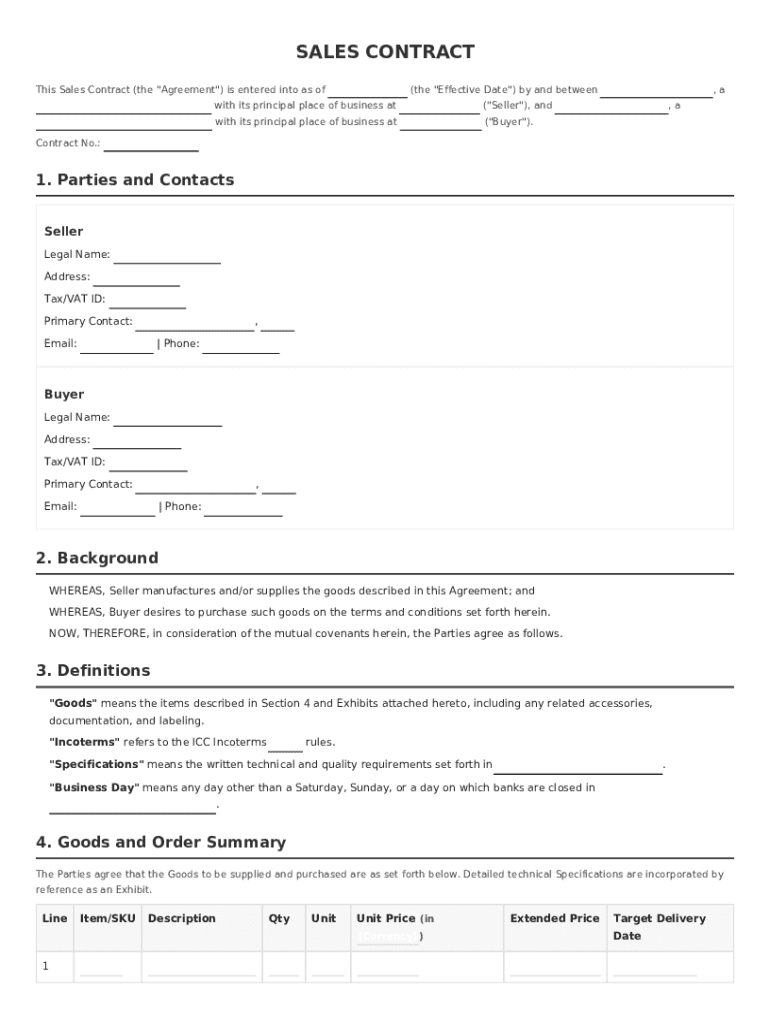







Definition and Meaning of a Sales Contract
A sales contract, also known as a purchase agreement, is a formal legal document that outlines the terms and conditions of a sale transaction between a seller and a buyer. This contract provides comprehensive details on the item or service being sold, the purchase price, quantity, and any applicable quality standards. It also specifies the payment schedule, delivery terms (such as Incoterms), and responsibilities of each party involved. In essence, it serves as a safeguard, ensuring both the buyer and seller understand their obligations and rights, thereby minimizing future disputes.
Key Elements of a Sales Contract
A well-structured sales contract typically includes several important elements:
- Parties Involved: Clearly identifies the buyer and the seller, including contact details and legal names.
- Description of Goods or Services: Provides a detailed description of what is being sold, including quantity and quality specifications.
- Payment Terms: Outlines the accepted payment methods, schedule, and any penalties for late payments.
- Delivery Terms: Specifies how and when the goods or services will be delivered, including shipping responsibilities and costs.
- Warranties and Guarantees: Details any warranties, guarantees, or representations made by the seller regarding the goods or services.
- Breach of Contract: Explains potential actions or penalties in cases of non-compliance or breach by either party.
How to Use the Sales Contract
Utilizing a sales contract involves several key steps that ensure its effectiveness and comprehensiveness.
- Drafting the Contract: Begin by assembling all necessary information about the sale, including details about the parties, the goods or services, and the terms of the sale.
- Customizing Terms: Customize any specific clauses to fit the unique aspects of the transaction, ensuring alignment with applicable laws and industry standards.
- Legal Review: Have a legal professional review the contract for accuracy, potential legal risks, and enforceability.
- Signing: Both parties should read, understand, and sign the contract to solidify their agreement.
- Execution and Monitoring: Ensure that both parties adhere to the terms outlined in the contract and monitor for any necessary adjustments or amendments.
Who Typically Uses the Sales Contract
Sales contracts are utilized by a wide array of individuals and businesses across different industries.
- Businesses: Companies of all sizes, particularly those involved in the sale of goods or services, regularly use sales contracts for transactions.
- Freelancers and Contractors: Individuals who offer services may use sales contracts to define the scope of work and terms with their clients.
- Real Estate Agents: Real estate transactions often require detailed sales contracts to outline terms and contingencies related to property sales.
- Manufacturers and Suppliers: These entities use sales contracts to finalize agreements on the delivery of products to distributors or retailers.

Steps to Complete the Sales Contract
Completing a sales contract requires careful attention to detail to ensure all elements are accurately addressed.
- Gather Necessary Information: Collect all relevant data about the transaction, including pricing, delivery schedules, and product specifications.
- Fill Out Buyer and Seller Information: Input the correct legal names and contact information for both parties.
- Detail the Product or Service: Provide a comprehensive outline of what is being sold, focusing on specifications crucial to the transaction.
- Specify Payment and Delivery Terms: Clearly define how payment will be handled and by when deliveries must be completed.
- Include Any Additional Provisions: Add clauses related to confidentiality, dispute resolution, and breach consequences as necessary.
Legal Use of the Sales Contract
Sales contracts are legally binding documents that, when properly executed, are enforceable by law in the United States. They:
- Detail Legal Obligations: Clearly define the duties and responsibilities of each party.
- Offer Legal Protection: Provide a framework to resolve disputes in a legal context if necessary.
- Compliance with U.S. Laws: Must comply with state and federal regulations governing sales and commerce.
- Standardization: Utilize standardized language and clauses to ensure clarity and legal recognition across jurisdictions.
Important Terms Related to the Sales Contract
Several critical terms frequently appear in sales contracts and are essential for understanding the document's full scope:
- Consideration: Refers to the price agreed upon and monetary exchange for the goods or services.
- Force Majeure: A clause that frees both parties from liability or obligation when an extraordinary event prevents one or both from fulfilling the contract.
- Liquidated Damages: Predetermined damages outlined in the contract that a party can claim if the contract is breached.
- Severability: A provision stating that if some parts of the contract are held to be illegal or otherwise unenforceable, the remainder shall continue to be enforceable.
State-Specific Rules for Sales Contracts
Different states in the U.S. may have varying requirements and interpretations of sales contracts. It is vital to:
- Research Local Laws: Understand state-specific laws that impact contract terms, especially regarding consumer protection and warranty.
- Customize to State Requirements: Adjust contracts to reflect any unique state provisions, such as required disclosures or tax implications.
- Consult State-Specific Legal Advice: Obtain legal counsel familiar with state law to ensure compliance and enforceability.
Examples of Using the Sales Contract
Real-world examples illustrate the versatility and necessity of sales contracts:
- Automobile Sale: A car dealership uses a sales contract to outline the vehicle's sale details, including price, financing, warranty, and service options.
- Service Agreement: A graphic design freelancer crafts a sales contract to clarify project milestones, payment schedules, and deliverables for a client.
- Equipment Lease: A construction company enters into a sales contract for leasing heavy machinery, detailing the rental terms, maintenance responsibilities, and insurance requirements.
By integrating these blocks into a structured and comprehensive outline, the nuances and utility of sales contracts are thoroughly explored, catering specifically to the needs of users seeking detailed guidance and understanding of this legal document.




