




01. Edit your form online
Type text, add images, blackout confidential details, add comments, highlights and more.

Type text, add images, blackout confidential details, add comments, highlights and more.

Draw your signature, type it, upload its image, or use your mobile device as a signature pad.

Send it via email, link, or fax. You can also download it, export it or print it out.
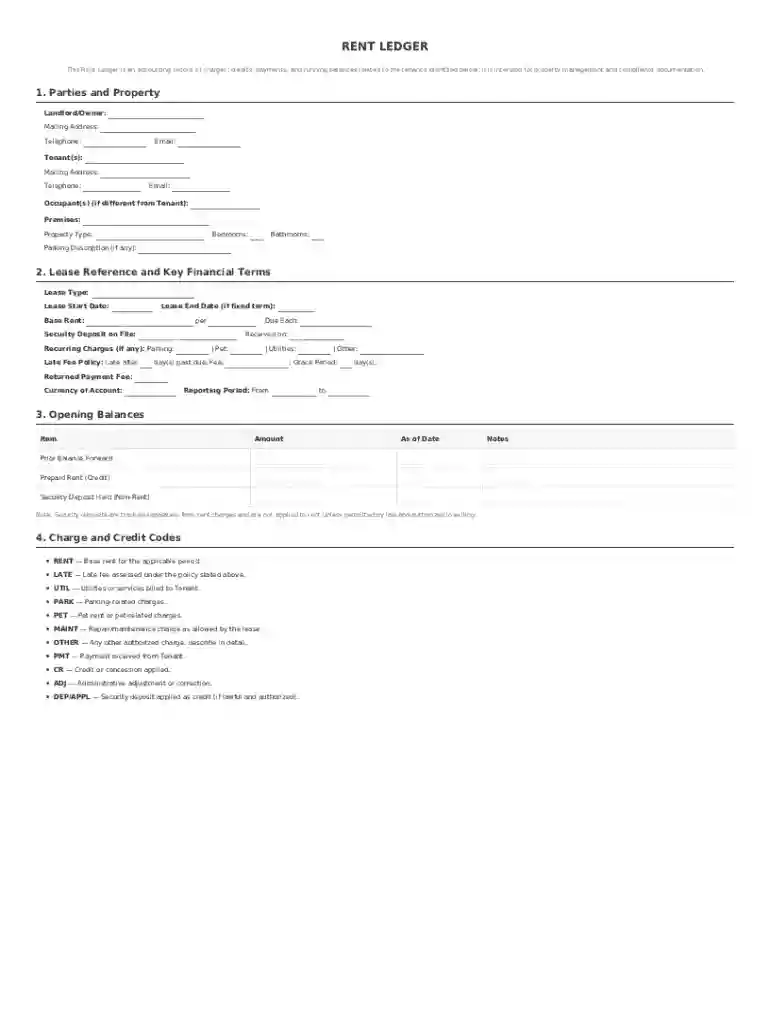
A rent ledger is a detailed, chronological accounting record specifically maintained by landlords or property managers. It itemizes all rental payments due, the dates those payments were received, and any outstanding balances owed by tenants. This document is crucial for both landlords and tenants, as it provides a transparent record of financial transactions related to a rental property.
The rent ledger serves multiple purposes, including helping landlords track payments, identify any missed or late payments, and calculate the total rent collected over a specific period. For tenants, it serves as proof of payment, ensuring that any discrepancies can be quickly addressed. This document is often used in financial audits, legal disputes, or when applying for loans that require proof of rental income.
To effectively use a rent ledger, landlords should regularly update it with accurate information. Start by inputting the tenant's name, the rental property address, and the lease term. Each month, record the date that rent is due, the amount paid, and the date of payment. If applicable, include a section for notes where you can document any late fees or adjustments.
The ledger can be maintained digitally or in paper form. Digital versions often offer additional features like automated calculations and integration with property management software, making them more efficient and reducing the risk of human error.
Completing a rent ledger requires attention to detail and periodic updates to ensure its accuracy. Follow these steps for effective record-keeping:
By following these steps, landlords can create an accurate financial record that serves both operational and legal purposes.
The rent ledger should include several key elements to be effective:
Including these elements ensures comprehensive tracking of rental transactions, providing clarity for both parties involved.
Various professionals and entities utilize rent ledgers, predominantly within the real estate and property management industries. Common users include:
The rent ledger's utility extends beyond simple record-keeping, allowing these users to manage financial aspects of rental properties with precision and reliability.


Rent ledgers serve as vital legal documents, especially in disputes regarding late payments or eviction processes. They provide:
Using these ledgers legally obliges adherence to privacy and data protection laws. As financial records, these ledgers should be stored securely and shared only when necessary and appropriate.
Rent ledgers can be effectively managed using various software solutions, including those from trusted brands like TurboTax or QuickBooks. Key considerations for compatibility include:
Such compatibility enhances accuracy, reduces errors, and facilitates easier management of rental property finances.
State laws can affect the management and contents of a rent ledger. Key considerations for state-specific compliance include:
Consulting state-specific legal guidelines ensures landlords remain compliant while maintaining accurate and useful rent ledgers.
At DocHub, your data security is our priority. We follow HIPAA, SOC2, GDPR, and other standards, so you can work on your documents with confidence.


Rent All money due, other than a security deposit, owed or paid to the landlord under the rental agreement. This rent amount must be the same as the rent.Read more
Manage multiple properties from a single platform, streamlining tasks such as lease management, rent collection, and maintenance requests.Read more
We offer a free rent ledger template to assist you in keeping a record of rental payments received from tenants. Easily organize and track rent payments usingRead more


