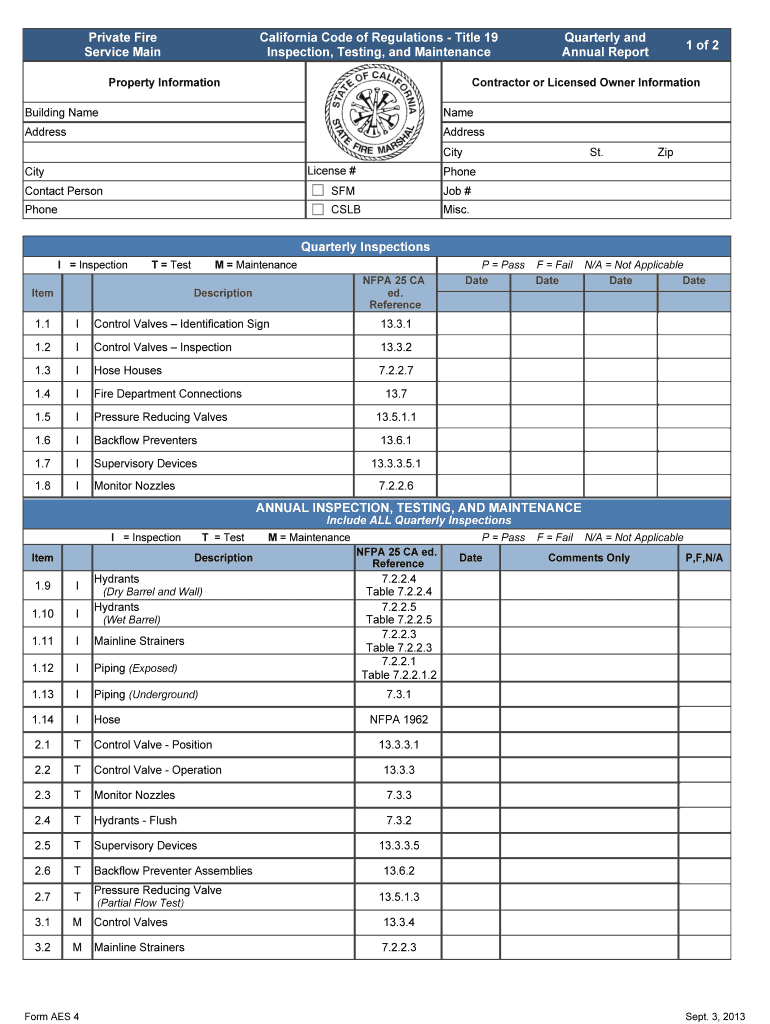







Definition and Meaning of the California Fire Service Annual Report
The California Fire Service Annual Report is an essential document designed to provide a comprehensive overview of fire service activities and updates within the state of California. This report typically includes detailed statistics on incidents, responses, and performance metrics related to the state's fire services. The data within this report assists government agencies, policymakers, and fire department officials in understanding trends, allocating resources effectively, and improving overall fire service operations.
- Purpose: The report serves as a benchmarking tool for evaluating the effectiveness of fire prevention strategies and emergency response initiatives.
- Content Overview: It contains statistical data, narrative explanations, and charts that summarize annual outcomes and highlight critical areas for improvement.
Key Sections in the Report
Each annual report is structured to include several key sections:
- Incident Statistics: Provides detailed figures on the number of fires, types of incidents, and outcomes.
- Resource Allocation: Analyzes how personnel, equipment, and funding were distributed across various regions.
- Performance Metrics: Evaluates the effectiveness of response times and operational efficiency.
How to Use the California Fire Service Annual Report
Professionals and agencies use this report for various purposes:
- Policy Development: Policymakers utilize the data to draft legislation or update policies that enhance fire safety and resource distribution.
- Strategic Planning: Fire departments rely on the report to plan training programs and operational improvements.
- Public Awareness: Community leaders and educators use the report to foster public understanding of fire safety and prevention measures.
Practical Applications
- Budget Planning: Financial officers in fire departments can use insights from the report to justify budget requests.
- Training Needs Assessment: Fire chiefs review performance data to identify areas where additional training is necessary.
Steps to Complete the California Fire Service Annual Report
Compiling the California Fire Service Annual Report involves multiple steps to ensure accuracy and completeness. Here's an overview of the typical process:
- Data Collection: Gather detailed incident reports, resource logs, and performance metrics from all departments statewide.
- Data Analysis: Analyze the collected data for trends, patterns, and areas requiring improvement.
- Report Drafting: Create a preliminary draft of the report, ensuring all data points are accurately represented and conclusions are supported by the data.
- Review and Feedback: Submit the draft for review by stakeholders, including fire service personnel and governmental bodies, to gather feedback and insights.
- Final Approval: After incorporating feedback, obtain approval from the relevant authorities before releasing the final report to the public.
Important Considerations
- Accuracy: Ensuring all data is accurate and up-to-date is crucial for the credibility of the report.
- Comprehensiveness: The report should cover all relevant aspects of fire service operations across California.
Key Elements of the California Fire Service Annual Report
The report comprises several core elements to provide a well-rounded overview:
- Executive Summary: Offers a concise overview of major findings and significant changes from the previous year.
- Comparative Analyses: Includes comparisons with past reports to identify progress or areas needing attention.
- Recommendations: Suggests actionable steps for improving fire service operations and public safety measures.
Detailed Components
- Financial Overview: Summarizes funding sources, expenditures, and financial needs.
- Community Engagement Efforts: Describes outreach initiatives and public education efforts to promote fire safety.
Who Typically Uses the California Fire Service Annual Report
The report is utilized by a range of stakeholders:
- Government Agencies: For regulatory compliance and funding allocation.
- Fire Department Officials: To assess and improve operational strategies.
- Researchers and Analysts: For examining trends and proposing new safety measures.


Broader Utilization
- Public Safety Advocates: Use data to support broader safety initiatives and campaigns.
- Insurance Companies: Evaluate fire risk and develop policies accordingly.
Required Documents for Completing the Report
To compile the California Fire Service Annual Report, various documents are required:
- Incident Logs: Detailed records of each fire-related event throughout the year.
- Resource Inventories: Lists of existing personnel, equipment, and funding.
- Performance Reports: Data on response times, success rates, and efficiency metrics.
Typical Documentation
- Financial Statements: Reflect budget allocations and financial needs.
- Training Records: Document completed training sessions and certifications.
Legal Use of the California Fire Service Annual Report
Understanding the legal context is essential for correct utilization:
- Compliance: The report ensures adherence to state regulations governing fire service operations.
- Transparency: Provides a transparent view into how resources and funds are utilized, fostering public trust.
Legal Implications
- Public Record: The report is a public document, meaning it is accessible to anyone interested in fire service operations.
- Statutory Requirements: Must meet legal reporting standards defined by state legislation.
State-Specific Rules for the California Fire Service Annual Report
The report adheres to specific regulations unique to California:
- Regulatory Framework: Abides by guidelines set by California's fire safety laws and regulations.
- State-Specific Metrics: Includes data reflective of California's geographic and demographic considerations.
Key Regulations
- Reporting Frequency: Typically published annually to provide year-over-year insights.
- Data Collection Standards: Follows state protocols to ensure data accuracy and reliability.