






Definition & Meaning
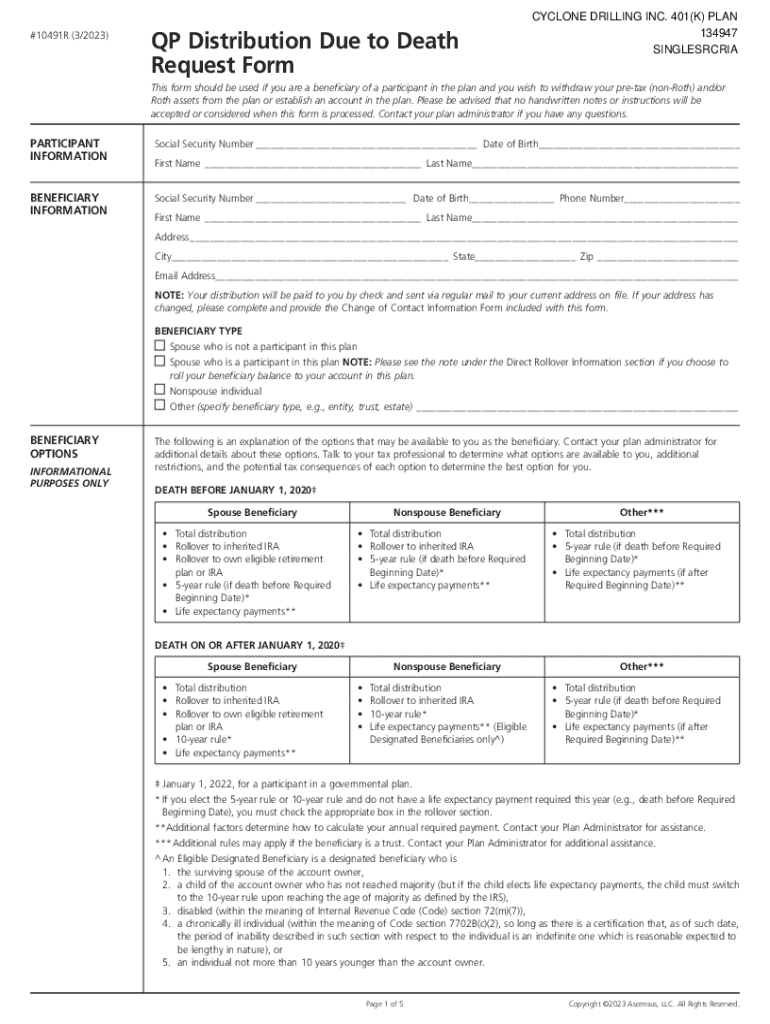
The "QP Distribution Due to Death Request Form" is a critical document used by beneficiaries of a qualified retirement plan, such as a 401(k), to request the distribution of assets upon the death of the plan participant. This form ensures that the distribution process adheres to legal and financial protocols, providing an efficient method for beneficiaries to claim their inheritance in a structured manner.
Importance of the Form
- Ensures compliance with legal and tax requirements.
- Facilitates the transfer of retirement assets to rightful beneficiaries.
- Minimizes potential disputes with clear documentation.
Typical Scenarios
- Utilized by beneficiaries of deceased individuals who had investments in qualified retirement plans.
- Relevant in estate planning and settlement processes.
Steps to Complete the QP Distribution Due to Death Request Form
Successfully completing the QP Distribution Due to Death Request Form requires careful attention to detail and adherence to specific steps. The process ensures proper transfer of assets and compliance with regulatory requirements.
Step-by-Step Guide
-
Identify the Necessary Information:
- Gather personal information of the deceased, including their plan details and social security number.
- Obtain the beneficiary's details, such as identification and contact information.
-
Complete Beneficiary Information:
- Fill out sections requiring your full name, relationship to the deceased, and current address.
- Provide verification of your identity if necessary (e.g., photocopy of a driver’s license).
-
Specify Distribution Preferences:
- Indicate your preferred method of distribution (lump sum, annuitization, etc.).
- Include any specific instructions for asset division if multiple beneficiaries are involved.
-
Attach Supporting Documents:
- Provide a certified copy of the death certificate.
- Include any relevant legal documents, such as proof of beneficiary designation.
-
Sign and Date the Form:
- Review the completed form to ensure accuracy.
- Sign the document in the designated area to validate your request.
-
Submit the Form:
- Send the form and all supporting documents to the plan administrator via mail or through designated submission methods.
Required Documents
To process the QP Distribution Due to Death Request Form efficiently, a set of essential documents must accompany the submission. These documents substantiate the claim and provide necessary evidence for the distribution process.
Document Checklist
- Certified Death Certificate: Confirms the passing of the plan participant.
- Proof of Identity: Valid identification for the beneficiary, such as a driver's license or passport.
- Beneficiary Designation Form: Verifies that the claimant is a legitimate beneficiary.
- Legal Documents: Any court orders or estate-related documents that may impact the distribution.
Importance in the Process
- Ensures claims are validated and processed smoothly.
- Prevents delays associated with incomplete or inadequate documentation.
Legal Use of the QP Distribution Due to Death Request Form
Understanding the legal context and use of the QP Distribution Due to Death Request Form is crucial for beneficiaries. This understanding safeguards against potential legal challenges and ensures compliance with relevant tax and estate laws.
Key Legal Considerations
- Adherence to Tax Laws: Distribution follows IRS regulations regarding inheritance and retirement plans.
- Avoiding Legal Disputes: Clear documentation helps prevent contested claims among potential beneficiaries.
- Complying with Estate Laws: Adjusts based on state-specific estate and probate requirements.
Implications for Beneficiaries
- Provides legal protection for asset transfer.
- Clarifies rights and responsibilities under estate and tax law.
Who Typically Uses the QP Distribution Due to Death Request Form
Identifying the typical users of the form helps contextualize its importance and application in retirement and estate planning.


Typical Users
- Direct Beneficiaries: Individuals named in the plan participant’s beneficiary designation form.
- Estate Executors: Responsible for managing and distributing the deceased’s assets.
- Financial and Legal Advisors: Professionals tasked with ensuring the form is accurately completed and submitted.
User Scenarios
- Beneficiary managing the estate of a deceased family member.
- Executor navigating the distribution of a large estate with multiple beneficiaries.
IRS Guidelines
Compliance with IRS guidelines is essential for the proper handling of retirement asset distributions. Understanding these guidelines aids in avoiding penalties and ensuring tax compliance.
Key IRS Guidelines
- Tax Treatment of Inherited Assets: Inherited retirement funds may be subject to income tax.
- Rollover Options: Beneficiaries may roll over inherited assets into their own retirement accounts under specific conditions.
- Required Minimum Distributions (RMDs): Ensures compliance with RMD requirements to avoid steep penalties.
Practical Examples
- A spouse using the rollover option to combine funds into their existing IRA.
- Non-spousal beneficiary opting for fixed distributions over a specified period.
Filing Deadlines / Important Dates
Awareness of critical deadlines and dates is crucial for timely submission and processing of the QP Distribution Due to Death Request Form. Missing these can have financial and legal repercussions.
Key Deadlines
- RMD Deadline: Beneficiaries must be aware of the deadlines to initiate required minimum distributions.
- Filing Due Dates: Specific timelines for submitting the form after the participant's death.
Consequences of Missing Deadlines
- Potential IRS penalties for missing RMDs.
- Delayed asset distribution, causing financial strain on the beneficiary.
Form Submission Methods (Online / Mail / In-Person)
Understanding the various methods available for submitting the QP Distribution Due to Death Request Form offers flexibility and convenience to beneficiaries.
Submission Options
- Online Submission: Many plan providers offer secure online portals for convenient form submission.
- Mail Submission: Traditional method involving physical mailing of the completed form and supporting documents.
- In-Person Submission: Some institutions allow for direct submission in local branch offices.
Benefits of Each Method
- Online: Fast processing and confirmation.
- Mail: Suitable for comprehensive, documented submissions.
- In-Person: Direct communication with plan administrators for confirmation and assistance.
This multisectional approach, incorporating headings and detailed content, ensures beneficiaries fully understand the QP Distribution Due to Death Request Form and its requirements, leading to a smoother and more informed asset distribution process.