
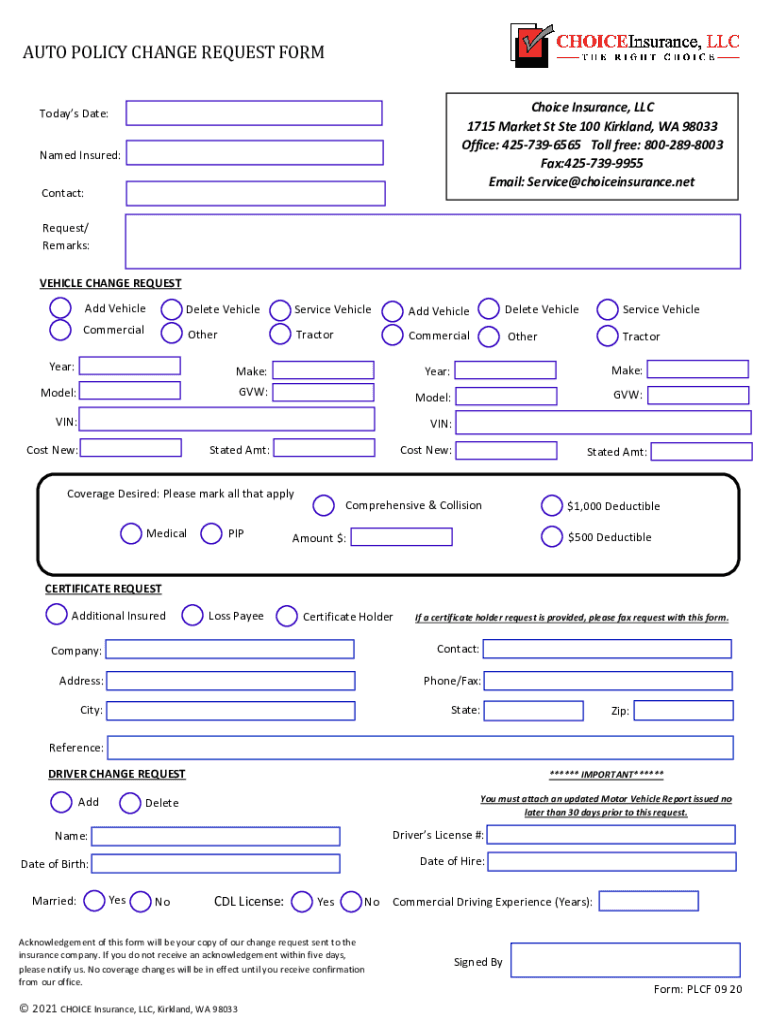







Definition and Purpose of the Auto Policy Change Request Form
The Auto Policy Change Request Form is a standardized document designed for individuals or entities wishing to modify their existing auto insurance policy. Essentially, this form serves as an official request to your insurance provider for adjustments to coverage, information updates, or other policy amendments. Such changes might involve adding or removing a driver, updating vehicle details, or altering coverage levels. By using this form, policyholders can ensure that their insurance coverage accurately reflects their current needs and circumstances. Importantly, insurers rely on this paperwork to process changes efficiently, thus maintaining correct policy records.
Key Elements of the Form
For the successful submission and processing of an Auto Policy Change Request Form, several essential components must be filled out accurately. These elements include:
-
Policyholder Information: Name, address, and contact details of the individual or entity holding the policy.
-
Policy Number: Unique identifier for the existing insurance policy.
-
Type of Change Requested: Specific details about the requested modification, such as changes to coverage limits, vehicle information, or driver details.
-
Reason for Change: Explanation of why the change is necessary, such as changing vehicles or coverage needs.
-
Effective Date: The date when the requested changes should become effective.
Each section of the form is critical to ensure the insurance provider has all necessary information to process the change efficiently and accurately.
Steps to Complete the Auto Policy Change Request Form
Completing the Auto Policy Change Request Form involves a systematic approach to ensure accuracy and completeness. Follow these steps for proper form completion:
-
Gather Required Information: Before starting the form, collect all necessary documents and information, including your current policy details, vehicle information, and driver information.
-
Fill in Personal and Policy Details: Enter your personal information, including name and contact details, and the current policy number to identify your account.
-
Specify the Change Details: Clearly outline the changes you wish to make to your auto policy, providing all necessary details to avoid any confusion.
-
Justify the Change: Provide a brief explanation for the requested changes, such as adding a new vehicle or adjusting coverage in response to life changes.
-
Review and Sign the Form: Double-check all the information for accuracy, sign the document to authorize the changes, and ensure all required fields are complete.
-
Submit the Form: Send the completed form to your insurance provider via their preferred submission method, which may include mail, email, or an online portal.
Proper completion and submission of each step are vital to avoid delays or complications in processing the requested policy changes.
How to Obtain the Auto Policy Change Request Form
When considering changes to your auto insurance policy, obtaining the appropriate form is straightforward. Here's how you can do it:
-
Visit the Insurance Provider's Website: Most major insurance companies provide downloadable forms directly on their websites within the customer service or claims section.
-
Contact Customer Service: If an online option is not available, call or visit the customer service department of your insurance provider to request the form in paper or digital format.
-
Check Online Portals: If your insurer offers an online customer account portal, you might find the form available for download or completion within your account dashboard.
Obtaining the form quickly allows you to begin processing your policy adjustments without delay.
Who Typically Uses the Auto Policy Change Request Form
Understanding who needs this form helps in gauging its practical use and audience. Generally, individuals and businesses that require policy modifications will engage with this form. Typical users include:
-
Individual Policyholders: People who wish to update their personal auto insurance details, such as address changes or vehicle swaps.
-
Small Business Owners: Businesses maintaining commercial auto policies and needing to update fleet vehicle coverage or driver information.
-
Fleet Managers: Those overseeing auto policies for multiple vehicles or drivers, managing numerous policy updates simultaneously.
This form is essential across various contexts to maintain accurate and effective insurance coverage.


State-Specific Regulations for Auto Policy Change Requests
Insurance policies are subject to state regulations that can influence how policy changes are managed. Some states might have specific laws regarding minimum coverage levels or mandatory notifications. It's critical to:
-
Understand Local Regulations: Review any state-specific requirements that could affect coverage changes, such as mandatory liability limits or additional coverage types.
-
Consult with Local Agents: Insurance agents familiar with regional laws can provide insights and ensure compliance when requesting changes.
Adhering to state-specific policies ensures compliance and prevents coverage gaps or legal issues.
Legal Use and Implications
Correctly using the Auto Policy Change Request Form is essential for maintaining compliance with insurance regulations. Here's what you need to consider:
-
Legal Binding: The form, once submitted and approved, becomes part of the legal insurance contract between you and the provider.
-
Fraud Prevention: Ensure all information is truthful and accurate, as false statements can result in denied claims or policy cancellations.
-
Documentation: Keep a copy of all submissions in case of disputes or verification needs later.
Following legal guidelines ensures that your insurance coverage remains valid and effective.
Form Submission Methods
The method of submitting your Auto Policy Change Request Form can vary depending on your insurance provider’s offerings. Various submission methods include:
-
Online Portals: Many insurers offer a secure portal for electronic submissions, providing convenience and instant confirmation.
-
Email or Fax: Some providers accept forms through these channels, usually accompanied by written confirmation of receipt.
-
In-Person or Mail: Traditional methods include dropping off at the insurer's office or sending via postal mail, often preferred for physical document transactions.
Choosing the most convenient and reliable submission method helps ensure timely processing of your request.
Digital vs. Paper Versions
Modern insurance processes have evolved to include both digital and paper versions of forms, offering flexibility for different preferences. Considerations include:
-
Digital Forms: Allow for quick submission and often provide an audit trail of submissions, enhancing speed and ease of access.
-
Paper Forms: May still be necessary in some cases, especially if digital access is limited, providing a tangible record for your files.
Preference and accessibility will guide the choice between digital and paper submission, affecting the processing speed and ease of making changes to your policy.




