







Definition & Meaning
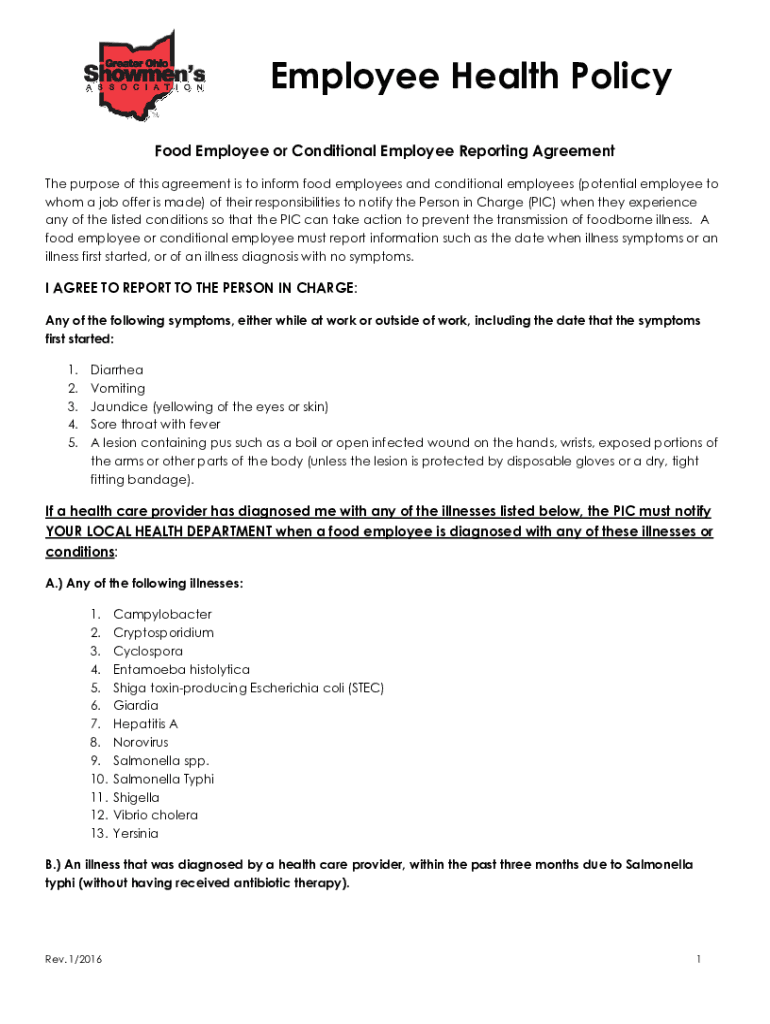
The Food Employee Health Reporting Agreement serves as a pivotal document in the food service industry, focusing on disease prevention and ensuring food safety. This agreement, established under public health regulations, mandates food employees to report specific health conditions that may pose a risk to food safety. It outlines the responsibilities of both the employees and employers to notify authorities of any symptoms, diagnoses, or exposure to foodborne illnesses. This preventive measure aims to mitigate the risk of contamination and protects public health by ensuring only healthy individuals are involved in food preparation and service.
Key Aspects of the Agreement
- Communication of Symptoms: Employees must inform management of symptoms like vomiting, diarrhea, jaundice, sore throat with fever, or lesions containing pus.
- Exposure Reporting: Employees should report any exposure to specific pathogens, such as norovirus, hepatitis A, Shigella, and Salmonella Typhi.
- Diagnosis Disclosure: If diagnosed with a foodborne illness, employees must notify management and comply with exclusion or restriction from duties as advised by health authorities.
How to Use the Food Employee Health Reporting Agreement
Using the Food Employee Health Reporting Agreement effectively involves clear understanding and communication between the employer and employees.
Steps for Implementation
- Introduction to Employees: Employers should present the agreement to all food-handling personnel during initial training. It should be part of the onboarding process for new hires.
- Regular Updates: Conduct periodic reviews and update the agreement to align with current health regulations and standards.
- Accessibility: Ensure the agreement is readily available for employees to review at any time, ideally posted in common areas or through a company intranet.
Compliance and Training
- Ensure that all employees are aware of their responsibility under the agreement.
- Incorporate health and safety training sessions to reinforce understanding and compliance.
Steps to Complete the Food Employee Health Reporting Agreement
Completing the agreement involves a structured approach to ensure all necessary information is captured and understood by the employee.
Key Steps
- Personal Information: Begin with the employee's name, contact information, and job title within the food service establishment.
- Acknowledgment of Symptoms: Employees must check off symptoms and illnesses they agree to report as outlined in the agreement.
- Signature and Date: The employee and a managerial representative should sign and date the document to validate the understanding and consent to comply.
Reporting Procedures
- Establish clear channels for reporting symptoms or exposure to management, including direct communication methods and documentation processes.
- Reinforce the importance of timely reporting to prevent foodborne disease outbreaks.
Key Elements of the Food Employee Health Reporting Agreement
Understanding the fundamental components of this agreement is essential for its effective application.
Core Components
- Employee's Obligations: Emphasizes the requirement to report illness or symptom onset at the earliest opportunity.
- Managerial Duties: Management must recognize reported symptoms or diagnoses and take appropriate action, such as reassigning duties or permitting leave.
- Health Department Guidelines: The agreement should be in line with health department guidelines to ensure consistency with local public health laws.
Protective Measures
- Implement protective policies that support employees in reporting health issues without fear of job loss or retribution.
- Encourage a culture of health and safety as a priority within the food service environment.
Legal Use of the Food Employee Health Reporting Agreement
The legal foundation of the agreement ensures its enforceability and validity in food safety compliance.
Regulatory Compliance
- Public Health Legislation: Aligns with federal and state health regulations, enabling enforcement as part of health inspections and audits.
- Legally Binding Contract: Serves as a contractual obligation between employees and employers to adhere to public health standards.
Managerial Enforcement
- Employers are legally permitted to exclude or restrict work for non-compliant employees, provided it is documented and justified according to health guidelines.
Examples of Using the Food Employee Health Reporting Agreement
Practical application scenarios demonstrate the real-world use of this agreement in maintaining food safety standards.
Case Studies
- Example 1: An employee at a restaurant reports symptoms of norovirus. The prompt reporting and appropriate managerial action prevent a potential outbreak.
- Example 2: During a routine health inspection, an inspector reviews employee health reporting agreements, identifying compliance and recommending best practices for improvement.
Best Practices
- Maintain transparent communication and foster trust among employees for effective health reporting.
- Routinely update the agreement to incorporate the latest health insights and regulatory changes.
State-Specific Rules for the Food Employee Health Reporting Agreement
State regulations may influence the specifics of how the agreement is implemented and enforced.
Variation by State
- Differing Guidelines: States might stipulate additional reporting requirements or have distinct procedural obligations for managing foodborne illness risks.
- Local Health Department Coordination: Collaborate with local health departments to ensure state-specific rules are met and agreements are modified accordingly.
Coordination and Compliance
- Regularly consult with state health authorities to remain informed about any changes affecting the agreement's applicability.
- Adapt the agreement to reflect any additional requirements unique to the restaurant's state or local jurisdiction.




