
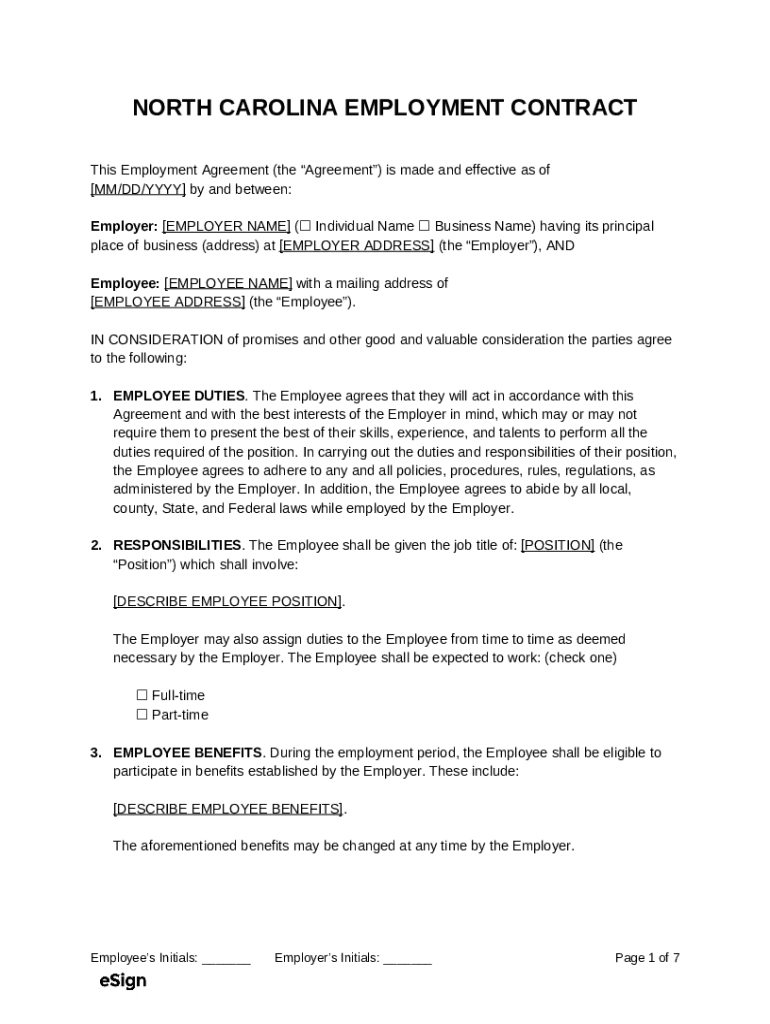







Definition and Meaning
An employment contract is a legally binding agreement between an employer and an employee, outlining the terms and conditions of employment. In North Carolina, these contracts are crucial for setting clear expectations and protecting both parties' rights. The contract typically includes specifics such as job duties, salary, termination conditions, and other employment-related details. A North Carolina Employment Contract adheres to state-specific regulations, which may differ from other states, ensuring compliance with local labor laws.
Elements of an Employment Contract
- Job Title and Duties: Specifies the employee's role and responsibilities.
- Compensation: Details salary, bonuses, and wage structures.
- Duration: Defines whether the employment is at-will, temporary, or permanent.
- Termination Conditions: Outlines the situations in which either party can end the employment.
- Non-Compete Clauses: Prevents the employee from entering into competition with the employer for a certain period after employment ends.
- Confidentiality Agreements: Protects sensitive company information from being disclosed.
Key Elements of the North Carolina Employment Contract
The essential components of a North Carolina Employment Contract are pivotal for legal clarity and mutual understanding. These contracts often incorporate terms specific to local employment practices.
Work Responsibilities
- Detailed Job Descriptions: Clearly defines the tasks and duties expected from the employee.
- Performance Expectations: Sets benchmarks and objectives that the employee should achieve.
Compensation Details
- Salary and Benefits: Specifies the pay structure, including base salary, overtime, health benefits, and retirement plans.
- Bonuses and Incentives: Outlines any performance-based rewards.
Termination Clauses
- At-Will Employment: Illustrates the conditions under which employment can be terminated by either party without cause.
- Notice Periods: Identifies the timeframe required for notification before ending the employment.
Legal Use of the North Carolina Employment Contract
Understanding the legal use of this contract ensures both parties are protected under North Carolina's jurisdiction. The employment contract serves as a safeguard, outlining rights and obligations.
Compliance with State Laws
- Labor Standards: Adheres to minimum wage and overtime rules specific to North Carolina.
- Discrimination Policies: Reflects compliance with federal and state non-discrimination laws.
Enforceability
- Legal Validity: To be enforceable in North Carolina, the contract must be signed by both parties and comply with state laws.
- Modification Provisions: Changes to the contract should be documented in writing and agreed upon by both the employer and employee.
Steps to Complete the North Carolina Employment Contract
Drafting and completing an employment contract involves a systematic approach to ensure all critical elements are addressed.
- Initial Coordination: Discuss and decide on the terms with prospective employees.
- Drafting the Contract: Use standardized templates as a starting point, then customize according to specific employment conditions.
- Legal Review: Have a legal expert review the contract to ensure compliance with North Carolina laws.
- Signing Ceremony: Facilitate a formal signing process where both parties can discuss any last-minute changes or concerns.
Finalizing the Agreement
- Document Storage: Retain a signed copy of the contract for both parties.
- Periodic Reviews: Regularly revisit contract terms to adjust to any role changes or legal updates.
Who Typically Uses the North Carolina Employment Contract
Various entities utilize these contracts, each benefiting from the legal clarity provided.


Typical Users
- Corporations and LLCs: To standardize employee relations and clarify expectations.
- Small Businesses: Ensures clarity in employment terms, especially crucial for startups.
- Non-Profits: Aligns employment terms with mission-driven goals and regulatory compliance.
Employee Types
- Full-Time Employees: Most likely to have detailed contracts.
- Contractors/Freelancers: Specific contract conditions addressing project duration and scope.
Important Terms Related to the North Carolina Employment Contract
A solid understanding of key terms within the contract is crucial for interpreting its content effectively.
Common Terminology
- Probationary Period: Initial phase where employment terms are evaluated for suitability.
- Restrictive Covenants: Conditions limiting the employee's actions post-employment.
- Severance Clauses: Specifies benefits available upon employment termination under certain conditions.
State-Specific Rules for the North Carolina Employment Contract
Contracts must align with state-specific laws, which might deviate from federal standards.
Local Regulations
- Minimum Wage Laws: North Carolina mandates adherence to either state or federal minimum wages, whichever is higher.
- Worker's Compensation: Contracts should ensure compliance with state worker's compensation insurance requirements.
Dispute Resolution
- Mediation Requirements: Some contracts may require mediation before taking disputes to court.
- Governing Law Clauses: Specify that the contract is governed by North Carolina laws, clarifying judicial application in dispute scenarios.
Examples of Using the North Carolina Employment Contract
Providing examples helps illustrate the contract's application across different scenarios.
Business Environments
- Retail Operations: Clarifying roles and responsibilities for store management and associates.
- Technology Firms: Addressing intellectual property rights and non-disclosure agreements.
Hypothetical Scenarios
- Case Studies: Analyze situations where businesses protected themselves legally through well-drafted contracts.
- Resolution Examples: Detailing how disputes were resolved due to clear contract terms, emphasizing the importance of comprehensive documentation.




