
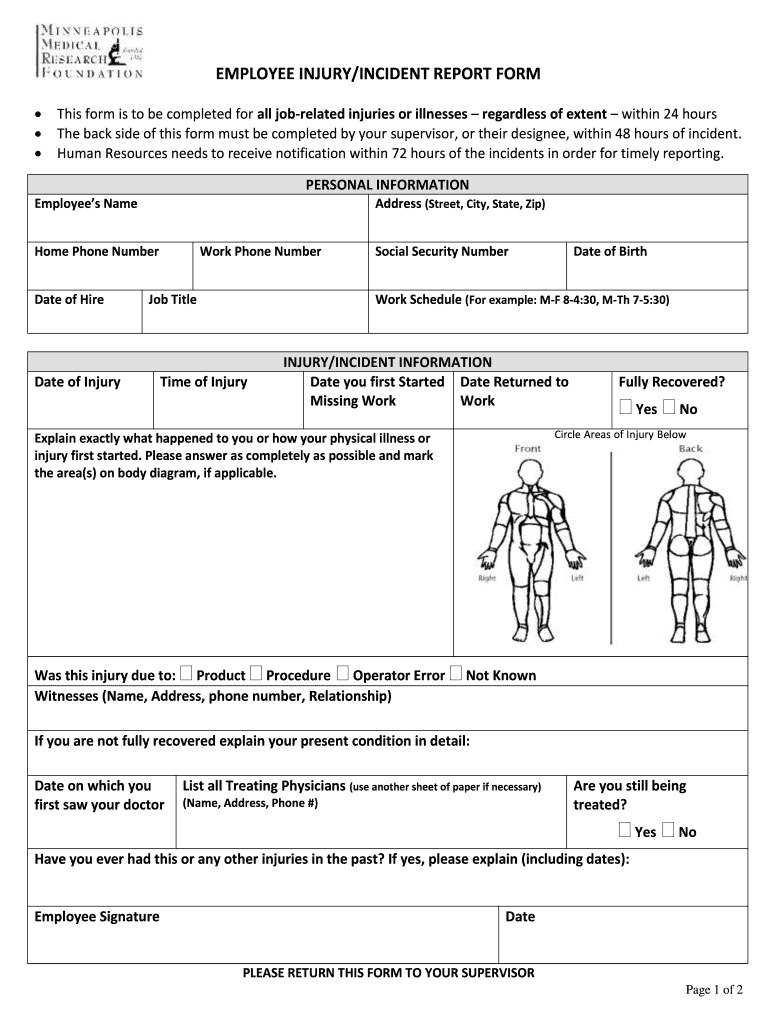







Definition & Meaning
The Employee Injury Incident Report Form is a structured document used to record incidents of workplace injuries or illnesses. It is critical for ensuring both legal compliance and maintaining a safe working environment. This form serves as an official account of the incident, detailing what occurred, how it happened, and identifying involved parties. It helps employers monitor safety protocols, make necessary improvements, and provides the basis for workers' compensation claims.
How to Obtain the Employee Injury Incident Report Form
Obtaining the Employee Injury Incident Report Form can typically be accomplished through an employer's HR department or safety officer. Some employers have digital versions stored in internal document management systems, while others may require you to collect a physical form from HR. Additionally, forms specifically tailored to an industry or organization are often available on official corporate portals or governing body websites. In some cases, depending on state regulations, the form may be provided directly by a state's department of labor.
Steps to Complete the Employee Injury Incident Report Form
-
Gather Initial Information: Collect all necessary details about the injured employee, including name, job title, and contact information.
-
Detail the Incident: Accurately describe the location, time, and nature of the injury or illness, citing any contributing factors.
-
Identify Witnesses: Note any witnesses to the incident, providing their contact details for further clarification if necessary.
-
Medical Intervention: Document any immediate medical treatment given or required, including details of the attending healthcare professional.
-
Review and Sign: Before submission, review for completeness and accuracy. The injured party and a supervisor should sign off to verify the account.
-
Submit the Form: Follow your organization’s protocol for submission—either filing with HR, through an online system, or sending to the relevant department.
Key Elements of the Employee Injury Incident Report Form
- Employee Information: Employee ID, name, and job title.
- Incident Description: Date, time, place, and specific injuries.
- Witness Accounts: Names and statements from individuals who saw the incident.
- Response Actions: First aid given and healthcare referrals.
- Corrective Measures: Prevention plans for future incidents.
Legal Use of the Employee Injury Incident Report Form
In the U.S., maintaining and correctly filing Employee Injury Incident Report Forms is essential for regulatory compliance. It fulfills obligations under OSHA (Occupational Safety and Health Administration) requirements for tracking workplace injuries. Employers must ensure accurate and timely completion to avoid legal penalties and help safeguard their workforce. They serve not only as a record of events but can also be pivotal in handling disputes related to workers' compensation claims.
State-Specific Rules for the Employee Injury Incident Report Form
While federal guidelines mandate the use of these forms, specifics can vary by state. For example, California's Division of Workers’ Compensation and Texas's Department of Workers' Compensation may have unique provisions and additional reporting requirements, such as specific timelines for submission or additional documentation. Employers and employees should consult their state’s labor department resources to ensure compliance with all local regulations.
Important Terms Related to Employee Injury Incident Report Form
- OSHA: The agency that oversees workplace safety and health regulations.
- Worker's Compensation: Insurance program aiding employees who suffer job-related injuries.
- Incident Reporting Protocol: The established process for documenting and reporting workplace injuries.
Examples of Using the Employee Injury Incident Report Form
Typical Scenarios:
- Construction Site Injury: An employee falls from scaffolding, requiring immediate medical attention and detailed reporting.
- Office Ergonomics Incident: A repetitive stress injury that developed over time, needing thorough documentation for any compensation claims.
- Chemical Spill Exposure: Immediate reporting is required to document exposure level, symptoms, and steps taken to mitigate effects.
In each case, thorough and accurate use of the form ensures proper procedural follow-up, supports workers' compensation claims, and helps prevent future incidents.




