







Definition & Meaning
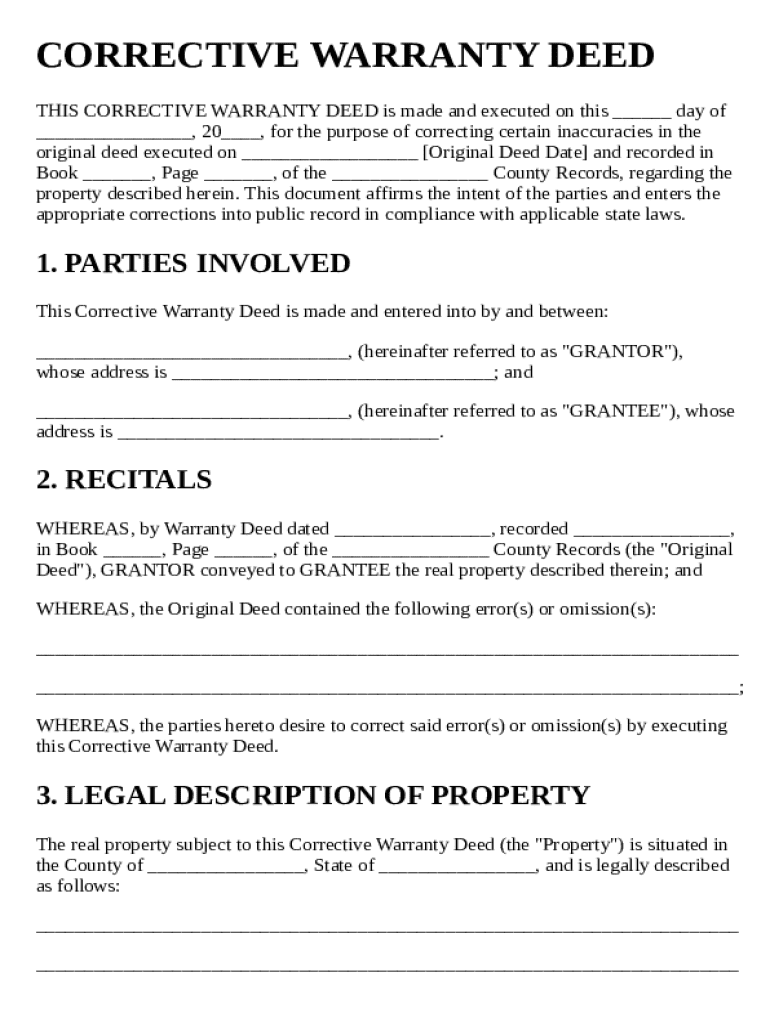
A Corrective Warranty Deed Template is a legal document used to rectify errors or inaccuracies present in an original warranty deed. The template serves as an official means to amend the conveyance of real property, ensuring the intentions of the parties involved are correctly represented. This type of deed clarifies any previous mistakes such as incorrect legal descriptions, misspelled names, or other substantial omissions that could affect property rights.
Examples of Common Corrections
- Legal Description Errors: Mistakes in the property's legal boundaries or identifiers.
- Grantee's Name Corrections: Addressing misspelled names or wrong individuals listed.
- Recording Errors: Resolving issues arising from clerical mistakes during recording.
How to Use the Corrective Warranty Deed Template
Steps to Implement the Template
- Identify the Error: Pinpoint the specific mistakes in the original deed.
- Gather Information: Collect all necessary documents, including the original deed and any supporting documentation.
- Complete the Template: Fill in the template by providing precise details about the original error and the correct information.
- Sign and Notarize: Ensure all parties involved sign the document and have it notarized to uphold its legality.
- Record the Corrective Deed: Submit the corrected deed to the local recorder's office to formalize the amendment.
Who Typically Uses the Corrective Warranty Deed Template


Common Users
- Property Owners: Individuals rectifying personal property transactions.
- Real Estate Attorneys: Legal professionals assisting clients with property corrections.
- Title Companies: Businesses ensuring the accuracy and clarity of property deeds during transactions.

Scenarios Involving Corrective Deeds
- Inheritance Adjustments: Correcting deeds after probate for accurate property distribution.
- Title Transfers: Ensuring rightful transfer of ownership between parties with clear documentation.
Legal Use of the Corrective Warranty Deed Template
State-Specific Requirements
The corrective warranty deed must comply with state-specific laws to be deemed legally binding. Requirements may include distinct notary acknowledgments or specific language dictated by state statutes to align with local property regulations.
Importance of Legal Compliance
Ensuring that the corrective deed adheres to state legal standards is crucial to validate the corrections and secure property rights effectively.
Key Elements of the Corrective Warranty Deed Template
Essential Components
- Corrective Statement: Clearly indicates the inaccuracies being corrected.
- Accurate Property Description: Updates with the correct legal description.
- Parties Involved: Lists all grantors and grantees with corrected details.
- Original Recording Information: Reference to the original deed recording details, such as book and page number or document ID.
State-Specific Rules for the Corrective Warranty Deed Template
Variations Across States
- Notary Requirements: Different states may require varying forms of notarization or witness signatures.
- Form Language: Legal language and templates may differ to meet specific state legislative guidelines.
- Filing Fees: Each state might impose different fees for recording a corrective deed.
Examples of Using the Corrective Warranty Deed Template
Practical Applications
- Residential Transactions: Correcting the original recording to reflect accurate homebuyer details.
- Commercial Properties: Ensuring clear property boundaries for commercial real estate.
- Family Transactions: Amending deeds within family trusts or inheritance contexts for clear distribution of assets.
Required Documents for a Corrective Warranty Deed
Essential Submission Materials
- Original Warranty Deed: The deed containing the error.
- Corrective Warranty Deed: The filled and signed template.
- Supporting Legal Documents: Any court orders or agreements related to the correction.
- Proof of Identity: Identifications for each signatory involved in the corrective action.
Form Submission Methods
Options for Submission
- Online: Some states offer electronic submission through their local recording office portals.
- Mail: Mailing the completed deed and supporting documents to the appropriate recording office.
- In-Person: Direct submission at the recorder’s office for immediate processing and verification.




