







Definition & Meaning
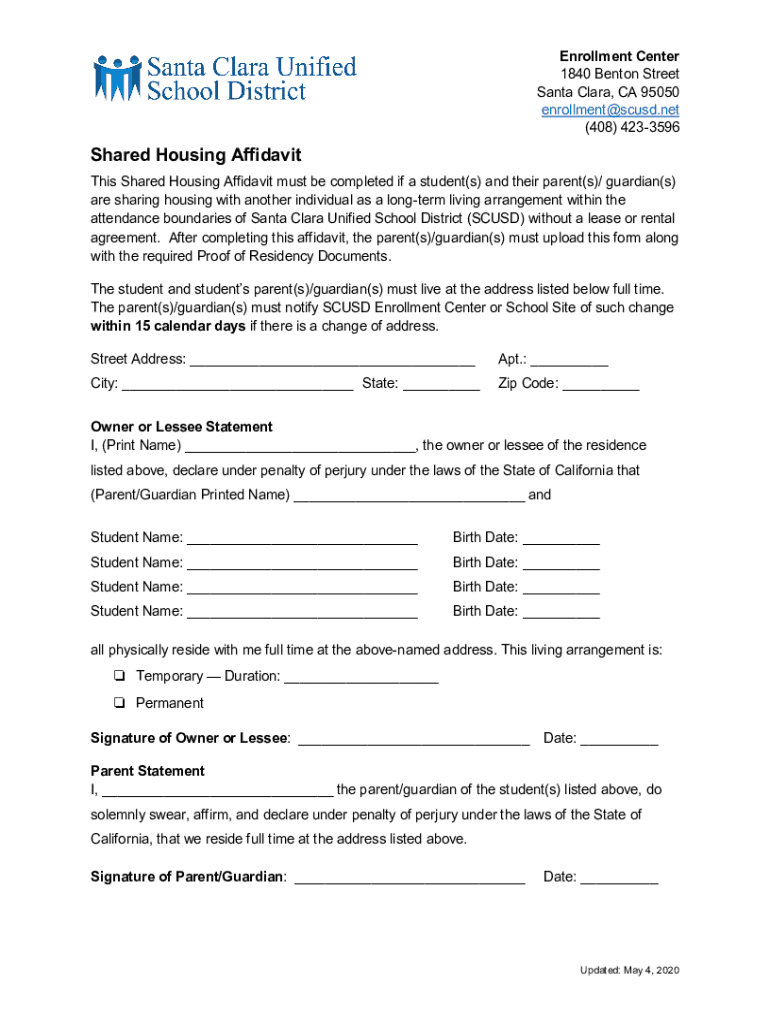
The Shared Housing Affidavit is a legal document typically required by school districts to verify a student's residency within a particular district when they are living in a shared housing situation. This affidavit often involves a declaration made by the person with whom the child and their parents are living, confirming that the child resides with them and providing details about the living arrangement.
Understanding Shared Housing Arrangements
- Shared housing refers to situations where individuals or families live together in the same residence. This can arise due to various circumstances such as financial necessity or family arrangements.
- The affidavit serves as formal proof of residence, ensuring that students attend schools within their correct jurisdiction.
Purpose
- Primarily used by educational institutions to verify residences for student enrollment decisions.
- Helps maintain accurate records for student demographics and school funding based on district population.
How to Use the Shared Housing Affidavit
When using a Shared Housing Affidavit, it's critical to ensure that the information provided is accurate and complete to avoid any disputes or legal complications.
Steps to Follow
- Gather Basic Information: Collect names, addresses, and contact details for all parties involved in the shared housing arrangement.
- Verify Residency: Include details verifying that the student(s) reside at the stated address.
- Notarization Requirement: Often, affidavits must be notarized. Check if notarization is required to ensure legal validity.
Considerations
- Ensure that both the host and the residing family provide consistent information.
- Keep copies of supporting documentation, such as utility bills or rental agreements, which can aid in validating the affidavit.
Steps to Complete the Shared Housing Affidavit
Completing a Shared Housing Affidavit involves several detailed steps to ensure all necessary legal and informational requirements are met.
Detailed Process
- Identify the Participating Parties: Clearly define who is involved in the shared housing situation, including the primary resident and the individuals sharing the residence.
- Provide Complete and Accurate Information:
- Full names and addresses.
- Date of birth for minors attending the school.
- Length of time the residence has been shared.
- Documentation: Attach any required supporting documents, such as a signed lease or a utility bill in the primary resident’s name.
- Signature and Date: Ensure all parties involved sign and date the affidavit.
Final Steps
- Review: Double-check all entered information for accuracy.
- Submit: Follow submission guidelines precisely—this often involves providing the affidavit to the relevant school district office.
Legal Use of the Shared Housing Affidavit
Understanding the legal implications of a Shared Housing Affidavit can protect all involved parties and ensure compliance with regional laws.
Legal Responsibilities
- Affidavits are sworn statements, meaning the signer agrees under penalty of perjury that the information is truthful and accurate.
- False claims could lead to serious consequences, including legal action from schools or other governmental entities.
Compliance
- Check for additional local requirements or stipulations mandated by the state or district laws governing shared residency affidavits.
- Notarization might be necessary to enhance the affidavit's legal credibility and recognition.
Important Terms Related to Shared Housing Affidavit
Familiarizing oneself with key terms and definitions can simplify the process of completing a Shared Housing Affidavit.
Key Considerations
- Affidavit: A sworn statement in writing.
- Residency: Living in a particular location as the primary resident.
- Notarization: The act of certifying a document as legitimate by a notary public.
Usage Context
- Pernancy of Residence: Many districts require proof that living arrangements are not temporary.
- Legal Guardianship: In cases where the student resides with someone other than a parent, guardianship details might be required.
State-Specific Rules for the Shared Housing Affidavit
State-specific regulations may greatly affect how one completes and submits a Shared Housing Affidavit.
Examples of Variations
- California: May require additional proof of residency, like utility bills or rental agreements.
- New York: Might include additional declarations for non-parental guardianship cases.
- Texas: Often integrates dual-residency checks for shared housing scenarios.
Researching Local Laws
- Consult local education department resources to ensure compliance.
- Contact the school's enrollment center for guidance on specific affidavits.
Examples of Using the Shared Housing Affidavit
The practical application of a Shared Housing Affidavit can be illustrated through various scenarios.
Common Scenarios
- Family Co-Habitation: Parents and children moving in with relatives due to economic circumstances sign an affidavit to verify the child's school enrollment address.
- Roommate Arrangements: A single parent and child living with roommates can use the affidavit to establish their student's school residency without separate lease agreements.
Ensuring Documentation
- Make sure all required documents corroborating the shared living arrangement accompany the affidavit to prevent delays in processing.
Key Elements of the Shared Housing Affidavit
There are critical elements that every Shared Housing Affidavit must contain to meet its intended purpose legally and functionally.
Primary Components
- Identification Details: Names and contact information for all related parties.
- Living Arrangement: Detailed description of the shared residency status.
- Verification: Signatures from all parties involved, sometimes requiring a notary signature.
Supporting Information
- Supporting documents like utility bills can authenticate the living situation.
- A brief explanation of why the shared housing arrangement is necessary, if applicable.
These structured and comprehensive insights into the Shared Housing Affidavit provide clarity and guidance to ensure that the document fulfills its legal and practical roles effectively.




