




01. Edit your form online
Type text, add images, blackout confidential details, add comments, highlights and more.

Type text, add images, blackout confidential details, add comments, highlights and more.

Draw your signature, type it, upload its image, or use your mobile device as a signature pad.

Send it via email, link, or fax. You can also download it, export it or print it out.
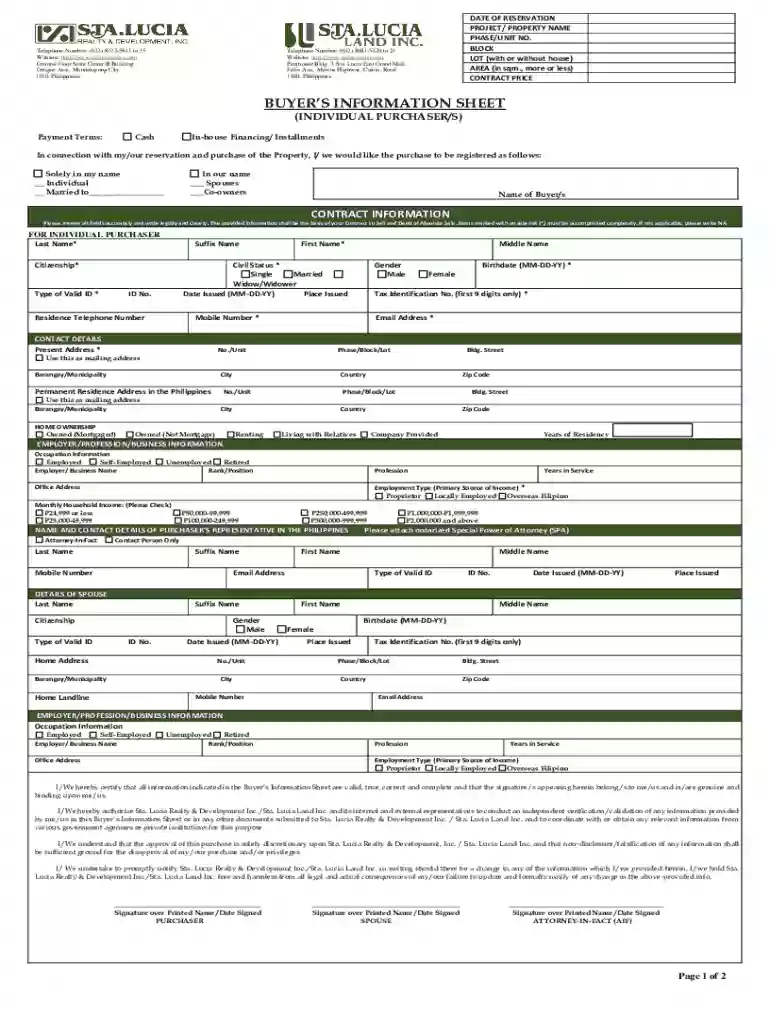
The Buyer's Information Sheet serves as a crucial document for individuals involved in property transactions. It is designed to collect essential information regarding the buyer, streamlining communication and transaction processes. This sheet typically captures personal details, contact information, and other relevant data crucial for both the buyer and the involved parties such as realtors and developers. Understanding the role of this sheet can facilitate a smoother transaction process, reduce misunderstandings, and ensure clarity between all parties.
Consider a homebuyer looking to purchase a condo in Miami. By filling out the Buyer's Information Sheet, the real estate agent can tailor their property recommendations based on specified needs and preferences.
Filling out a Buyer's Information Sheet correctly ensures a seamless property buying process. Here's a step-by-step guide to make the most of this document:
Completing the Buyer's Information Sheet involves several clear steps that ensure efficiency and correctness.
In cases where a buyer does not have internet access, the agent can mail or deliver a physical copy of the form.
Utilizing a Buyer’s Information Sheet presents several compelling advantages:
When multiple buyers are interested in a property, having completed forms enables quick identification of the most qualified buyer.
Understanding the critical components of the Buyer's Information Sheet helps ensure completeness and accuracy:
A first-time homebuyer might lean on the detailed timeline section to plan their financial commitments.
Different states might have specific requirements or additional details that must be included in a Buyer's Information Sheet due to varying real estate laws.
Buyers should consult with a local real estate expert to ensure all state-specific requirements are met.
To better illustrate the practical use of the Buyer's Information Sheet, consider these scenarios:
A real estate investor looking for multiple-family units can use the sheet to specify preferred neighborhoods for better-targeted property recommendations.
When deciding between digital and paper forms, it’s vital to weigh the pros and cons:
Digital Forms:
Paper Forms:
Opt for digital versions when possible, especially in tech-savvy markets, ensuring quick submissions and data integrity.
By using the insights above, those involved in real estate transactions can make well-informed decisions regarding the Buyer's Information Sheet, enhancing the efficiency and effectiveness of property-related communications and transactions.
At DocHub, your data security is our priority. We follow HIPAA, SOC2, GDPR, and other standards, so you can work on your documents with confidence.
A guide on how to Assemble a Skeleton in The Bone Market, both as an introduction to skeleton-building and a reference for those already familiar.Read more
List all lines of credit and credit cards whether balance is owing or not. If additional space is required for what you owe, attach separate form.Read more
You can contribute to as many exhibitors projects as youd like by placing bids ($25 minimum) on their Multiple Buyer Forms. The exhibitor.Read more


