






Definition and Purpose
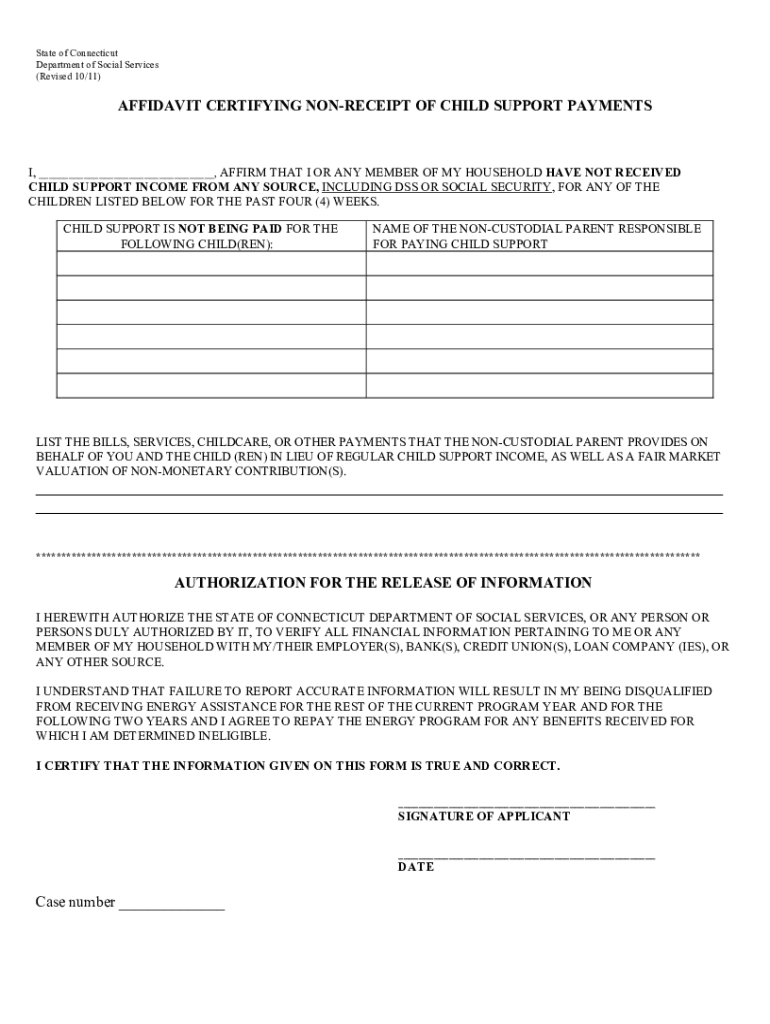
The "Connecticut Affidavit Certifying Non-Receipt of Child Support Payments" is a legal document used to formally declare that an individual or their household has not received the expected child support payments. This form serves critical functions within family law proceedings, particularly when discrepancies in payment records need clarification to support claims for enforcement or adjustments in child support arrangements.
Examples of Use
- Family Court Proceedings: It can be presented as evidence to support motions to enforce child support orders.
- Mediate Disputes: Useful in mediation sessions to validate claims of non-payment and work towards a resolution.
How to Use the Affidavit
The process of using the Connecticut Affidavit involves understanding its components and ensuring its accurate completion. The affidavit should be filled in with precise information regarding the non-receipt of child support to avoid legal complications.
Detailed Instructions
- Identify the Court Case: Begin by specifying the court docket number associated with your case.
- Provide Personal Information: Include the full names and contact information of both the obligor and obligee.
- State the Facts Clearly: Clearly outline the details regarding non-receipt, including dates and amounts expected versus received.
- Notarization: Most affidavits require notarization to verify authenticity.
How to Obtain the Affidavit
Obtaining this form typically involves accessing resources from local family law courts or the Connecticut Department of Social Services. It is crucial to start from reliable and official sources to ensure the validity of the document used.
Common Sources
- Family Law Attorneys: Legal professionals can provide copies and assist in understanding the form.
- State Department Websites: Official government sites often have downloadable and printable versions.
Steps to Complete the Affidavit
Completing the Connecticut Affidavit involves several steps, which ensure that it is both complete and legally valid. Detailed attention to filling out each section accurately is crucial for its effectiveness.
Detailed Steps
- Fill Out Required Information: Ensure all fields are correctly filled, including your personal data, the other party’s data, and court information.
- Sign the Document: Affix your signature after confirming the accuracy of all entered details.
- Have it Notarized: Visit a notary public to have your affidavit notarized, making it a recognized legal document.
Why Use the Affidavit
The affidavit is an essential tool in disputes regarding child support payments. It provides a formal method of documenting non-receipt, which can be used in court or negotiations.
Benefits
- Legal Protection: Protects your rights by providing documented evidence in legal settings.
- Facilitates Resolution: By documenting the issue formally, it facilitates quicker resolution through court or mediations.
Who Typically Uses the Affidavit
This affidavit is commonly used by individuals involved in child support cases, particularly those seeking to resolve disputes related to non-payment or discrepancies in payment records.


Common Users
- Custodial Parents: Often the individuals claiming non-receipt to secure child support payments.
- Legal Representatives: Attorneys acting on behalf of their clients in family law cases.

Important Terms
Understanding the terminologies used within the affidavit is essential for completing it accurately and avoiding misunderstandings.
Key Terms
- Obligor: The person legally required to pay child support.
- Obligee: The person entitled to receive child support.
- Affiant: The person who swears to the affidavit's truthfulness.
Legal Use of the Affidavit
The affidavit holds substantial legal weight in family law contexts within Connecticut. It is crucial to understand its role and implications fully.
Legal Implications
- Documentation of Non-Payment: Can impact court decisions on enforcement measures or modifications of child support orders.
- Evidence for Legal Proceedings: Provides a credible basis for claims of non-receipt in legal disputes.