






Definition & Meaning
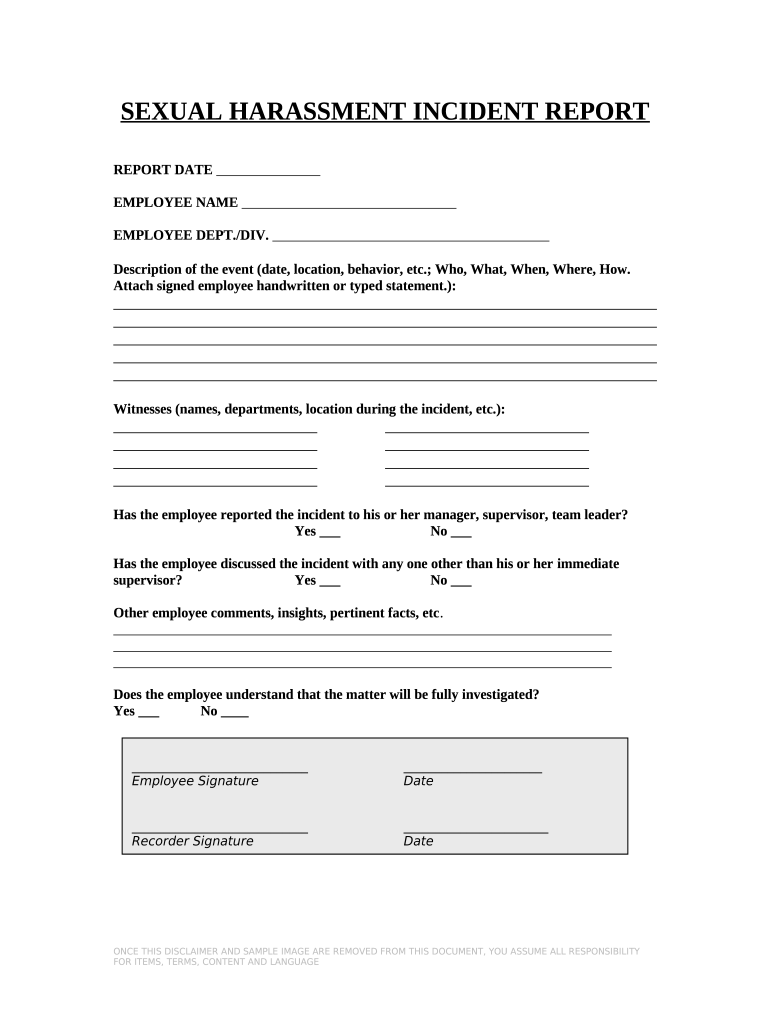
The Sexual Harassment Incident Report is a formal document designed to capture detailed information about incidents of sexual harassment within a workplace or organizational setting. It serves as a crucial tool for organizations to record, assess, and address complaints while ensuring compliance with legal and internal policies. This report typically includes critical identifiers such as the date and location of the incident, involved parties, and a comprehensive description of the alleged harassment events. The document aims to provide an objective framework for evaluating the incident and determining appropriate responses while safeguarding the rights and dignity of all parties involved.
Steps to Complete the Sexual Harassment Incident Report
-
Gather Initial Information:
- Identify the complainant and respondent details, including names, positions, and departments.
- Note the date, time, and location where the incident occurred.
-
Describe the Incident:
- Provide a comprehensive account of what happened, specifying actions, words, or gestures perceived as harassment.
- Include any witnesses to the event and their contact information.
-
Provide Evidence:
- Attach supporting documents, such as emails, text messages, or notes, that corroborate the complaint.
- Include signed statements from witnesses if available.
-
Outline Action Taken:
- Document any immediate actions taken to address the incident, such as informing a supervisor or seeking advice from HR.
-
Sign and Date:
- Ensure that the report is signed by the complainant and dated to affirm the accuracy and veracity of the information provided.
Legal Use of the Sexual Harassment Incident Report
The Sexual Harassment Incident Report plays a vital legal role in maintaining a documented account of alleged harassment incidents. This documentation is essential for ensuring that employers conduct fair and thorough investigations. It also serves as evidence in potential legal proceedings, demonstrating that the organization took prompt and appropriate actions in response to complaints. The report's legal significance underscores the importance of accurately and thoroughly documenting all relevant details, maintaining confidentiality, and adhering to legal requirements for workplace conduct.
Key Elements of the Sexual Harassment Incident Report
- Complainant Information: Name, department, and contact details of the person reporting the incident.
- Respondent Information: Details of the individual alleged to have committed harassment.
- Incident Details: Date, time, location, and a narrative description of the events.
- Witnesses: Names and contact information for any witnesses to the incident.
- Evidence: Any supporting documentation or corroborative materials.
- Immediate Actions: Responses taken immediately following the report of harassment.
- Signatures: The complainant’s signature and date representing the accuracy of the report.
Who Typically Uses the Sexual Harassment Incident Report
The primary users of the Sexual Harassment Incident Report include employees, human resources professionals, and organizational leaders. Employees utilize the report to formally document instances of harassment they have experienced or witnessed. HR departments and managers leverage the report to enforce policies, initiate investigations, and take corrective actions. Additionally, legal teams may reference these reports during investigations or litigation processes to ensure the organization complies with labor laws and maintains a safe working environment.


State-Specific Rules for the Sexual Harassment Incident Report
State laws regarding the documentation and response to sexual harassment incidents can vary significantly. It is crucial for organizations to align their reporting procedures with state-specific regulations governing training, reporting timelines, and confidentiality requirements. Some states mandate annual harassment prevention training or require specific language in company policies. Organizations must stay informed of these differences to ensure compliance and protect the rights of all parties involved in harassment cases.
Examples of Using the Sexual Harassment Incident Report
Consider an organization that received a sexual harassment complaint through the incident report. The report details unwelcome comments and advances made during a company-sponsored event. The HR department uses this document to interview witnesses and gather additional evidence. Based on the report’s findings, HR implements corrective actions, such as suspension or termination, while also providing additional training on appropriate workplace conduct. This example illustrates how the report facilitates a structured response to allegations and underscores the company’s commitment to a respectful work environment.
Who Issues the Form
Typically, the Sexual Harassment Incident Report is issued by an organization’s Human Resources department. The HR team develops the form in alignment with legal standards and organizational policy. It is made available to all employees, who are encouraged to use it when they need to report instances of harassment. Having the form readily accessible simplifies the process for employees and ensures prompt reporting and investigation of complaints.
Digital vs. Paper Version
Many organizations offer both digital and paper versions of the Sexual Harassment Incident Report to accommodate various preferences and ensure accessibility. A digital version allows for easy distribution, storage, and data management. It also facilitates remote access, which is essential in modern work environments where employees may work from different locations. The paper version remains an essential option for those who prefer traditional documentation methods or lack digital access. Both formats must be secure and ensure the confidentiality of the reporting process to protect the parties involved.