
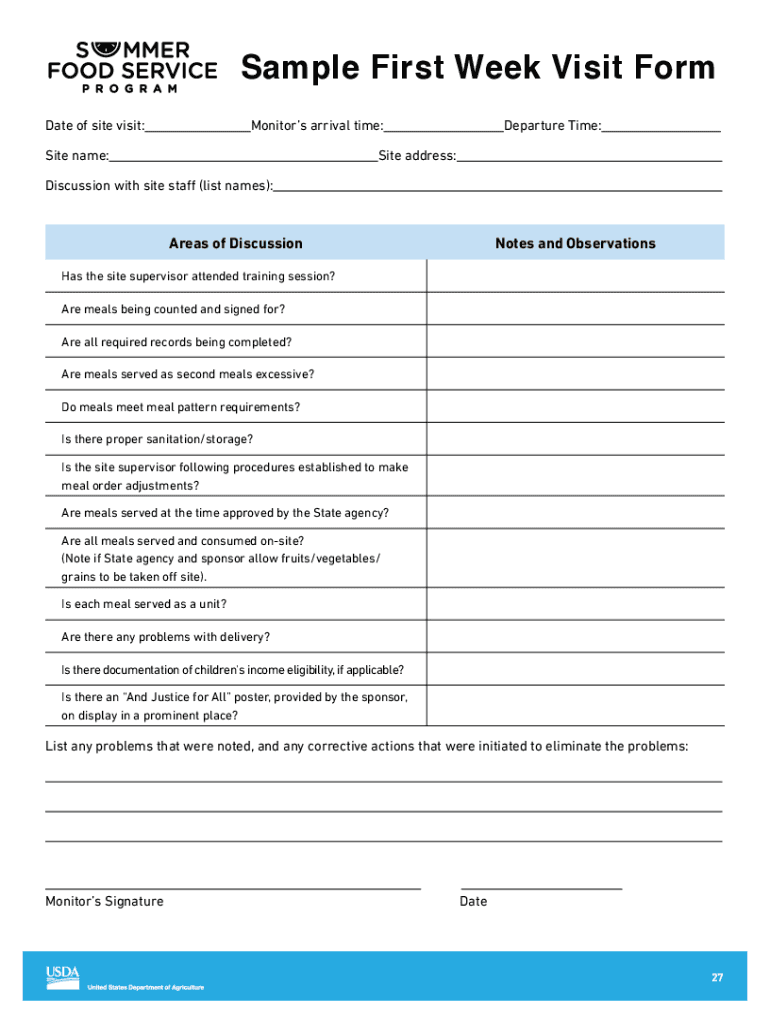







Definition and Purpose of the First Week Visit Form
The First Week Visit Form is a documented process that ensures critical observations and communications occur during the initial week of a project or a site setup. This form acts as a structured tool to document important information such as site conditions, personnel interactions, and logistical details. It helps maintain clear records of discussions and site evaluations.
Within the framework of documenting operational needs, this form requires capturing various data points like monitor arrival times, departure times, and interactions with site personnel. Additionally, it records any observed conditions or potential issues that might impact the ongoing work or project environment.
Key Elements of the First Week Visit Form
The First Week Visit Form is composed of several pivotal elements. Each element serves a specific function to ensure comprehensive site documentation and effective initial assessments:
-
Monitor Arrival and Departure Times: These time stamps are crucial for scheduling and logistics, ensuring all site activities align with the planned timelines.
-
Site Details: Information such as the site name and address ensures geographical clarity and ease of identifying the location for future reference.
-
Interviews and Discussions: Documenting conversations with site staff, including staff names, ensures acknowledgment and allows for follow-up on any points raised.
-
Areas of Discussion: Identifying and documenting the key discussion areas help focus on operational necessities and challenges that need addressing.
-
Notes and Observations: Detailed observations provide insight into the site's operational status, and any immediate issues, and inform decision-making processes.
Steps to Complete the First Week Visit Form
Completing the First Week Visit Form involves a series of methodical steps to ensure thorough and accurate capturing of visit details:
-
Gather Initial Information: Before visiting the site, collect preliminary details about the site location, planned activities, and key personnel.
-
Arrive and Log Times: Upon arrival, record the time to support accurate time management and scheduling.
-
Engage in Discussions: Conduct discussions with the site staff. Notate the names of the individuals involved and the focal topics.
-
Document Observations: Carefully observe site conditions, noting any issues or standout points that could affect operations.
-
Review and Finalize Entries: Go through the form to ensure all sections are thoroughly completed and accurate before submission.
Practical Examples of the First Week Visit Form Usage
Real-world applications of the First Week Visit Form serve a broad spectrum, from construction projects to corporate office setups. Here are several examples:
-
Construction Projects: The form helps track initial infrastructure setups, ensuring compliance with safety and design guidelines.
-
IT Infrastructure Installations: Documenting the deployment processes and ensuring alignment with the technical requirements of the setup phase.
-
Corporate Relocation: Facilitating transparency in planning during the first week of relocating a business to a new location, ensuring all logistics are in place.
Who Typically Uses the First Week Visit Form
The First Week Visit Form is commonly utilized by project managers, site coordinators, and operational leads who are responsible for overseeing the initial phases of a project. These individuals leverage the form to standardize documentation practices and monitor early-stage activities, ensuring alignment with project objectives.
For organizations requiring detailed oversight during project initiation or transitions, this form represents an integral component of operational protocols.


Legal Use and Security of the First Week Visit Form
Ensuring the legal integrity and security of the First Week Visit Form involves compliance with location-specific regulations and organizational privacy policies. The form must be handled as an official document, securing all confidential or sensitive information recorded within its pages.
Implementing security measures such as encrypted storage and controlled access is crucial in safeguarding the information, aligning with best practices such as those under the ESIGN Act for digital documentation security.
Digital vs. Paper Versions of the First Week Visit Form
The decision between utilizing a digital version versus a paper version of the First Week Visit Form is influenced by factors such as organizational policies, user preferences, and the accessibility of digital tools:
-
Digital Version: Offers benefits of easy editing, swift distribution, and seamless integration with document management systems, enabling real-time updates.
-
Paper Version: While offering an offline alternative, a physical form provides tangibility, sometimes necessary for environments lacking digital infrastructure.
The choice should consider both operational efficiencies and user comfort, aligning with the overall digital strategy of the organization.
Important Terminology Related to the First Week Visit Form
Understanding the terminology associated with the First Week Visit Form is vital for effective usage:
-
Monitor: The person responsible for observing and recording site details during the visit.
-
Observation Notes: Detailed entries documenting site conditions and any variances from expected standards.
-
Discussion Areas: Central topics covered during site evaluations, often predetermined or guided by immediate site needs.
These terms facilitate clear communication and understanding among users, ensuring the form is utilized efficiently and effectively.
Business Types That Benefit Most From the First Week Visit Form
Various business types can leverage the First Week Visit Form, specifically those involving transitional or high-stakes operational setups:
-
Construction Firms: Ensuring consistent documentation across various projects and sites.
-
Manufacturing Plants: Monitoring initial production setups to align with safety regulations.
-
Large Corporations: Overseeing new branch openings or major office relocations, facilitating structured and documented transitions.
-
IT and Tech Firms: Documenting and assessing tech infrastructure installations and updates.
Such organizations find value in the structured insights that the form provides, contributing to streamlined operations and strategic planning.




