







Definition & Meaning
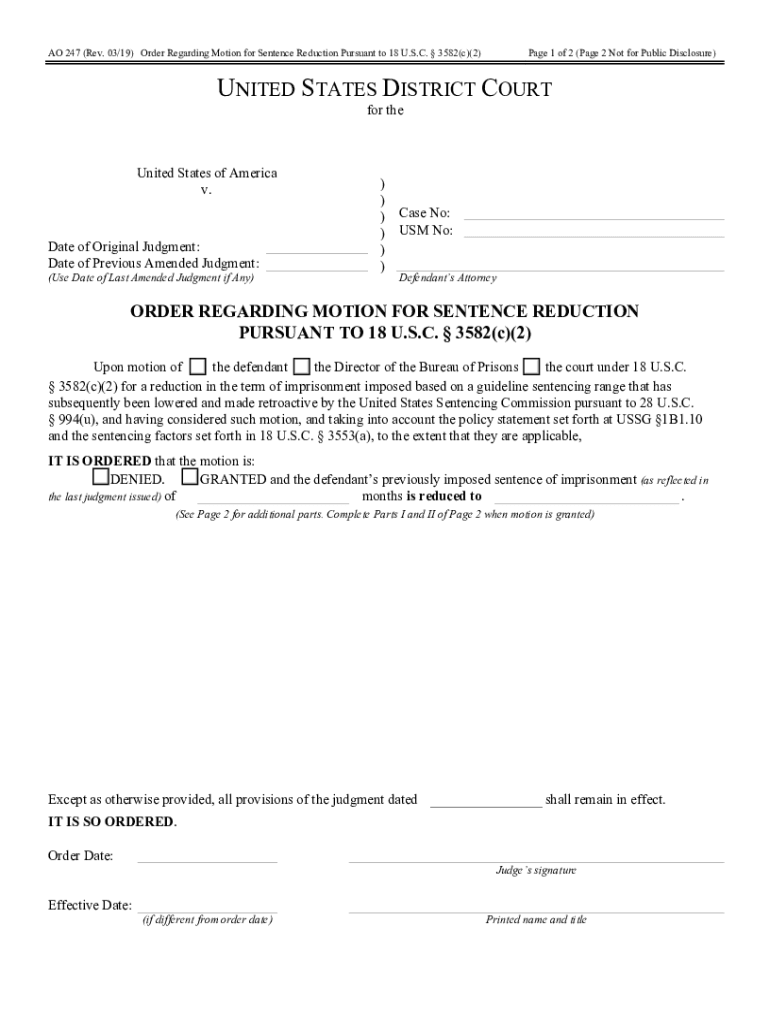
The "US District Court Sentencing Reduction Directive" pertains to guidelines issued by a U.S. District Court to reduce sentences based on specific amendments, such as Amendment 821. These directives allow eligible individuals, often those facing federal sentences, to request a reconsideration or reduction of their original sentence. The directive's legal foundation often ties back to recent legislative changes or judicial precedents seeking to rectify sentencing disparities or update outdated sentencing practices.
These directives can significantly impact the length of time individuals spend in prison, providing a mechanism for sentence reevaluation based on contemporary legal standards. The primary goal is to ensure fairness in sentencing, reflecting changes in policy or understanding of criminal behavior.
How to Use the US District Court Sentencing Reduction Directive
When using the directive, individuals typically follow a judicial process that involves several steps:
-
Eligibility Assessment: Determine if the amendments and criteria outlined by a specific district court apply to your case. This often requires legal counsel, who can interpret the intricacies of courtroom legislation.
-
Filing a Motion: Prepare a formal request, known as a motion, to the court that outlines the arguments for sentence reduction. This motion should succinctly highlight the Amendment 821's relevance to the case and any supporting documentation or precedents that may influence the court’s decision.
-
Supporting Documentation: Include evidence such as character references, rehabilitation efforts, and other mitigating factors to strengthen the case for sentence reduction.
-
Court Hearing: Attend a court hearing where both the petitioner and the prosecution present their arguments. The judge then evaluates the motion based on the presented evidence and current legal standards.
-
Awaiting Decision: Once the hearing concludes, the judge deliberates and issues a verdict on whether a sentence reduction is warranted.
Legal representation is crucial throughout this process, as an attorney can provide tailored guidance and ensure compliance with legal procedures.
Steps to Complete the US District Court Sentencing Reduction Directive
Completing a directive involves careful preparation and understanding of legal requirements. Essential steps include:
-
Review the Amendment: Carefully study the specific amendment, such as 821, to understand its implications and the cases it affects.
-
Collect Necessary Information: Gather case details, including the original sentencing documents, to clearly establish the foundation of the appeal.
-
Consult Legal Experts: Engage with a legal expert who specializes in sentence reductions to evaluate the case's chances of success and understand the legal nuances involved.
-
Draft the Motion: Write a detailed motion that outlines the reasons for requesting a sentence reduction. This document should be concise yet comprehensive, covering all applicable legal precedents and personal circumstances.
-
Submission: Submit the motion and all relevant documents to the district court. Adhere to all specified cut-off dates to ensure your request is considered.
-
Follow-Up: Track the case’s progress through necessary court appearances and provide any additional documentation if requested by the judiciary.
Key Elements of the US District Court Sentencing Reduction Directive
Critical elements include:
-
Eligibility Criteria: Amendments typically apply retroactively, benefiting those whose offenses precede the amendment’s implementation. Understanding these nuances is vital for accurate application.
-
Legal Precedents: Courts often rely on past decisions and legal interpretations, making it essential to provide examples similar to one’s case.
-
Documentation: Comprehensive documentation, including legal, medical, or psychological evaluations, may enhance the argument for a reduction.
-
Hearing Details: Knowledge of court proceedings and effective presentation of one’s case can significantly affect the outcome.
Legal Use of the US District Court Sentencing Reduction Directive
The legal use aims to promote justice and equity within the criminal justice system. Individuals affected by changes in sentencing guidelines can leverage these directives to seek reductions. For example, adjustments in drug sentencing laws have historically led to significant sentence reductions for affected individuals.
Such legal initiatives ensure sentences align with current societal norms and legal standards. They address past inconsistencies and rectify outdated sentencing approaches, thereby improving the overall justice system's efficacy.
Examples of Using the US District Court Sentencing Reduction Directive
Consider a case where an individual sentenced under old federal drug laws becomes eligible for reduction due to new amendments. Here’s how they might proceed:
-
Assessment: Legal counsel assesses the amendment's impact on the original sentence.
-
Motion Filing: A motion outlines how the amendment affects the sentence.
-
Advocacy: Presenting mitigating factors, such as rehabilitation accomplishments.
-
Court Rulings: Upon acceptance, the court may reduce the sentence based on amendment guidelines.
This practical example highlights the directive's potential to alter individuals' lives positively.
Important Terms Related to the US District Court Sentencing Reduction Directive
Understanding the following legal terms can assist in navigating the directive:
-
Amendments: Modifications or corrections to existing laws that may impact sentencing.
-
Motion: A formal request for a decision by the court.
-
Hearing: A session wherein arguments for and against the motion are presented.
-
Eligibility: The criteria determining if a case qualifies for consideration under the directive.
State-Specific Rules for the US District Court Sentencing Reduction Directive
Rules may vary by state, influencing how directives are applied. These differences occur due to varying interpretations of amendments within state and federal jurisdictions. Engaging with local legal experts is necessary to understand specific protocols and ensure compliance with localized judicial practices.
For example, the application of Amendment 821 may differ between states based on local precedents and court interpretations, necessitating tailored legal strategies for effective advocacy. Such variability underscores the importance of region-specific legal expertise in pursuing a sentence reduction effectively.




