
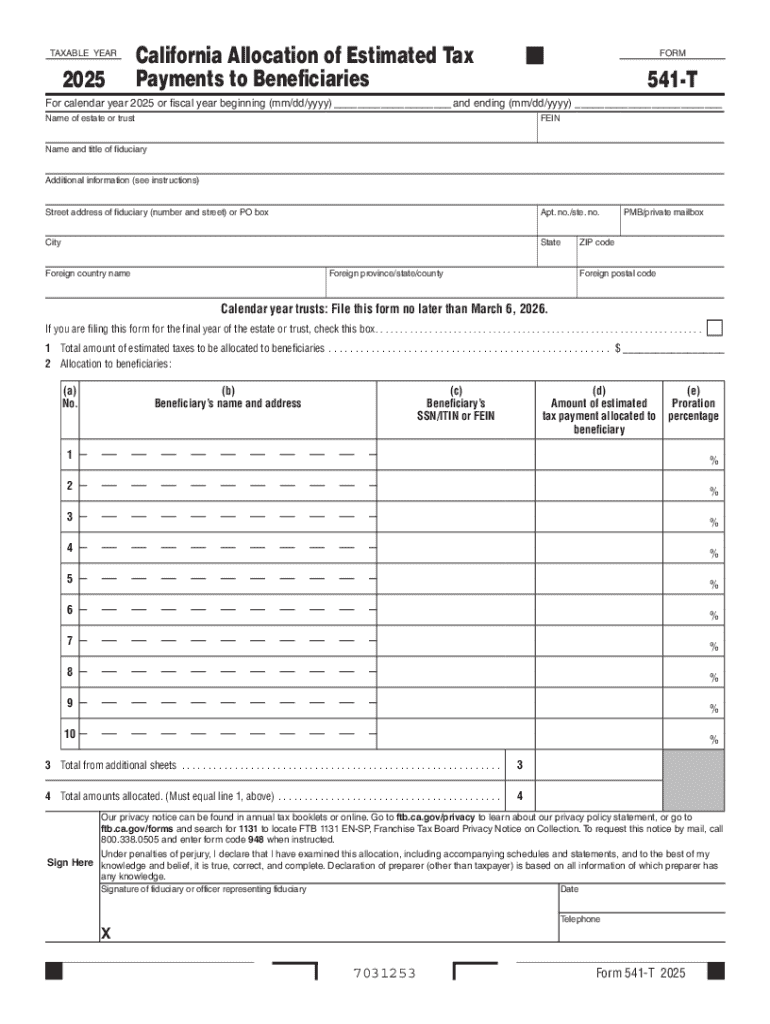







Definition and Purpose of California Form 541-T 2025
California Form 541-T 2025 is primarily used for the allocation of estimated tax payments made by the fiduciary of an estate or trust to its beneficiaries. This form is applicable for the taxable year 2025 and is a crucial tool for distributing tax credits among beneficiaries. The allocation helps each beneficiary claim their share of the estimated taxes on their individual tax returns, ensuring accurate tax liability calculations. The form serves as an accounting mechanism that aligns with California's tax regulations, offering a structured method to manage and report the distribution of such payments.
Why the Form is Necessary
- Ensures that estimated tax payments are credited appropriately among beneficiaries.
- Helps beneficiaries avoid potential tax underpayments.
- Provides a systematic approach to tax liability allocation within an estate or trust.
Use Cases
- Estate Distribution: When an estate makes estimated tax payments, the executor uses Form 541-T to distribute these payments to beneficiaries.
- Trust Accounting: Trustees use the form to allocate tax payments recorded against a trust, facilitating fair distribution among trust beneficiaries.
Steps to Complete California Form 541-T 2025
To properly complete California Form 541-T 2025, you must follow several carefully delineated steps. Ensuring accuracy in this process is vital to compliance with tax regulations.
Step-by-Step Instructions
-
Gather Information
- Obtain the trust or estate's name, ID number, and the accounting period applicable for the 2025 year.
- Compile the names, addresses, and social security numbers of all beneficiaries.
-
Calculate Allocations
- Determine the total estimated tax payments made.
- Allocate the appropriate share to each beneficiary based on the terms of the trust or estate.
-
Complete the Form
- Enter the calculated amounts in the corresponding sections.
- Ensure all requisite sections are filled accurately to avoid processing delays.
-
Submission
- Submit the completed form by attaching it to the California Form 541 (Trust and Estate Income Tax Return).
- Ensure it is filed by the beneficiary’s tax return deadline to facilitate accurate processing.
Detailed Considerations
- Proportional Allocation: Ensure that each beneficiary's share of the estimated tax payment corresponds proportionately to their interest in the estate or trust.
- Documentation: Maintain detailed records and supporting documents to substantiate allocations.
Who Typically Uses California Form 541-T 2025
This form is commonly utilized by fiduciaries—such as executors of estates and trustees of trusts—in California. It serves to ensure beneficiaries receive their entitled share of estimated tax payments. Specific parties who might need to use the form include:
- Estate Executors: Involved in the administration of estates and the allocation of payouts or tax deductions.
- Trustees: Responsible for managing trust assets, who use the form to appropriately distribute estimated tax allocations to beneficiaries.
Benefits to Users
- Financial Accuracy: Ensures that beneficiaries correctly account for their respective portions of estimated tax payments on personal tax returns.
- Regulatory Compliance: Aligns with California state tax reporting requirements, preventing penalties and ensuring compliance.
Important Terms Related to California Form 541-T 2025
Understanding critical terms associated with this form is essential for accurate completion and reporting.
Key Definitions
- Estimated Tax Payments: Prepayments made toward anticipated tax liability, typically to avoid underpayment penalties.
- Beneficiary: An individual or entity entitled to receive a portion of an estate or trust.
- Fiduciary: A person or organization that manages property or assets on behalf of others, bound by duty to act in their best interests.
Common Terms
- Trustee: An individual or institution responsible for managing a trust's assets.
- Estate: The total property, real and personal, owned by an individual prior to distribution through a trust or will.
Legal and Practical Importance of the Form
Form 541-T 2025 plays a significant role in adhering to legal requirements and facilitating practical tax management.
Legal Context
- Compliance: Essential for legal compliance with California tax law involving trusts and estates.
- Documentation: Provides an official record verifying the allocation of estimated tax payments.
Practical Considerations
- Tax Planning: Helps in strategic tax planning and management for beneficiaries and fiduciaries.
- Transparency: Enhances transparency and accountability in financial dealings within trusts and estates.
Filing Deadlines and Important Dates
Adhering to precise filing deadlines is critical to ensure compliance and avoid penalties.
Important Timelines
- Filing Date: Typically aligned with the due date of the trust or estate income tax return, commonly April 15, unless extended.
- Extensions: In some cases, an extension may be filed, ensuring additional preparation time.
Impact of Missing Deadlines
- Penalties: Late submissions may incur penalties or interest charges.
- Beneficiary Impact: Delays or failures in filing can affect the beneficiaries' tax reporting and liabilities.
Digital vs. Paper Submission Options
California Form 541-T 2025 can be filed in either digital or paper format, each with distinct advantages.
Digital Submission
- Efficiency: Offers a streamlined process with electronic tracking and confirmation of receipt.
- Integration: Can seamlessly integrate with platforms like DocHub, facilitating electronic signatures and document management.
Paper Submission
- Traditional Method: Provides a tangible record and is suitable for individuals who prefer manual documentation processes.
- Mail Processing: Requires adequate time for postal delivery and physical processing.
Choosing the Right Method
- Volume of Submissions: Businesses handling large volumes may benefit more from digital filing for speed.
- Personal Preference: Preference for traditional paper methods can also dictate submission choice.
Considerations
- Compatibility: Ensure chosen method aligns with California Franchise Tax Board requirements.
- Record Retention: Maintain copies of submissions for personal and institutional records.




