
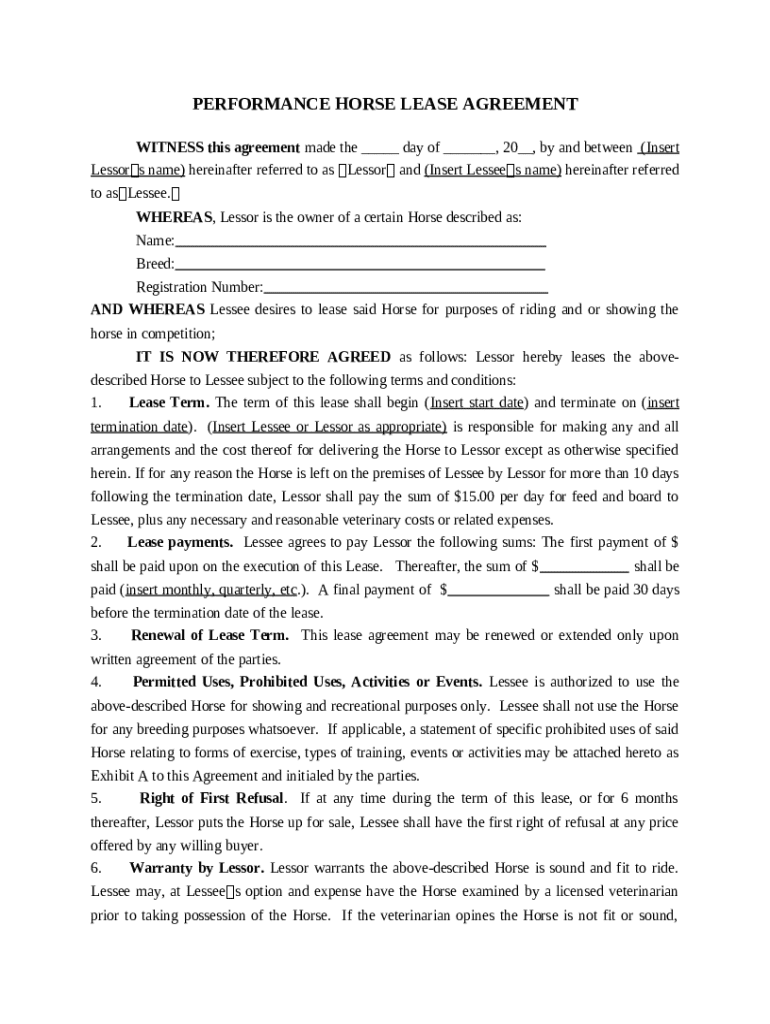







Definition and Meaning of Horse Lease Agreement
A Horse Lease Agreement is a legal contract between the owner (lessor) of a horse and a person who wishes to use or manage that horse (lessee) for a specified period. This lease is often utilized when someone wants to ride, show, or care for a horse without committing to full ownership. The agreement outlines the rights and responsibilities of each party, detailing how the horse can be used, maintained, and returned.
This type of agreement ensures that both parties understand their obligations, such as the care standards for the horse, restrictions on its use, and financial responsibilities. A well-drafted agreement helps prevent disputes by clearly outlining expectations and responsibilities. Common usages include leasing a brood mare, a gelding for leisure riding, or even a high-performance competition horse.
Key Elements of the Horse Lease Agreement
A comprehensive Horse Lease Agreement includes several essential elements to ensure clarity and legal enforceability:
- Parties Involved: Identification details of the lessor and lessee.
- Horse Identification: Detailed description of the horse—including its name, breed, color, age, and unique markings.
- Duration of Lease: The start and end dates of the lease term.
- Lease Fee and Payment Terms: The cost of the lease and the schedule of payments, including any deposits or additional fees.
- Care and Maintenance: Detailed instructions on the horse's care, including feeding, stabling, exercise, and veterinary needs.
- Use Restrictions: Specification of intended use, such as riding, showing, or breeding.
- Insurance and Liability: Requirements for insurance policies to cover the horse during the lease period.
- Termination Conditions: Conditions under which the lease can be terminated early.
These elements provide a foundation for a comprehensive agreement that protects the interests of both lessee and lessor.
Steps to Complete the Horse Lease Agreement
Completing a Horse Lease Agreement requires attention to detail and collaboration between the involved parties:
- Gather Information: Collect all necessary details about the horse, lessor, and lessee.
- Draft the Agreement: Outline the key terms, responsibilities, and care standards.
- Review Legalities: Ensure the agreement complies with local laws and regulations. Consulting a legal professional can be beneficial.
- Discuss Terms: Meet with all parties to review and discuss the terms. Adjust as needed.
- Finalize and Sign: Once all parties agree to the terms, sign the document in duplicate, and keep copies for records.
- Conduct Periodic Reviews: Periodically review the lease agreement to ensure compliance and address any arising issues.
This step-by-step approach ensures clarity and agreement from all parties, reducing potential conflicts.
Legal Use and Implications
The Horse Lease Agreement serves a legal function by formally documenting the relationship between the lessor and lessee. It establishes a legally binding contract that protects both parties' interests, offers recourse in instances of disagreement, and complies with U.S. contract law.
In cases of disputes, the Horse Lease Agreement can be presented in court as evidence of predefined terms and conditions. It can also specify the jurisdictional authority for any legal proceedings. Misunderstandings regarding the horse's care or use can be legally addressed if guided by a well-constructed agreement.
State-Specific Rules for Horse Lease Agreements
Certain states may have specific legal requirements or interpretations that affect horse leasing contracts. For example, equine activity statutes in some states may offer additional protection to horse owners or lessees, impacting liability considerations. It is crucial to be aware of:
- Equine Activity Liability Acts (EALA): These statutes often limit liability for injuries related to inherent risks of equine activities.
- Agricultural Codes: Some state codes consider equine leases under agricultural laws, which may influence insurance and care requirements.
- Contractual Formalities: Varying state laws may require notarization or specific contractual language.
Being informed of these rules ensures the agreement is valid and enforceable within that jurisdiction.
Examples of Using a Horse Lease Agreement
Several real-world scenarios illustrate the utility of a Horse Lease Agreement:
- Leisure Riding: An individual who wants to experience horse riding without owning a horse can lease it for a few months.
- Competitive Showing: A rider aiming to participate in shows with a trained horse can lease one for the competition season, avoiding the upfront cost of purchase.
- Breeding Purposes: Horse breeders might lease their stock to ensure top breeding quality or bloodlines in another stable.
In each scenario, the agreement covers all specifics of use, expectations, and terms tailored to the particular purpose of the lease.
Who Typically Uses the Horse Lease Agreement
The Horse Lease Agreement is beneficial for a diverse range of individuals and entities within the equine industry:
- Riders: Those who wish to ride without buying a horse, especially beginners or seasonal riders.
- Competitive Equestrians: Participants in equestrian sports who require specific horse characteristics for events.
- Horse Breeders: Utilizing or offering horses for specific breeding seasons.
- Equestrian Schools and Clubs: Facilitating horses for riding lessons or programs without the need for long-term ownership.
These users rely on lease agreements to ensure a formalized and secure transaction aligning with their specific needs and goals.


Important Terms Related to Horse Lease Agreements
Understanding key terminology within the Horse Lease Agreement can clarify communications and enhance the accuracy of the document:
- Lessor and Lessee: The owner of the horse vs. the individual leasing it.
- Lease Term: Duration for which the horse is leased.
- Liability Waiver: Legal clause that limits the lessor's liability for injuries.
- Care Standards: Minimum requirements for how the horse is to be maintained.
- Indemnification: Clause requiring the lessee to protect the lessor against legal claims.
Being familiar with these terms is crucial for anyone drafting or entering into a Horse Lease Agreement.




