






Definition and Purpose of the Namibia Customs Declaration Form
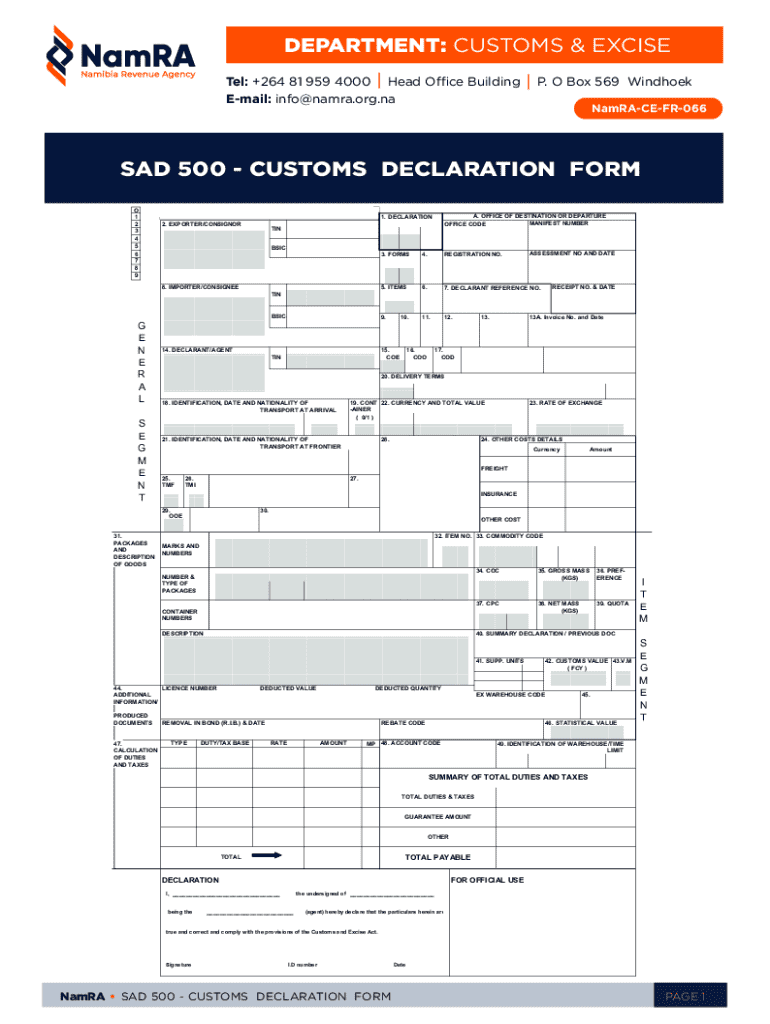
The Namibia Customs Declaration Form, often referred to as the SAD 500 form, is used to declare goods when they are imported into or exported out of Namibia. This form ensures compliance with customs regulations and facilitates both the collection of import/export duties and the monitoring of cross-border trade. Notably, it serves as a tool for reporting details about the nature, value, origin, and destination of the goods in question. This form is crucial for aligning with Namibia's trade laws and minimizing the risk of importing illegal goods. For businesses and individuals alike, understanding this form's purpose is essential to streamline customs procedures and avoid delays or fines.
Steps to Complete the Namibia Customs Declaration Form
Completing the Namibia Customs Declaration Form involves several key steps to ensure accuracy:
-
Identification of Goods: Begin by providing a detailed description of each item, including its weight, dimensions, and material composition. This is essential for calculating duties accurately.
-
Declaration of Value: State the value of each item accurately in the appropriate currency to prevent discrepancies during customs clearance.
-
Classification and Origin: Use the harmonized tariff classification and specify the country of origin for each product, since these factors affect the duty calculation.
-
Consignment Details: Include information on the consignor and consignee, as well as the transportation method (air, sea, or land).
-
Signature and Date: After verifying all information, sign and date the form to certify its correctness.
How to Obtain the Namibia Customs Declaration Form
Obtaining the Namibia Customs Declaration Form is a straightforward process:
-
Online Access: Visit the Namibia Revenue Authority's official website to download the form in PDF format. This makes it easy to fill out and submit electronically.
-
Physical Collection: Alternatively, you can collect a paper version from the Customs & Excise offices situated at major border points or in metropolitan areas like Windhoek.
Be sure to have the necessary import/export information ready to complete the form accurately.
Who Typically Uses the Namibia Customs Declaration Form
The Namibia Customs Declaration Form is used by a diverse range of individuals and organizations:
-
Importers and Exporters: Companies involved in international trade use this form to facilitate the movement of goods across borders.
-
Logistics and Shipping Companies: These entities often handle multiple consignments and need this form to ensure compliance on behalf of their clients.
-
Individual Travelers: Persons bringing in goods above a specific value may also need to complete this form to declare their items at customs.
Understanding the form's significance helps users navigate customs procedures more effectively, ensuring smooth operation and legal compliance.

Key Elements of the Namibia Customs Declaration Form
Certain elements are essential for the completion of the Namibia Customs Declaration Form:
-
Customs Value: Details the monetary worth of the goods, affecting the duties and taxes applicable.
-
Country of Origin: Identifies where the goods were produced, which influences trade laws and duty rates.
-
Harmonized System Code: A standardized numerical method of classifying traded products to ensure tariff consistency.
Each of these elements plays a crucial role in the correct assessment of duties and the prevention of non-compliance penalties.
Legal Use and Compliance Requirements
The Namibia Customs Declaration Form has specific legal implications:
-
Adhering to Trade Regulations: Completing this form is a mandatory compliance step under the Customs and Excise Act to avoid legal repercussions.
-
Accuracy and Honesty: Provides the legal framework for ensuring honest declarations, preventing fraudulent activities or misrepresentations that could lead to fines or increased scrutiny from customs authorities.
Individuals and companies alike must pay careful attention to legalities to mitigate compliance issues or unexpected liabilities.
Form Submission Methods
Submitting the Namibia Customs Declaration Form can be accomplished through various methods:
-
Electronic Submission: Complete and submit the form online via the Namibia Revenue Authority's digital platforms. This method ensures faster processing and reduces paperwork.
-
In-Person Submission: Visit a designated Customs office for manual submission, often necessary for cases requiring direct interaction or additional verification.
Choosing the submission method that suits your situation can significantly influence the ease and speed of the customs process, providing flexibility and adaptability in varying business scenarios.
Penalties for Non-Compliance
Failing to comply with the requirements of the Namibia Customs Declaration Form can result in serious consequences:
-
Fines and Penalties: Inaccuracies in form submission can lead to financial penalties, which could be substantial depending on the discrepancy magnitude.
-
Product Seizure: Incorrect or fraudulent declarations may result in the seizure of goods until compliance is restored.
Understanding and preventing these penalties ensures smoother operations and avoids costly delays in business logistics, safeguarding both financial interests and reputational integrity.