






Definition and Meaning
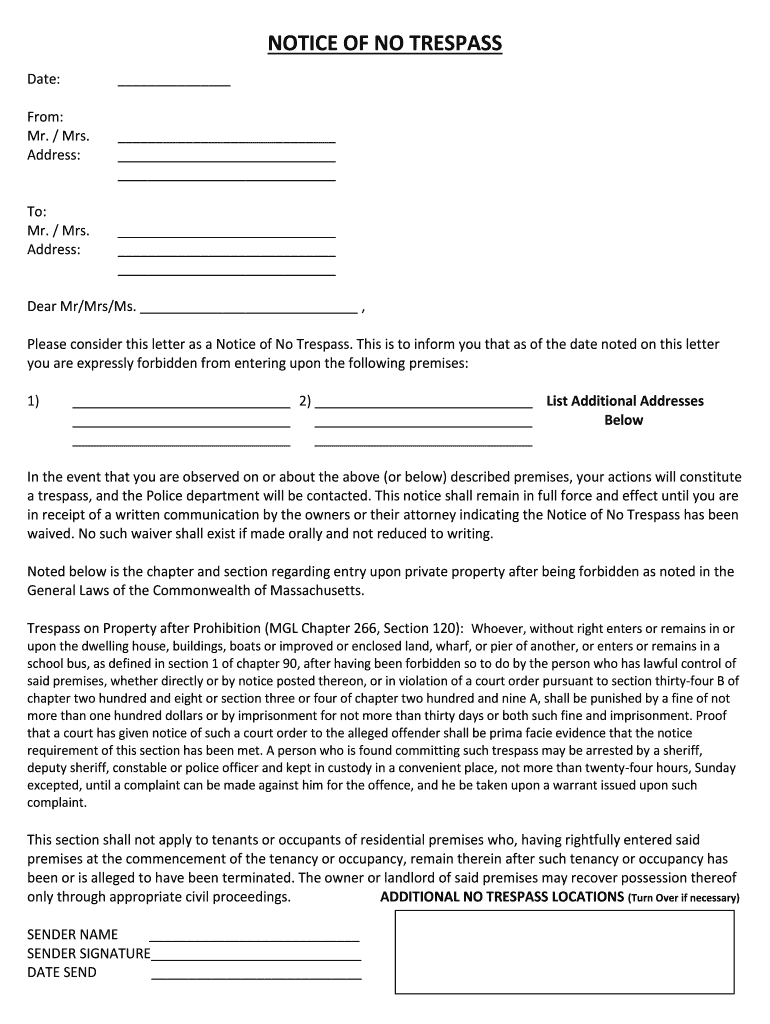
The "Notice of No Trespass" is a formal document used to prohibit individuals or entities from entering a specified property without permission. This notice serves as a directive that restricts access and seeks to prevent unauthorized entry. Understanding the specific language used in this notice is crucial as it clearly communicates the legal boundaries set by the property owner. It typically includes the names of both the issuer and the recipient, the property address, and other pertinent details. By issuing this notice, property owners assert their rights to control access to their property, providing legal grounds for enforcement if trespassing occurs.
Key Elements of the Notice of No Trespass
A comprehensive "Notice of No Trespass" should contain several essential components:
- Identification of Parties: Clearly state the full names and addresses of both the issuer (property owner) and the recipient.
- Property Description: Provide a precise description of the property to which the notice applies.
- Date of Issuance: Include the date when the notice is created and issued.
- Explicit Terms of No Trespass: Clearly define the prohibition on entering the property without permission.
- Consequences of Non-Compliance: Outline potential legal actions or penalties if the recipient fails to honor the notice.
- Signature and Contact Information: The issuer’s signature and contact details for further correspondence.
These elements ensure the notice is legally valid and clearly understood by all parties involved.
Legal Use of the Notice of No Trespass
In the United States, the "Notice of No Trespass" is recognized as a legal tool that property owners use to enforce their right to exclude others from their property. This document can be used in both residential and commercial contexts and should comply with state-specific laws. The notice serves as evidence of the owner's intent to restrict access, which is essential if legal proceedings become necessary. It’s important for property owners to understand their rights and obligations, as well as any state-specific regulations that may influence the enforceability of the notice.
Steps to Complete the Notice of No Trespass
Completing a "Notice of No Trespass" involves several straightforward steps:
- Gather Required Information: Collect full details of both the property and the individual(s) being restricted.
- Draft the Document: Use clear, formal language to outline the terms of no trespass and include all key elements.
- Review and Revise: Ensure accuracy and completeness by revising the draft for any errors or omissions.
- Sign and Date the Notice: Validate the document with the property owner’s signature and the date of issuance.
- Deliver the Notice: Use certified mail or personal service to deliver the notice to ensure receipt can be confirmed.
These steps ensure that the notice is thorough and enforceable.
State-Specific Rules for the Notice of No Trespass
State legislation can influence the procedural requirements and enforcement of a "Notice of No Trespass." For example:
- California: Requires posting visible signage on the property in addition to issuing the notice.
- New York: Emphasizes personal service to ensure the notice is directly acknowledged by the recipient.
Property owners must be aware of local regulations that may affect the issuance of these notices. Consulting legal experts or state-specific resources can provide guidance on drafting legally compliant notices.
Why Use a Notice of No Trespass
There are several compelling reasons to issue a "Notice of No Trespass":
- Protecting Property: Proactively prevent unauthorized access to private or commercial spaces.
- Legal Recourse: Establishes a clear record in case of subsequent violations, aiding in potential legal action.
- Deterrence: Serves as a formal warning that may deter individuals from entering restricted areas.
By establishing clear boundaries, property owners can effectively manage and safeguard their premises.
Examples of Using the Notice of No Trespass
Examples illustrate how a "Notice of No Trespass" is applicable in various scenarios:
- Residential Properties: Property owners can issue notices to previous tenants who refuse to vacate the premises.
- Commercial Spaces: Businesses might use the notice to restrict former employees from entering the workspace.
- Unused Land: Owners of vacant lands can deter squatters or loiterers with a formal notice.
These examples demonstrate the versatility and importance of having formal documentation to assert control over property access.
Versions or Alternatives to the Notice of No Trespass
While the "Notice of No Trespass" is the standard form, there may be variations or alternatives depending on specific needs:
- Emergency No Trespass Orders: For immediate restrictions, shorter-term orders may be issued.
- Verbal Warnings: An informal, but less legally binding initial step before issuing formal notice.
- Restraining Orders: Applicable in cases involving personal safety concerns, extending beyond property boundaries.
Understanding the context and necessity of each option allows property owners to choose the most appropriate course of action.
Important Terms Related to the Notice of No Trespass
There are several terminologies associated with the "Notice of No Trespass" that are important for understanding its implications:
- Trespass: The unlawful entry onto another’s property without permission.
- Grantor/Issuer: The individual or entity issuing the notice.
- Grantee/Recipient: The party receiving the notice, prohibited from accessing the property.
These terms help clarify the roles and legal standing of those involved in issuing and receiving this formal notice.