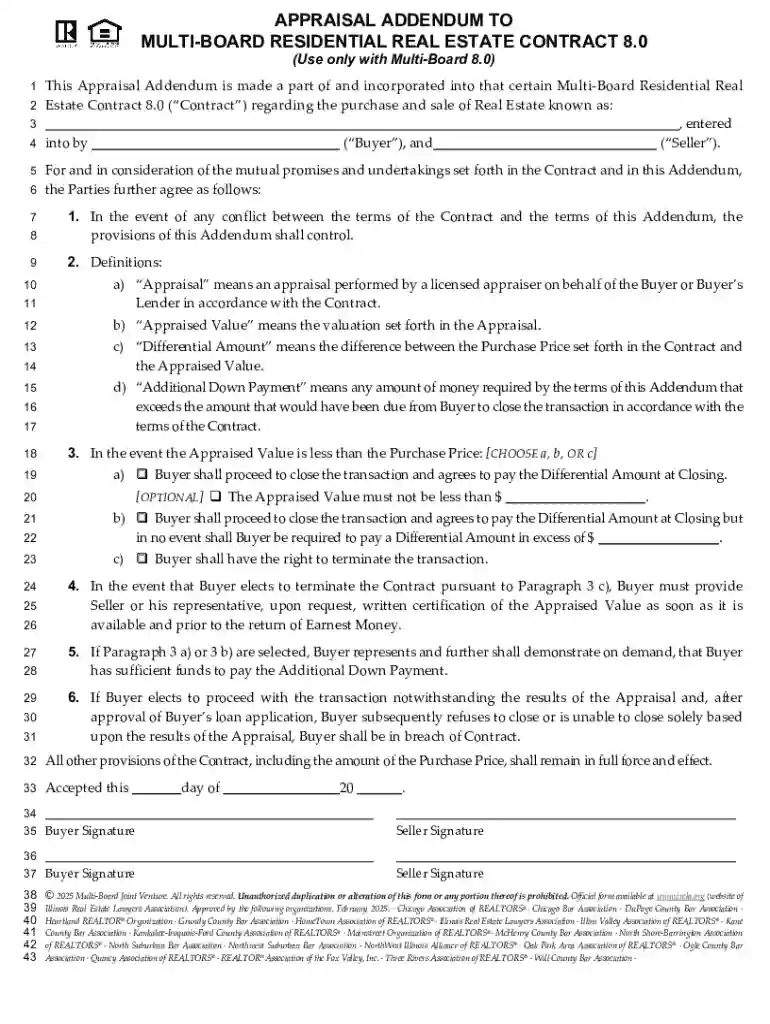
Appraisal Addendum to Multi-Board Residential Real Estate Contract 8 0 2026

Get Form
Appraisal Addendum to Multi-Board Residential Real Estate Contract 8 0 Preview on Page 1

Here's how it works

01. Edit your form online
Type text, add images, blackout confidential details, add comments, highlights and more.

02. Sign it in a few clicks
Draw your signature, type it, upload its image, or use your mobile device as a signature pad.

03. Share your form with others
Send it via email, link, or fax. You can also download it, export it or print it out.

Definition & Meaning of the Appraisal Addendum to Multi-Board Residential Real Estate Contract 8.0

The Appraisal Addendum to Multi-Board Residential Real Estate Contract 8.0 is a supplemental document designed to be included within the primary Multi-Board Residential Real Estate Contract, specifically the version 8.0. An appraisal addendum is typically used to address potential variances between the appraised value of a property and the agreed purchase price. This contract element is crucial for ensuring that buyers and sellers have a mutual understanding of how to proceed if the property's appraisal value differs significantly from the contract price.

How to Use the Appraisal Addendum

Using the appraisal addendum involves several steps to ensure it is properly integrated and fulfills its intended purpose:

  1. Incorporation into Contract: The addendum must be referenced and attached to the main contract, forming a legally binding part of the agreement.
  2. Filling Out Details: Buyers and sellers must accurately complete all required fields, addressing key points such as agreed actions if appraisal values fall short.
  3. Agreement on Terms: All parties must agree on the specific terms laid out, including any contingency plans tied to appraisal results.
  4. Signatures: Legitimate signatures from both buyer and seller are required to finalize the addendum, solidifying its authority alongside the main contract.

Steps to Complete the Addendum

Completing the addendum involves a structured approach to ensure all necessary elements are addressed:

  1. Review the Primary Contract: Understand the main contract terms to ensure alignment with appraisal conditions.
  2. Gather Necessary Information: Collect all pertinent information including property details and prospective appraised values.
  3. Fill Out the Addendum: Complete sections detailing potential discrepancies between sale price and appraisal value.
  4. Consult With Stakeholders: Discuss terms with agents, legal advisors, and other stakeholders to establish clarity and mutual consent.
  5. Finalize and Sign: Both parties review final terms before signing the addendum, making it an official part of the contract.

Key Elements of the Appraisal Addendum

The appraisal addendum is comprised of various critical components that ensure its functionality within a real estate transaction:

  • Contingency Clauses: Describes course of action if the appraisal value is lower than the agreed price.
  • Adjustments: Specifies potential adjustments in the sale price based on appraisal figures.
  • Resolution Policy: Outlines steps to resolve disputes arising from differing appraisal outcomes.
  • Termination Options: Provides conditions under which the contract may be terminated if appraisal impacts cannot be reconciled.

Who Typically Uses the Appraisal Addendum

This addendum is predominantly used by:

  • Real Estate Buyers: Seeking protection against overpayment based on inflated property valuations.
  • Sellers: Looking to predefine response strategies if appraisals affect the sale's viability.
  • Agents and Brokers: Acting on behalf of clients to facilitate transparent and fair negotiations.
decoration image ratings of Dochub

State-Specific Rules for the Addendum

Regulations affecting the use of appraisal addendums can vary significantly between states. Some states might have their own mandated templates or additional stipulations concerning appraisal-related contingencies. It's essential to consult state laws and possibly legal counsel to ensure compliance and relevance of the addendum within the jurisdiction of the transaction.

Legal Use and Compliance

Ensuring the legal validity of the appraisal addendum involves adhering to applicable real estate laws and contract regulations:

  • Federal and State Laws: Compliance with both federal guidelines, like those under the ESIGN Act, and state-specific mandates is crucial.
  • Accuracy and Honesty: Transparently filled out details grounded in factual assessments foster legal defensibility.
  • Consistent Documentation: Proper documentation and retention of signed originals safeguard the validity of the addendum's terms.

Examples of Using the Appraisal Addendum

Examples highlight practical applications of appraisal addenda in various scenarios:

  • Protecting Buyer Interests: A buyer utilizes the addendum to nullify a purchase contract when an appraisal significantly undervalues the home, preventing financial loss.
  • Agreeing Upon Adjusted Prices: Parties agree in advance on a sliding sale price scale contingent upon fluctuating appraised values; keeping transactions smooth and expectations managed.

Such scenarios illustrate the addendum's role in managing expectations and protecting concerned parties' interests within real estate dealings.

be ready to get more

Complete this form in 5 minutes or less

Get form

Security and compliance

At DocHub, your data security is our priority. We follow HIPAA, SOC2, GDPR, and other standards, so you can work on your documents with confidence.

Learn more
ccpa2
pci-dss
gdpr-compliance
hipaa
soc-compliance
be ready to get more

Complete this form in 5 minutes or less

Get form