






Definition & Meaning of the Temporary Delegation of Parental Powers
The Temporary Delegation of Parental Powers is a legal document that allows parents to grant another adult the authority to make decisions on behalf of their child for a specified period. This delegation can cover various responsibilities, including medical decisions, education management, and general caregiving tasks. Generally used in situations where a parent might be unavailable temporarily, such as due to travel or hospitalization, this delegation ensures continuity in the child’s care without transferring permanent legal guardianship.
Key Elements of the Form
- Name of the Parent/Guardian: The document begins by identifying the parent or legal guardian who is delegating their powers.
- Recipient of Delegation: Details about the adult receiving the temporary powers, including their relationship to the child, must be specified.
- Duration of Delegation: Clearly delineates the start and end date of the delegation period to prevent misunderstandings.
- Scope of Powers: Lists the specific responsibilities and rights being transferred, which may encompass medical, educational, and general welfare decisions.
- Notarization: Many states require the form to be notarized to validate the delegation, adding an extra layer of legal compliance.
How to Use the Temporary Delegation of Parental Powers
To effectively utilize this form, parents need to follow certain steps which include understanding the full extent of the powers they are delegating. It's crucial to ensure that both the delegating parent and the appointed adult have a shared understanding of the scope of the authority and the responsibilities it includes.
Practical Steps
- Discuss with the Designated Adult: Before formalizing the delegation, have a detailed discussion with the person who will be receiving the authority.
- Specify Detailed Instructions: Include detailed instructions regarding the specific areas where the adult is empowered to act.
- Review State Requirements: As each state has its own regulations, ensure that the form complies with the local legal requirements.
- Consult Legal Advice: Prior legal consultation can clarify the implications and any state-specific legal nuances.
Steps to Complete the Temporary Delegation of Parental Powers
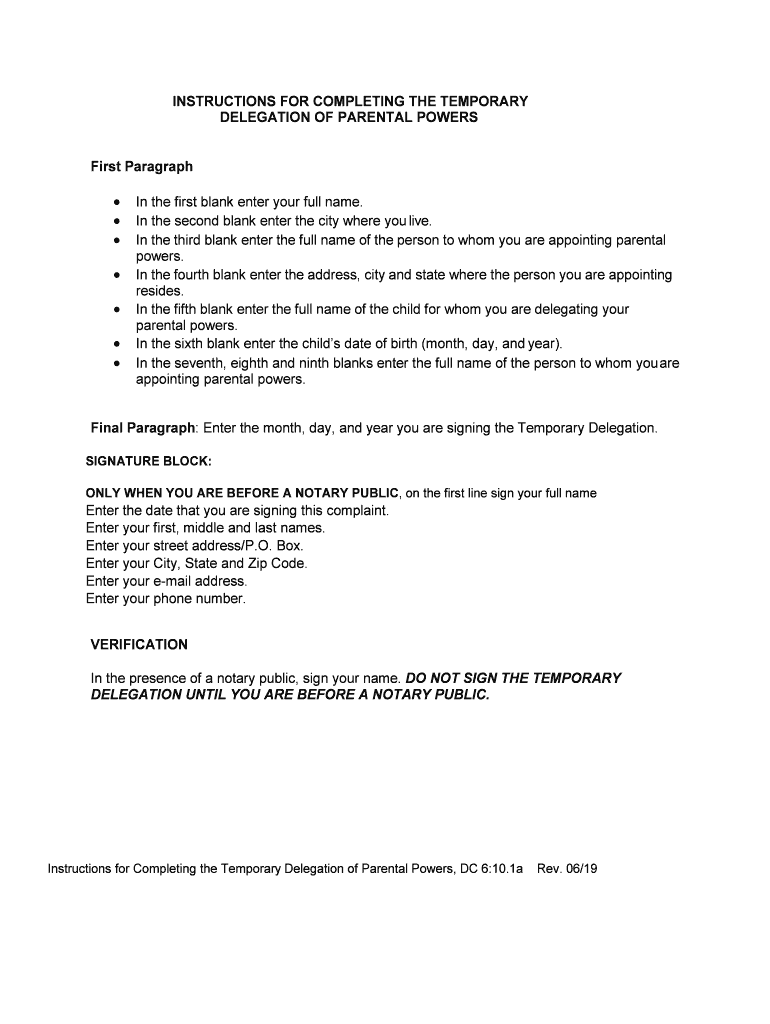
Completing the form involves several steps designed to ensure accuracy and legal compliance. It’s a straightforward process when approached methodically.
- Gather Information: Collect necessary information on both the child and the person receiving the powers.
- Fill Out the Form: Complete the document by providing details such as the names, addresses, and specific powers being delegated.
- Review for Accuracy: Double-check all entries for completeness and correctness to avoid legal disputes or misunderstandings.
- Notarization: Depending on state requirements, a notary public might need to witness the signing and date it accordingly.
- Distribute Copies: Provide copies to all concerned parties, including schools, medical professionals, and the designated adult for their records.
Why Use a Temporary Delegation of Parental Powers
The primary motivation is to ensure that children have consistent care and decision-making guidance when parents are temporarily unable to fulfill these roles.
Benefits
- Continuity in Care: Children's educational and medical needs are seamlessly managed without the disruption caused by a parent's absence.
- Legal Assurance: The form offers legal protection by clarifying responsibilities and preventing unauthorized decisions.
- Peace of Mind: Parents gain peace of mind knowing that their child’s needs will be competently handled in their absence.
Legal Use and Importance
The Temporary Delegation of Parental Powers holds significant legal weight, permitting the assigned adult to act in loco parentis — in place of a parent.
Legal Context
- Guardian's Powers: It determines the extent of decision-making capabilities given to the temporary guardian.
- Binding Document: Often recognized by courts as a legitimate handover of specific parental powers.
- State-Specific Regulations: While generally accepted across the United States, nuances exist—ensure compatibility with local laws.
State-Specific Rules for the Temporary Delegation of Parental Powers
Each state may have unique stipulations regarding the delegation process. Understanding these differences is crucial to ensuring legality and functionality.
Considerations
- State Guidelines: Verify local statutes or consult with legal professionals to understand state-specific requirements.
- Variable Validity: The duration for which the delegation remains valid can vary by state law.
Practical Examples of Using the Temporary Delegation of Parental Powers
Several real-world scenarios underscore the utility of this delegation form.
Scenarios
- Long-Term Business Travel: Parents traveling for work can delegate powers to a trusted family member.
- Military Deployment: Military personnel might use the form to ensure their child’s needs are met while deployed.
- Medical Treatments: Parents undergoing prolonged medical procedures can transfer decision-making powers temporarily.
Important Terms Related to the Temporary Delegation of Parental Powers
Understanding the language used in the form is essential to ensure clarity and prevent misinterpretations.
Key Terms
- Delegation: Transfer of authority from one party to another.
- In Loco Parentis: A legal responsibility placed on a person or organization to perform some of the functions or provide some of the care of a parent.
- Notarization: The official fraud-deterrent process that assures the parties of a transaction that a document is authentic.
These blocks offer a comprehensive resource for the Temporary Delegation of Parental Powers form, providing necessary instructions, legal understanding, and practical applications.