







Definition & Meaning
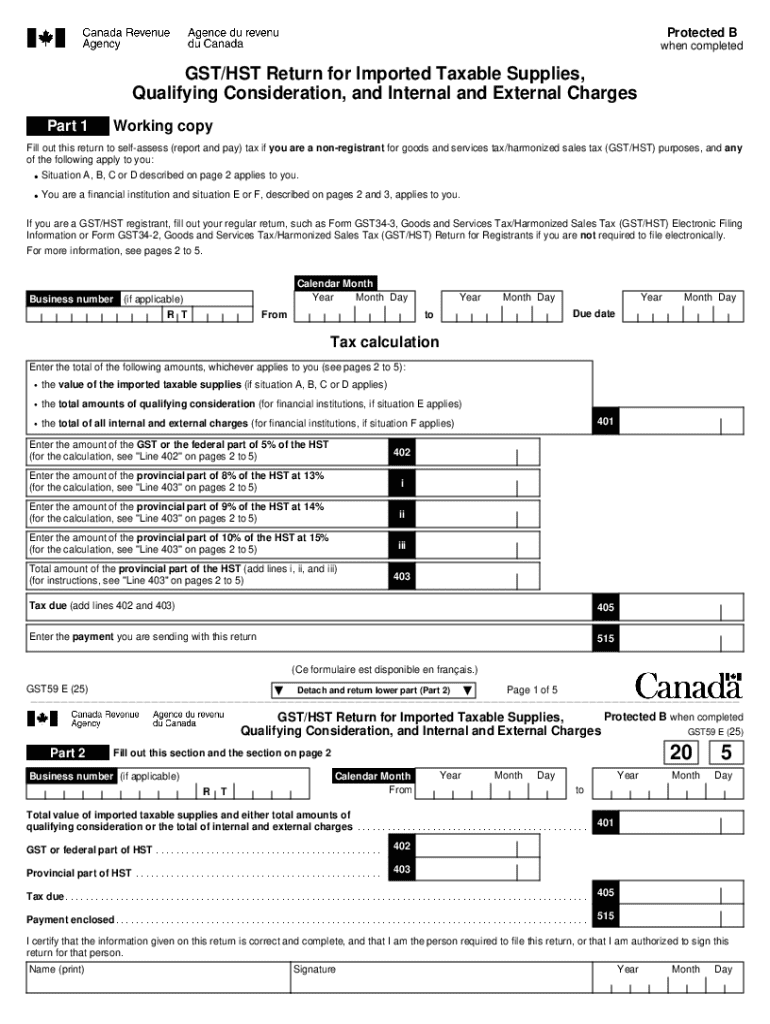
The GST HST Return for Imported Taxable Supplies is a specific form required for businesses and individuals who import goods or services that are subject to the Goods and Services Tax (GST) and Harmonized Sales Tax (HST). It is a method to self-assess and report the taxes due on these imports to the Canadian Revenue Agency. The form ensures compliance with tax regulations by accurately reporting taxable supplies, including qualifying consideration and various internal and external charges related to imports.
Importance of Accurate Reporting
- Accurate reporting on this form is crucial to avoid underpayment or overpayment of taxes.
- Ensures businesses meet their legal obligations for imported goods and services.
Case Study: Business with International Suppliers
Consider a small manufacturing company in the U.S. that imports raw materials from Canada. They must fill out this form to report and pay the appropriate GST/HST on these goods to remain compliant with Canadian tax laws.
Steps to Complete the GST HST Return for Imported Taxable Supplies
Completing the GST HST Return for Imported Taxable Supplies involves several key steps to ensure proper filing and compliance.
Step-by-Step Instructions
- Gather Necessary Information: Start by collecting all invoices and documentation related to imported taxable supplies.
- Calculate Taxes Due: Determine the GST/HST rate applicable to your supplies and calculate the amount.
- Fill Out the Form: Enter details such as the GST/HST amount, qualifying consideration, and other internal or external charges.
- Submit the Form: File the form through the appropriate method according to your jurisdiction.
Examples of Required Information
- Importer's business number
- Description of imported goods or services
- Total value of the imported supplies
Required Documents
Several documents are essential when preparing to file the GST HST Return for Imported Taxable Supplies.
List of Essential Documents
- Invoice Copies: Ensure you have copies of all purchase invoices.
- Customs Declarations: Include customs documentation that specifies the value and details of the imports.
- Previous Tax Returns: Consider reviewing previous GST/HST returns for consistency and accuracy.
Importance of Documentation
- Documents support claims and ensure accuracy.
- Prevents discrepancies during audits by tax authorities.
Who Typically Uses the GST HST Return for Imported Taxable Supplies
This form is mainly used by business entities involved in importing and reselling goods or services that are subject to GST/HST.


Business Entity Types
- Corporations: Entities that import large volumes of goods for resale or production.
- Small Businesses: Small-scale importers dealing with international suppliers.
Special Considerations
- Businesses not frequently dealing with Canadian imports may require additional guidance to complete the form accurately.
Legal Use of the GST HST Return for Imported Taxable Supplies
The legal use of this form is governed by Canadian tax laws, which require accurate reporting of GST/HST owed on imported goods and services.
Legal Implications
- Compliance: Ensures that all taxes are reported and remitted legally.
- Avoid Penalties: Proper use of the form helps avoid fines or penalties for inaccurate reporting.
Edge Cases
- Businesses making a one-time purchase from Canada may face different legal implications compared to regular importers.
IRS Guidelines
While the GST/HST Return for Imported Taxable Supplies primarily involves Canadian tax obligations, understanding how U.S.-based IRS guidelines interact with this process is essential for compliance.
Key Differences and Similarities
- Purpose: IRS forms focus on U.S. tax obligations, whereas the GST/HST return is for Canadian tax compliance.
- Documentation Requirements: Both systems require detailed documentation substantiating taxable activities.
Filing Deadlines / Important Dates
Meeting filing deadlines is critical to avoiding penalties associated with the GST HST Return for Imported Taxable Supplies.
Key Dates to Remember
- Quarterly Reporting: Generally, businesses must file every quarter if they frequently import goods.
- Annual Filing Option: Some businesses may qualify for an annual filing depending on their import activity and business size.
Consequences of Late Filing
- Penalties increase the longer the delay in filing and can include interest on the overdue amount.
Form Submission Methods (Online / Mail / In-Person)
Submitting the GST HST Return can be done through different channels based on preferences and capabilities.
Modern Submission Options
- Online Submission: Allows for rapid processing and confirmation.
- Mail Submission: Traditional method, beneficial for those preferring hard copies.
- In-Person Submission: Provides an opportunity for direct inquiry and clarification.
Benefits of Digital Submission
- Faster processing times.
- Immediate confirmation upon submission.
- Reduction in paper usage and associated costs.




