



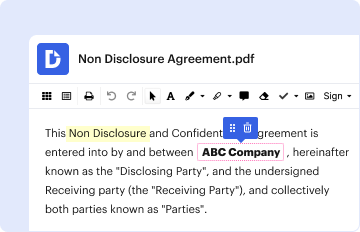
01. Edit your form online
Type text, add images, blackout confidential details, add comments, highlights and more.

Type text, add images, blackout confidential details, add comments, highlights and more.
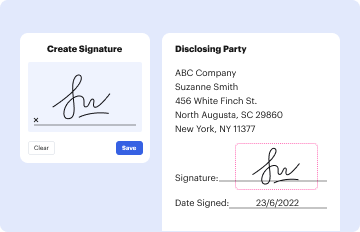
Draw your signature, type it, upload its image, or use your mobile device as a signature pad.

Send it via email, link, or fax. You can also download it, export it or print it out.
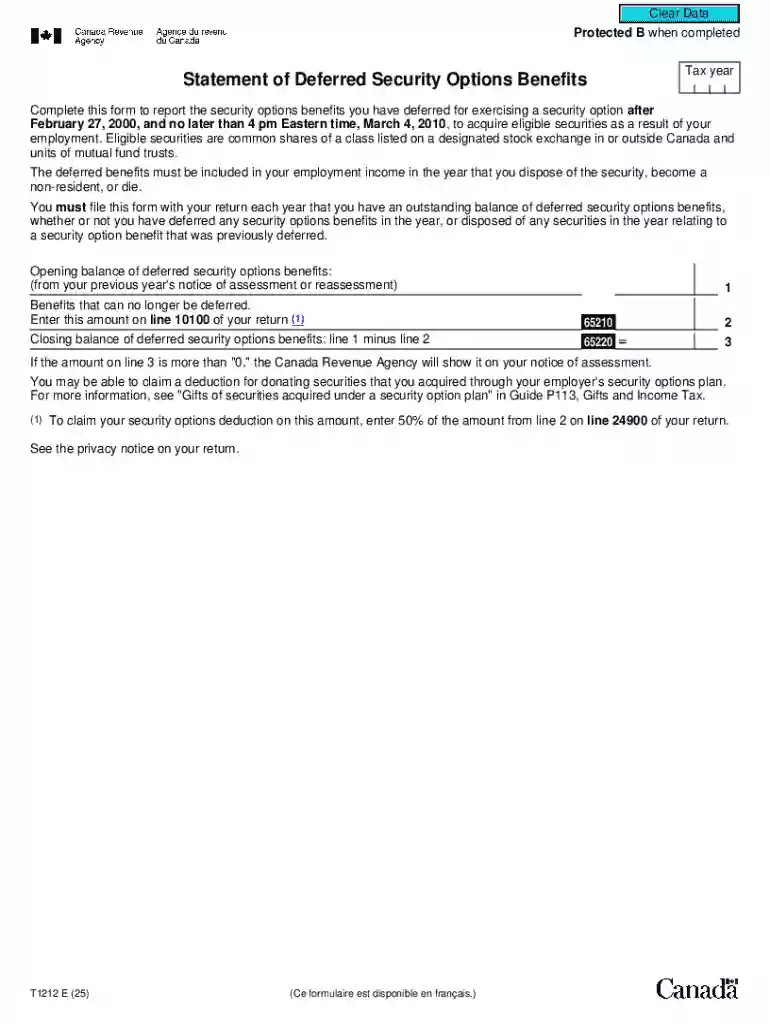
The Statement of Deferred Security Options Benefits is a tax-related form that reports security options benefits a taxpayer has chosen to defer. These benefits typically arise when an individual exercises a security option, such as stock options provided by an employer, but defers recognition of income until a later date. This deferral can impact both tax planning and financial strategies, allowing individuals to manage when they report these gains for taxation purposes.
To effectively utilize this form, individuals need to document their deferred security options benefits precisely as they defer income recognition. This involves reporting the details of options exercised, including the number of options, the exercise price, and any relevant conditions or stipulations affecting valuation and timing.
Completing this form involves a systematic review of all security options activities:
There are strategic advantages of deferring security options benefits:
This form is predominantly used by individuals with stock options or similar securities within organizational compensation plans. Typically, this includes:


Using this form legally requires adherence to the IRS guidelines and regulations surrounding deferred income recognition. It is crucial to ensure:
Several key components must be recognized when completing this form:
The IRS provides explicit guidance regarding the reporting and taxation of deferred security options benefits:
Strict adherence to IRS-prescribed deadlines is crucial:
At DocHub, your data security is our priority. We follow HIPAA, SOC2, GDPR, and other standards, so you can work on your documents with confidence.
How does the 457(b) deferred compensation plan work? With a 457(b) deferred compensation plan, you postpone receiving (defer) a portion of your salary.Read more
Jan 23, 2018 Dont include any social security benefits unless (a) you are married filing separately and you lived with your spouse at any time in 2017 or (b)Read more
The Statement of Benefits is a summary of your WRS retirement account available each year in mid-April. It helps you keep information up to date and trackRead more


