
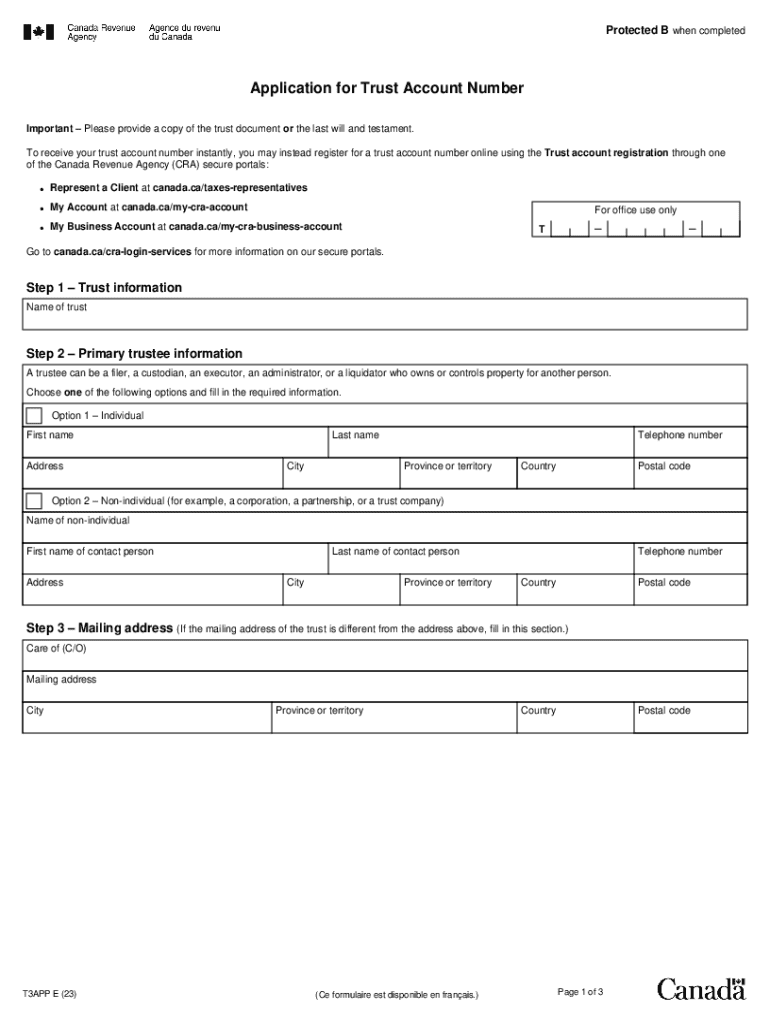







Definition & Meaning
The "Application for Trust Account Number" is a formal process used primarily for obtaining a unique identifier for trust accounts in the United States. This identifier plays a crucial role in tracking and managing trust-related financial activities, ensuring compliance with tax regulations and other legal requisites. Trust accounts are established to manage assets, typically for beneficiaries, under a legal agreement, and having an account number streamlines financial operations and simplifies reporting.
Steps to Complete the Application for Trust Account Number
Completing the Application for Trust Account Number involves several detailed steps to ensure accuracy and compliance. Follow these instructions to successfully submit the application:
-
Gather Required Documents:
- Prepare the trust document or the last will, as these are crucial for verifying the legitimacy of the trust.
- Include identification documents for the trustee(s), such as a government-issued ID.
-
Verify Eligibility:
- Ensure the trust is legally recognized and all necessary legal frameworks are in place.
- Consider consulting a financial advisor or attorney to confirm if the trust meets state-specific requirements.
-
Complete the Application:
- Fill out all mandatory fields accurately, directly related to the trust and its beneficiaries.
- Highlight important trust details such as its intended purpose and the nature of its assets.
-
Review and Submit:
- Double-check all information provided to prevent delays in processing.
- Ensure that all filled data aligns with supporting documents to avoid inconsistencies.
-
Await Confirmation:
- After submission, monitor any communications from the issuing body regarding application approval or additional information requirements.
Required Documents
Certain documentation is necessary to successfully apply for a Trust Account Number. These documents validate the legitimacy of the trust and its administration:
- The Trust Document: A legal document that outlines the arrangement and purpose of the trust.
- Last Will (if applicable): If the trust is established through a will, this document is necessary for validation.
- Identification of Trustee(s): Each trustee needs to provide personal identification to verify their authority.
- Tax Identification Number (TIN): Required if the trust will handle financial transactions independent of a personal SSN.
Legal Use of the Application for Trust Account Number
Trust account numbers have a variety of legal applications, each ensuring the structured management of the trust's financial activities. The number is vital for efficient tax reporting, simplifying the process for filing returns and ensuring compliance with the Internal Revenue Service (IRS) guidelines.
Trust account numbers offer protection by distinguishing trust assets from personal or business finances, reducing legal risks and complexities. This distinction is crucial during financial audits or when providing transparency to beneficiaries.
Key Elements of the Application for Trust Account Number
Several core elements must be meticulously detailed within the application to ensure eligibility and acceptance:
- Trust Name and Type: Clearly define the trust's name and its legal classification (e.g., revocable, irrevocable).
- Trustee Information: Complete contact details and identification of the trustees.
- Beneficiary Details: Names and, if applicable, Social Security Numbers (SSN) of all beneficiaries.
- Purpose of the Trust: Clearly articulate the reasons for the trust's existence and its intended operations.
- Financial Information: An overview of the assets managed or to be managed by the trust.
Eligibility Criteria
The eligibility to apply for a trust account number centers around the nature and structure of the trust. Some key eligibility criteria include:
- Trust Formation: The trust must be legally recognized, with properly executed trust documents.
- Beneficiaries Designated: Clear definition of who the beneficiaries are.
- Trustees Appointed and Verified: All trustees need to be legally authorized and verified.
Eligibility might slightly differ based on state guidelines or specific financial considerations.


How to Use the Application for Trust Account Number
Upon obtaining a trust account number, there are several ways to utilize it effectively:
- Tax Reporting: Use the number to streamline filing tax returns specific to the trust.
- Financial Transactions: Open bank accounts under the trust's name, allowing for easier management of financial assets.
- Regulatory Compliance: Provide the number when adhering to any fiduciary or financial regulations that require formal identification of the trust.
Penalties for Non-Compliance
Failing to obtain or properly use a trust account number can result in penalties, including:
- Fines and Penalties: Imposed by the IRS for non-compliance with tax reporting obligations.
- Legal Risks: Ongoing legal disputes over mismanagement may arise, potentially leading to litigation costs.
- Administrative Delays: Delays or inability to conduct financial transactions without the necessary identification.
Avoiding compliance issues necessitates accurate and timely application submissions, thereby fostering the efficient administration of trust finances.




