
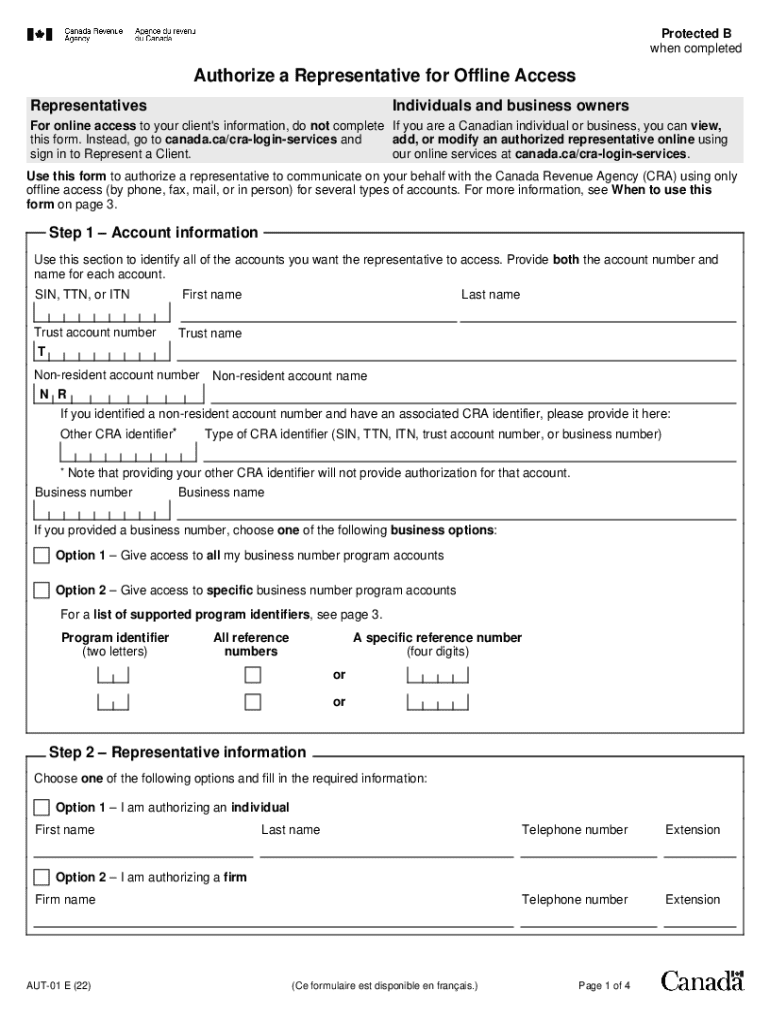







Definition and Meaning of the Canada Revenue Agency Representative Authorization Form
The Canada Revenue Agency Representative Authorization Form, commonly referred to as the CRA Authorization Form, is a legal document that permits a designated representative to access or manage another individual's or entity's tax information with the Canada Revenue Agency (CRA). This authorization allows representatives like accountants, lawyers, or tax professionals to interact with the CRA on behalf of their clients, ensuring that the authorized person can access, modify, or discuss tax-related information. Understanding the full scope and significance of this form is critical for both representatives and clients, as it dictates the level of access and control the representative will have. The form typically requires clear identification of both parties and specifies the permission level granted to the representative.
How to Use the Canada Revenue Agency Representative Authorization Form
Utilizing the CRA Representative Authorization Form involves several key steps. Initially, the taxpayer must determine the extent of the access they are willing to grant. This includes selecting the specific tax accounts and the actions the representative can perform, such as inquiry, adjustment, or negotiation. Once completed, the form can be submitted electronically through CRA's online services or mailed if paper submission is preferred. Using the form correctly ensures seamless communication and representation with the CRA, thus preventing miscommunications or unauthorized actions. Examples of usage include when engaging tax professionals during tax season to ensure accurate filings and updates.
Steps to Complete the Canada Revenue Agency Representative Authorization Form
- Gather Required Information: Before completing the form, collect relevant information for the taxpayer and representative, including Social Insurance Numbers (SIN) or Business Numbers (BN), and addresses.
- Select Authorization Level: Determine the level of access by specifying whether the representative can view, change, or receive confidential information.
- Complete the Form: Carefully fill out the form with all required details, ensuring accuracy to avoid rejection.
- Review for Accuracy: Check all details for correctness, as errors can lead to processing delays or denied authorization.
- Submit the Form: Depending on preference, submit the form either through the CRA's online portal or via traditional mail.
- Confirmation and Follow-up: After submission, verify the authorization status by contacting CRA or checking the online services to confirm the representative's access.
Legal Use of the Canada Revenue Agency Representative Authorization Form
The CRA Authorization Form has legal weight as it explicitly defines the rights and responsibilities granted to the representative. It is crucial to ensure the form is filled out accurately and truthfully, as any misrepresentation can lead to penalties, legal complications, or termination of the representative's privileges. The legal framework surrounding this form is designed to protect taxpayer privacy while allowing designated professionals the ability to manage or discuss tax-related matters effectively. Understanding this legal context is necessary for both parties involved.
Who Typically Uses the Canada Revenue Agency Representative Authorization Form
This form is predominantly used by individuals and businesses that require the services of a tax professional to manage their interactions with CRA. Accountants, tax attorneys, and financial advisors frequently use this form to obtain authorization from clients needing help with complex tax issues or ongoing CRA communications. Additionally, business owners often leverage this form when hiring external consultants to handle tax compliance or audits, ensuring these professionals have the necessary permissions to act on their behalf fully.


Key Elements of the Canada Revenue Agency Representative Authorization Form
Key elements of the CRA Authorization Form include the taxpayer's and the representative's identification information, the effective date and duration of the authorization, and the specific tax accounts or types of access granted. Additionally, conditions under which the authorization remains valid or can be revoked must be clearly stated. Understanding these elements is crucial for ensuring that all parties have a mutual understanding of the limitations and scope of the representative's authority, preventing potential misuse or misunderstanding.
Form Submission Methods for the Canada Revenue Agency Representative Authorization Form
The CRA Authorization Form can be submitted either online via the CRA's My Account or My Business Account platforms for immediate processing, or through traditional mail for those who prefer not to use digital options. Each method has its own set of instructions and timelines, with online submissions often resulting in faster processing times. If submitting by mail, ensure all original signatures are included, and consider using registered mail for added security and proof of delivery.
Important Terms Related to the Canada Revenue Agency Representative Authorization Form
Several terms are central to fully understanding the CRA Authorization Form. Terms like "authorized representative," "level of access," and "account number" are crucial for delineating who is involved and what specific permissions are being granted. Familiarity with these terms ensures that the authorization form is completed and processed accurately, safeguarding the interests of the taxpayer and their representative. Understanding the nuances of these terms can also prevent common misinterpretations that may lead to disputes or errors in handling tax affairs.




