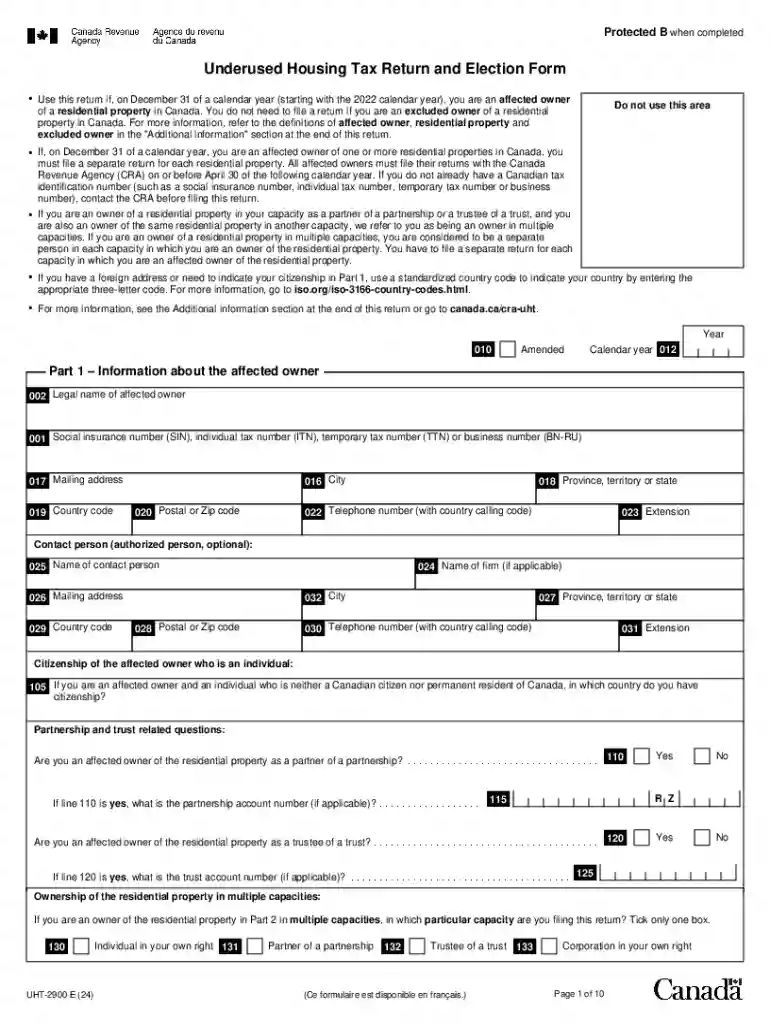
Definition and Meaning of the Underused Housing Tax Return and Election Form
The Underused Housing Tax Return and Election Form is an essential document for certain property owners, particularly those impacted by underused housing regulations in the United States. This form is utilized by affected owners at the end of the year, specifically on December 31, to report applicable taxes related to underutilized residential properties.
Purpose and Scope
- The form is designed to ensure that housing which is not being utilized effectively is appropriately taxed, incentivizing owners to make better use of their properties.
- It addresses both residential and mixed-use properties that fall under specific regulations involving underuse.
- This form involves tax calculations specific to underused housing scenarios, which may impact annual tax obligations.
How to Use the Underused Housing Tax Return and Election Form
Utilizing the Underused Housing Tax Return and Election Form involves several steps to ensure accurate filing and compliance with federal regulations.
Completing the Form
- Gather Required Information: Begin by collecting data on the property, including location, usage details, ownership information, and prior year’s tax documents.
- Calculate Tax Obligations: Use the guideline provided with the form to accurately determine the tax obligations based on the underuse criteria.
- Fill out the Form Accurately: Ensure that all personal and property details are correct. Accurate reporting is vital to avoid penalties.
- Review and Sign: Thoroughly review all entries for accuracy. Sign and date the form to validate its content.
Submission Options
- You can submit the form via mail or through authorized electronic filing methods. Some states might have specific requirements for submission.
- Verify deadlines for submission to avoid late penalties.
Steps to Complete the Underused Housing Tax Return and Election Form
Completing the Underused Housing Tax Return and Election Form necessitates a careful approach to detail and accuracy.
Detailed Steps
- Assessment of Property Use: Determine if your property qualifies as underused according to IRS standards.
- Income Calculation: Using official IRS guidelines, compute any income received from the property and its utilization.
- Tax Application: Fill out the sections indicating the property description, owner information, and specific details about housing use.
- Verification and Finalization: Double-check all form fields for errors before submission. Sign where applicable and ensure all required documentation is attached.
Key Elements of the Underused Housing Tax Return and Election Form
Several crucial components must be included in the Underused Housing Tax Return and Election Form to ensure its validity and compliance.
Important Components
- Identification Information: Includes taxpayer identification, property address, and relevant ownership details.
- Property Use Status: Clear declaration of how the property was used throughout the year.
- Income and Expense Reporting: Detailed income and expenditure related to the property, critical for determining tax dues.
- Signatures and Declarations: Any missing signatures can render the form incomplete and lead to filing issues.
Filing Deadlines and Important Dates
Timing is critical in ensuring compliance when submitting the Underused Housing Tax Return and Election Form.
Key Deadlines
- Annual Filing Date: Typically, the form must be filed by April 15 for the previous calendar year’s taxes. However, the specifics can slightly vary based on annual IRS updates or state requirements.
- Request for Extension: For those unable to meet the deadline, submitting a formal request before the due date is crucial to avoid interest and penalties.
Criteria Inclusions
- Ownership Status: Only applicable to residential property owners or those significantly involved in housing development activities.
- Usage Level: Properties categorized as underused per IRS definitions are required to file this form.
- Taxpayer Classification: Impact primarily affects individual and corporate taxpayers owning residential properties not meeting usage benchmarks.
Penalties for Non-Compliance
There are specific penalties laid down for non-compliance with the filing requirements of the Underused Housing Tax Return and Election Form.
Implications of Non-Compliance
- Monetary Fines: Failure to file or late submissions can lead to significant fines, which accumulate over time.
- Increased Audit Risk: Delinquent filings may trigger a formal IRS audit, complicating future tax processes.
- Loss of Tax Advantages: Missing filing deadlines may result in the forfeiture of potential tax reductions or credits.
State-by-State Differences
While the Underused Housing Tax Return and Election Form is a federal requirement, variations exist depending on state regulations.
State Variability
- Differing Definitions: Some states have unique thresholds for determining underuse, affecting the applicability of this form.
- Additional Documentation: Certain states may require supplementary forms or reports in conjunction with the federal filing.
- Tax Rates: Specific tax obligations might vary based on the state where the property is located, impacting total due tax amounts.