






Understanding the Residential Replacement Cost Estimator
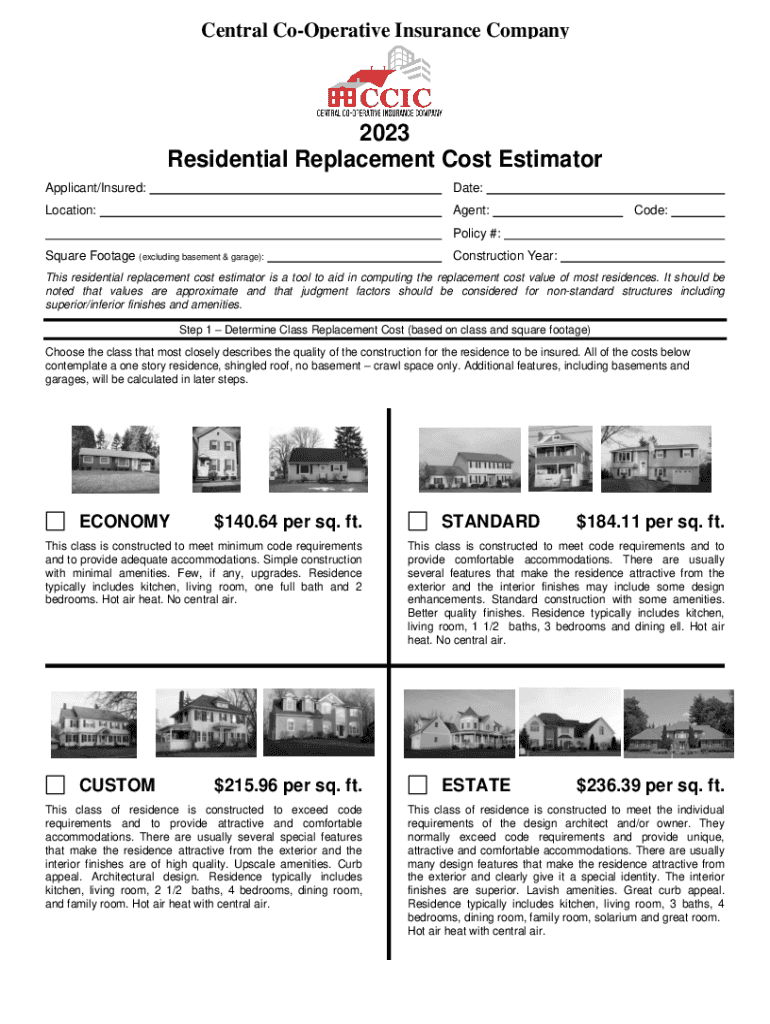
The Residential Replacement Cost Estimator is a tool used to calculate the estimated cost to replace a residential property in the event of damage or destruction. It considers various factors, including the building's size, construction materials, and location, to provide an accurate estimation of replacement expenses. This ensures homeowners have adequate insurance coverage that reflects the current market conditions and construction costs.
How to Use the Residential Replacement Cost Estimator
-
Gather Property Details: Start by collecting all relevant information about the property, including dimensions, construction year, and types of materials used.
-
Input Information: Access the estimator and enter the required property details. This can often be done via an online platform provided by insurance companies or third-party websites.
-
Review the Estimate: Once the data is entered, the estimator will compute the replacement cost estimate. Review this estimate to ensure it aligns with your expectations and any professional appraisals you may have obtained.
-
Adjust Insurance Coverage: Use the estimate to reassess your current insurance policy and make necessary adjustments to ensure adequate coverage.
Obtaining the Residential Replacement Cost Estimator
Residential Replacement Cost Estimators are typically offered through insurance companies, either as standalone tools or integrated within home insurance policy platforms. Some independent and third-party websites also provide access to such tools, often requiring a subscription or one-time fee for detailed reports.
Steps to Complete the Residential Replacement Cost Estimator
-
Access the Tool: Sign in to your insurance provider's website or a third-party platform offering the estimator service.
-
Enter Basic Property Information: Fill in foundational details including the address, property type, and year built.
-
Detailed Input: Provide specific information on square footage, number of rooms, and any unique features like a finished basement or high-end finishes.
-
Confirm and Submit: After inputting all necessary details, confirm the information is accurate and submit for processing.
Importance of the Residential Replacement Cost Estimator
- Accurate Insurance Coverage: Ensures homeowners have insurance policies that accurately reflect the replacement cost of their property, preventing underinsurance.
- Financial Planning: Helps property owners prepare for potential reconstruction costs, aligning financial planning with realistic scenarios.
- Risk Management: Enhances understanding of the financial risks involved in homeownership, especially in areas prone to natural disasters.
Key Users of the Residential Replacement Cost Estimator
This tool is predominantly utilized by:
- Homeowners: To evaluate and adjust their home insurance policies.
- Insurance Agents: To provide clients with accurate insurance quotes.
- Real Estate Investors: To assess risk and investment viability based on potential replacement costs.
Critical Terms Related to the Residential Replacement Cost Estimator
- Dwelling Replacement Cost: The cost to reconstruct a home with similar materials and features.
- Actual Cash Value: The market value of a property, accounting for depreciation.
- Insurance Appraisal: An assessment conducted to determine the value of a property for insurance purposes.
Legal Usage Considerations
When using the Residential Replacement Cost Estimator:
- Regulatory Compliance: Ensure estimations align with state insurance regulations and guidelines.
- Confidentiality: Maintain confidentiality of all personal and property information entered into the estimator.
- Audit Trails: Keep records of all estimates generated for future reference or in case of disputes with insurance providers.
State-Specific Rules for the Residential Replacement Cost Estimator
While the fundamental principles of replacement cost estimation remain consistent, state-specific regulations can impact how the estimated values translate into insurance policies. Some states impose strict guidelines on the minimum coverage limits, necessitating adjustments to comply with local requirements. Always verify the estimator's settings and outcomes according to your state's insurance laws to ensure compliance and adequacy of coverage.