







Definition & Meaning
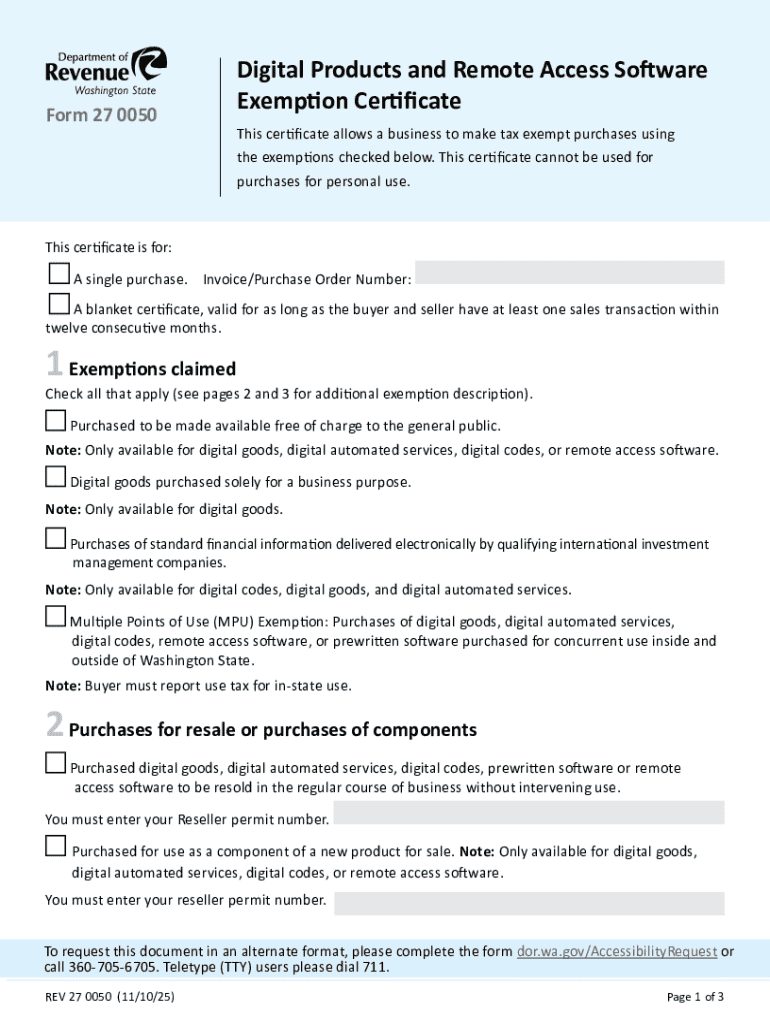
The Form 27-0050, known as the Digital Products and Remote Access Software Exemption Certificate, is a document that allows eligible businesses to purchase digital products and remote access software without the burden of sales tax. This exemption is typically applicable under specific conditions outlined by state tax authorities. The form ensures that companies leveraging various digital solutions in their operations can benefit from certain tax advantages, ultimately resulting in cost savings.
The certificate primarily benefits businesses that engage significantly with digital resources, from software as a service (SaaS) products to downloadable digital goods essential to their operations. By understanding the nuances of this form, entities can strategically utilize it to optimize their purchasing processes in the digital economy.
How to Use the Form 27-0050
When utilizing the Form 27-0050, businesses must ensure that they adhere to the specific guidelines set by the issuing state. It is crucial to determine the applicable scenarios where this form can be employed, such as during the purchase of software licenses or digital products intended for company-wide use.
- Verification of Exemption: Ensure that the supplier recognizes the form's validity and is comfortable exempting the transaction from sales tax based on its issuance.
- Document Retention: Maintain adequate records of transactions and associated exemption certificates in case of audits.
- Annual Review: Periodically review the form's conditions and any regulatory changes to ensure continued compliance.
Using the form correctly can facilitate smoother transactions and support financial efficiency in digital resource procurement.
How to Obtain the Form 27-0050
Businesses seeking to obtain this exemption form can usually find it on the website of the state’s Department of Revenue or equivalent tax authority. Here are the general steps to obtain the form:
- Locate the Form: Visit the official website of your state's Department of Revenue.
- Download: Access the form electronically as a PDF or similar file format.
- Complete Necessary Information: Fill in the required fields accurately, ensuring all details are up-to-date.
- Submit the form through the specified channels, which may include mailing, uploading to a digital platform, or delivering in person.
Make sure to review all instructions associated with the form to ensure that it is completed and submitted correctly.
Steps to Complete the Form 27-0050
Completing the Form 27-0050 involves several key steps that must be followed precisely to ensure compliance:
- Gather Business Information: Start by collecting all necessary details about your business, such as the tax identification number and address.
- Specify Exemption Details: Clearly outline the types of digital products and remote access software purchases that the exemption applies to.
- Authorized Signature: An authorized representative of the business should sign the form, affirming the accuracy of the provided information.
- Review and Submit: Before submission, review the form to ensure all fields are accurately filled out, then follow the submission guidelines provided by the issuing authority.
Having an organized approach can help minimize the risk of errors, facilitating faster processing.
Who Typically Uses the Form 27-0050
The form is primarily used by businesses heavily reliant on digital technologies. Typical users include:
- Tech Firms: Companies that develop or distribute software often use the form to purchase tools needed for product development tax-free.
- E-commerce Platforms: Businesses that host online marketplaces leverage the exemption to optimize their digital infrastructure at a reduced cost.
- Corporate IT Departments: Larger organizations with extensive IT departments use the form for acquiring necessary software licenses and digital tools.
These entities benefit from reduced operational expenses by efficiently utilizing the exemption certificate.


Key Elements of the Form 27-0050
The form comprises several critical sections essential for its proper execution:
- Business Identification: Details such as the company's legal name, address, and tax identification.
- Exemption Justification: Specific information about the digital products or software the business seeks exemption for.
- Authorized Signatory Section: A declaration by an authorized representative confirming the validity of the exemption claim.
- Compliance Statement: An acknowledgment of adherence to all relevant state tax regulations and guidelines.
Ensuring each section is properly completed enhances the effectiveness of the exemption certificate in streamlining business operations.
Legal Use of the Form 27-0050
Understanding the legal context of the form is crucial. Its use is governed by state-specific sales tax laws:
- State Regulations: Each state may have distinctive rules regarding what constitutes an eligible digital product or service for exemption.
- Audit Potential: Businesses should be prepared for potential audits by maintaining detailed records of transactions and exemption certificates.
- Validity: Often, the certificate has a validity period after which it must be renewed to continue benefiting from tax exemptions.
Adhering to these legal stipulations ensures businesses utilize the form effectively within the law’s boundaries.
State-Specific Rules for the Form 27-0050
States may have unique requirements or conditions for the exemption certificate:
- Applicable Products: Different states may include or exclude specific digital products or remote access software from exemption.
- Filing Requirements: Variations in submission processes or deadlines may exist, necessitating careful adherence to each state’s guidelines.
- Renewal Policies: Some states might require annual renewals or updates to the form to sustain its applicability.
Staying informed about your state’s rules ensures that the certificate is used effectively, enhancing business operations without legal hurdles.




