
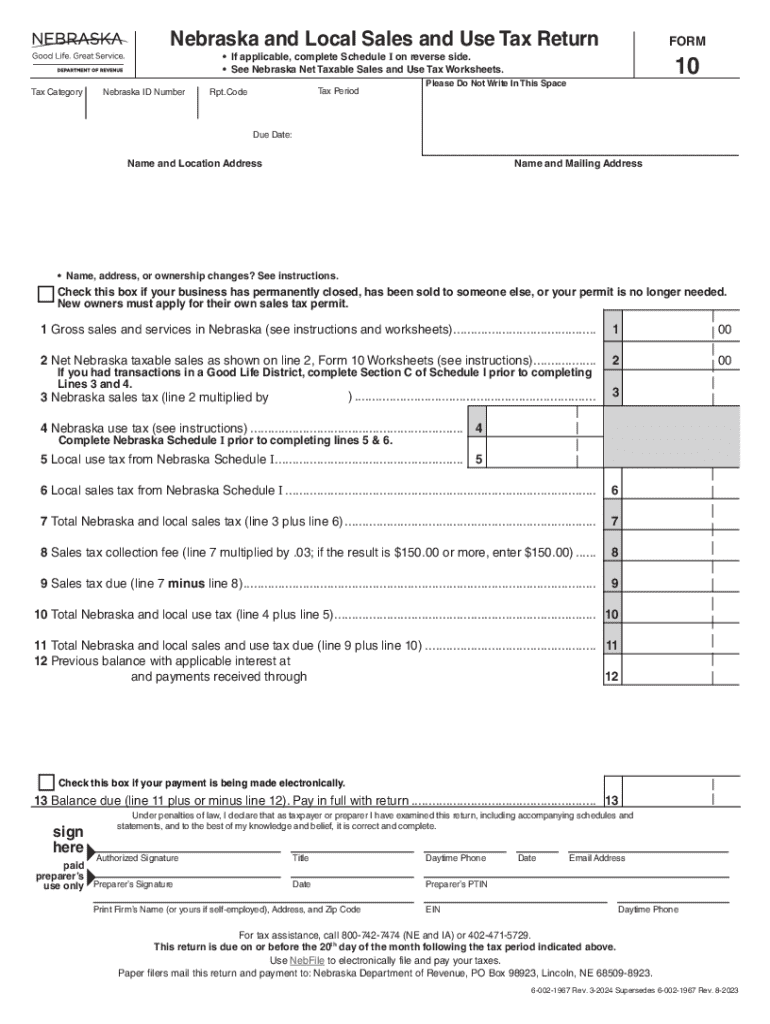







Definition & Meaning
The "Nebraska Sales and Use Tax Return Form 10" is a tax document used by businesses operating in Nebraska to report and remit sales and use taxes to the Nebraska Department of Revenue. This form is crucial for ensuring that businesses comply with state tax regulations by accurately declaring taxable sales, purchases, and other taxable activities within the state. It aids in determining the correct amount of tax owed, preventing any legal issues related to underpayment or non-compliance with Nebraska tax laws.
The form encompasses various tax categories, such as local sales, state sales, and use taxes, which collectively contribute to the state's revenue system. Accurate reporting on this form is vital, as it impacts the financial integrity of both the business and the state’s tax income.
How to Use the Nebraska Sales and Use Tax Return Form 10
Using this form involves several key steps to ensure accurate completion and submission. Below is a detailed guide on utilizing the form:
Gathering Necessary Information
- Sales Records: Collect data on all taxable sales made within the filing period.
- Purchase Documentation: Record all out-of-state purchases subject to use tax.
Completing the Form
- Start by entering your business information, including the business name and Nebraska tax identification number.
- Break down sales between state and local areas to apply the correct tax rates.
Calculating Taxes
- State Sales Tax: Apply the current state sales tax rate to taxable sales.
- Local Sales Tax: Assess applicable local taxes based on the location of sales.
- Use Tax: Compute use tax on items purchased outside of Nebraska for use within the state that haven't been taxed.
Final Review and Sign-off
- Double-check all entries for accuracy.
- Submit the form with the calculated tax amount if filing manually.
Steps to Complete the Nebraska Sales and Use Tax Return Form 10
Completing this form requires attention to detail and adherence to the following steps:
-
Identify Sales and Use Tax Obligations: Determine if your business activities require sales or use tax reporting.
-
Fill Out Business Details: Enter your taxpayer information to ensure proper identification.
-
List All Sales Transactions: Use detailed sales records to accurately list all transactions that occurred during the reporting period.
-
Calculate Total Taxable Sales: Sum all gross receipts from sales of tangible goods and services within Nebraska.
-
Apply Tax Rates: Use the applicable sales and use tax rates to calculate the total tax due.
-
Verify Exemptions: Check for any sales exemptions that might reduce the taxable amount, and provide proper documentation.
-
Finalize and Sign: Complete the document, ensure all figures are correct, and sign to affirm the truthfulness of the information provided.
-
Submit the Form: File by the designated deadlines either online, by mail, or in-person.
Practical Example
Consider a local Nebraska-based retail store that sells electronics. During one quarter, they make $50,000 in sales and purchase $5,000 worth of products from an out-of-state vendor. The store needs to report both sales and any applicable use tax on these purchases using Form 10.
Filing Deadlines / Important Dates
Timeliness in filing the Nebraska Sales and Use Tax Return Form 10 is crucial. Nebraska requires businesses to file and pay sales taxes on transactions periodically, often monthly, quarterly, or annually, depending on the size and volume of business transactions.
Key Dates
- Monthly Filing: Due on the 20th of the following month.
- Quarterly Filing: Typically due on the last day of the month following the quarter-end.
- Annual Filing: Due on January 20th for the prior year's activity.
Missing these deadlines can result in penalties, making it important for business owners to incorporate filing into their routine financial processes. Typically, electronic submissions offer a faster processing time.
Important Terms Related to Nebraska Sales and Use Tax Return Form 10
Understanding certain terms can help in accurately completing Form 10. Here are the essential terms:
- Gross Receipts: Total revenue from sales before deductions such as returns.
- Taxable Sales: Sales subject to tax; excludes exempt items.
- Exemptions: Specific sales not subject to taxation under Nebraska law.
- Use Tax: Tax on goods purchased out of state but used in Nebraska.
- Local Tax: Additional taxes imposed by certain municipalities or counties.
Business owners should be familiar with these terms as they are frequently used throughout Form 10 and are integral to accurate reporting.
Submitting the Nebraska Sales and Use Tax Return Form 10
Submission of the form can be done using several methods, each catering to different preferences and technical capabilities.
Methods of Submission
- Online: Using Nebraska’s E-File system for immediate submission and confirmation.
- Mail: Sending a physical copy of the form with a check for the tax amount.
- In-Person: Submission at a designated Nebraska Department of Revenue office.
Advantages of Electronic Filing
Electronic filing is often faster, reduces paper use, allows for instant error detection, and provides confirmation of receipt. It’s recommended for timely processing and immediate compliance checks.
Penalties for Non-Compliance
Non-compliance, such as late filing or incorrect reporting on the Nebraska Sales and Use Tax Return Form 10, can result in several penalties:
- Late Filing Fees: Penalties typically include a percentage of the tax due or a set fee.
- Interest on Overdue Taxes: Accrued charges on the unpaid amount calculated daily.
- Potential Legal Action: Continued non-compliance could lead to more severe legal consequences.
State-Specific Rules for the Nebraska Sales and Use Tax Return Form 10
Nebraska imposes specific rules that must be followed when completing Form 10. Businesses should be aware of these to avoid common mistakes:
- Unique Local Rates: Varying local tax rates require precise calculation and allocation.
- Document Requirements: Keep detailed records of all sales and purchases for verification purposes.
- Nexus Laws: Determine tax obligations based on physical or economic presence in the state.
By following Nebraska's specific guidelines, businesses ensure compliance, thus avoiding penalties and fostering a transparent and accountable tax process.
This structured content provides comprehensive insights into the Nebraskas Sales and Use Tax Return Form 10, ensuring legal compliance and accurate reporting within the U.S. taxation framework.




