
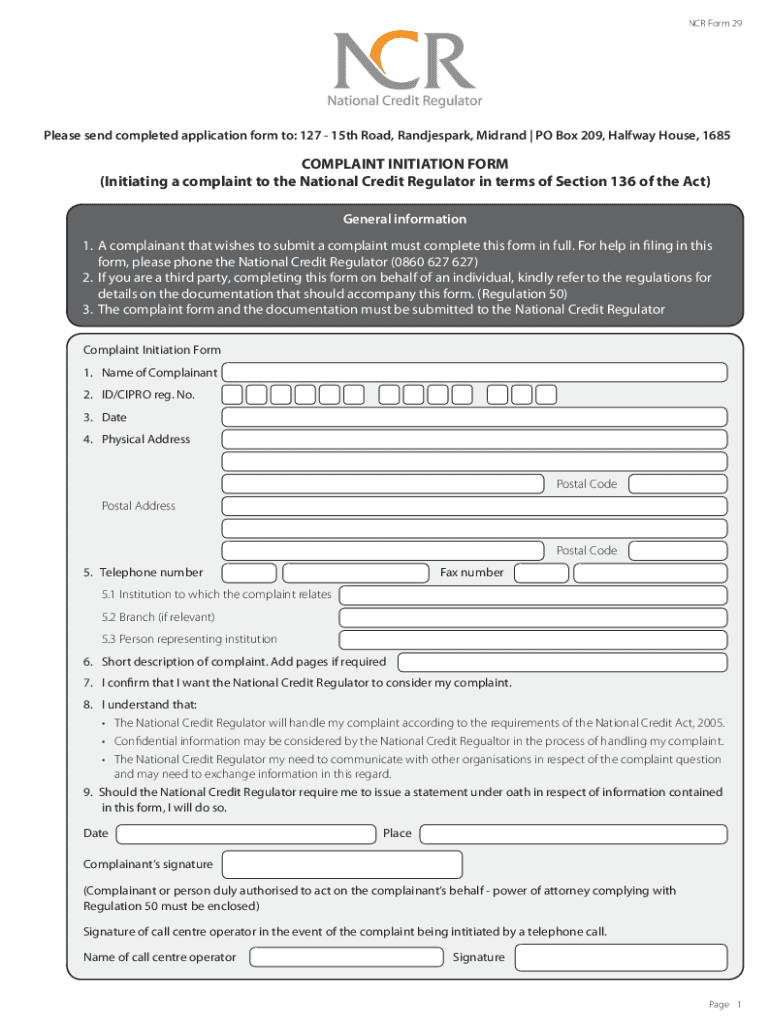







Definition and Purpose of the Complaint Initiation Form
The Complaint Initiation Form is a standardized document designed to facilitate the formal registration of complaints within an organization or institution. Its primary purpose is to provide a structured method for individuals to report grievances, ensuring that all necessary information is captured to address the issue effectively. This form acts as a critical tool in maintaining transparency and accountability, as it provides a record that can be used to track the resolution process.
The form typically includes sections for personal information, a detailed description of the complaint, and any relevant supporting documentation. By standardizing the complaint registration process, it ensures that all complaints are treated with consistency and fairness. This is particularly important in regulatory environments where formal documentation is essential for compliance purposes.
How to Use the Complaint Initiation Form
To effectively utilize the Complaint Initiation Form, follow these step-by-step instructions:
-
Personal Information
- Begin by entering all required personal details, such as your full name, contact information, and any identification numbers if applicable.
-
Description of Complaint
- Provide a comprehensive account of the issue at hand. Be as detailed as possible, including dates, times, and specific parties involved. Use clear and concise language to articulate your concerns.
-
Supporting Documentation
- Attach any relevant documents that support your case. This may include emails, receipts, witness statements, or photographs. Ensure that these attachments are clearly labeled and referenced in the description section.
-
Proposed Resolution
- Although optional, include any suggestions you might have for resolving the matter. This can offer a starting point for those investigating your complaint.
-
Submission
- Once the form is completed, review all entries to ensure accuracy and completeness. Submit the form according to the guidelines provided, whether it is through mail, online submission, or in person.
Steps to Complete the Complaint Initiation Form
Completing the Complaint Initiation Form involves a sequence of steps to ensure that the grievance is conveyed effectively:
- Begin by filling out your personal details accurately to ensure you can be contacted for further information or updates.
- Carefully document the nature of the complaint, ensuring clarity and precision. Include specific details such as the timeline of events and any individuals involved.
- Gather all pertinent evidence that supports your complaint. Ensure these are in the correct format and readily accessible for those reviewing the complaint.
- Review your completed form for any errors or omissions. An incomplete form can delay the processing of your complaint.
- Follow specific submission guidelines, including deadlines, to ensure timely processing. This may involve mailing the form to a designated address or uploading it through an official portal.
Who Typically Uses the Complaint Initiation Form
The Complaint Initiation Form is typically used by individuals and organizations seeking to formally address grievances. Common users include:
- Customers or Clients: Individuals who encounter issues with services or products and seek resolution.
- Employees: Workers within an organization who wish to report workplace issues such as harassment or unsafe conditions.
- Students: Educational environments often provide this form for students to report incidents or concerns.
- Tenants and Property Owners: Used to resolve disputes in housing or rental agreements.
Each of these groups may have specific sections or requirements on the form tailored to their context, ensuring that all relevant information is captured.


Key Elements of the Complaint Initiation Form
The Complaint Initiation Form is structured to capture comprehensive details necessary for reviewing and resolving the reported issue. Key elements typically include:
- Identification Section: Collects the complainant's personal and contact information.
- Complaint Details: Describes the issue, including circumstances, locations, and dates.
- Supporting Evidence: Section for attaching necessary documentation or evidence related to the complaint.
- Resolution Preferences: Optional section for the complainant to suggest potential solutions.
- Submission Confirmation: Includes acknowledgment of the complaint submission and any tracking numbers or identifiers for follow-up.
These elements ensure that the organization or institution receiving the complaint has all the information needed to investigate and resolve the issue efficiently.
Legal Use and Compliance of the Complaint Initiation Form
The legal utility of the Complaint Initiation Form cannot be understated. It serves as a documented acknowledgment of the complaint, establishing a formal record for both the complainant and the recipient organization:
- Documentation: Maintains a permanent record that can be referenced in legal proceedings if necessary.
- Regulatory Compliance: Ensures that the entity handling the complaint complies with legal obligations and standards relevant to fair treatment and resolution.
- Confidentiality Assurance: Provides guidelines on how personal information will be used and protected, adhering to privacy laws and regulations.
By ensuring legal compliance, the form mitigates risk and enhances trust in institutional processes.
Submission Methods for the Complaint Initiation Form
Submitting the Complaint Initiation Form can typically be done through various channels, each offering its own advantages:
- Online Submission: Filling and submitting the form through an official website portal. This is often the most efficient method, providing instant confirmation and ease of tracking.
- Mail Submission: Sending the completed form to a specified postal address. This method might be used when physical copies or signatures are necessary.
- In-Person Submission: Delivering the form to a designated office or representative, which can provide immediate feedback or acknowledgment of receipt.
Using the correct submission method as per the guidelines ensures that your complaint is processed in a timely manner.
Software Compatibility and Digital Features
For those using digital versions of the Complaint Initiation Form, understanding software compatibility is crucial:
- PDF Compatibility: Forms are often available in PDF format, which can be viewed and edited using standard software like Adobe Acrobat.
- Form Fill Features: Many digital forms include interactive fields that guide users through completion, minimizing errors and omissions.
- Cloud Integration: Certain forms may be uploaded and stored in cloud services like Google Drive, enhancing accessibility and security.
- Mobile Access: Allows users to complete and submit forms via smartphones or tablets, offering flexibility and convenience.
Ensuring compatibility with your software setup can streamline the form submission process and enhance overall efficiency in managing complaints.




