







Definition & Meaning
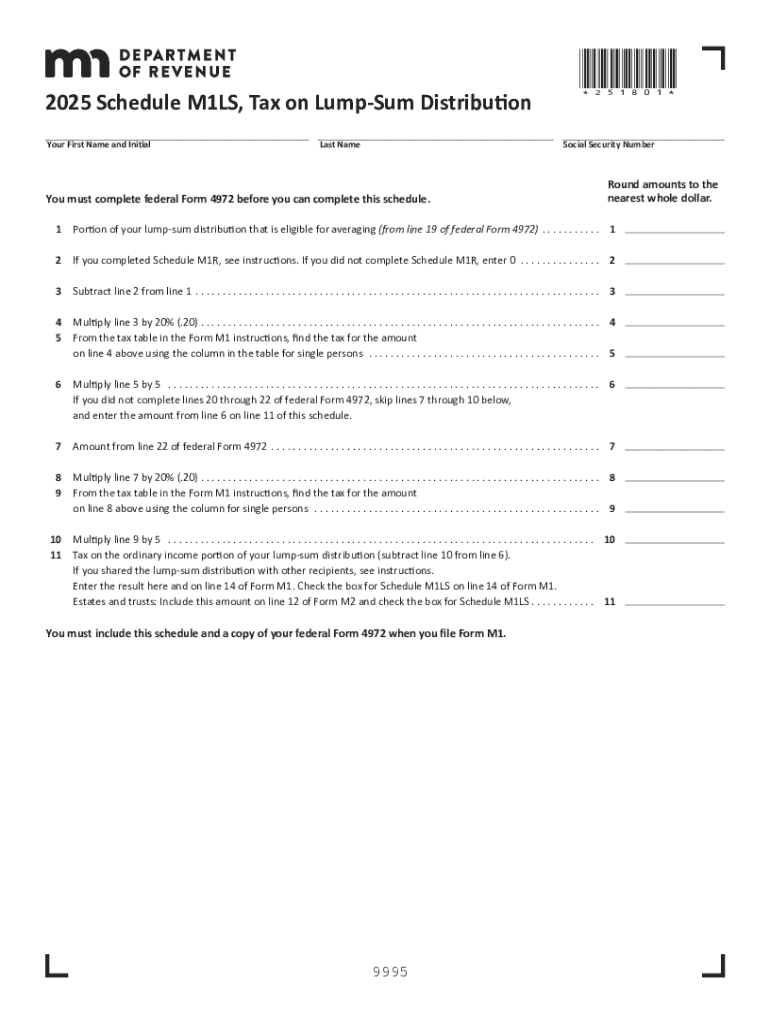
The 2025 M1LS, Tax on Lump-Sum Distribution form is essential for individuals who have received a lump-sum distribution from a qualified retirement plan and need to understand the tax implications. This form helps determine the state-specific tax liabilities on such distributions, adhering to the tax laws applicable in the United States. Lump-sum distributions generally occur in situations where an entire balance from a retirement plan is withdrawn in one payment, often upon retirement, and can significantly impact an individual's tax position.
Steps to Complete the 2025 M1LS, Tax on Lump-Sum Distribution
-
Gather Required Documents:
- Federal Form 4972: This form must be completed before addressing the M1LS form.
- Tax documents from the retirement plan provider detailing the distribution amount and dates.
-
Calculate the Lump-Sum Amount:
- Use the details from Form 4972 to calculate the portions subject to different tax rates according to the guidelines.
-
Fill in Personal Information:
- Complete sections detailing your Social Security Number, name, and address as specified in the instructions.
-
Determine Tax Liability:
- Follow the instructions on the M1LS to allocate the distribution into appropriate categories and apply relevant tax rates.
-
Double-check Entries:
- Review all calculations for accuracy, ensuring they align with your federal filings.
-
Submit the Form:
- Options include mailing the completed form to your state’s tax office or submitting it electronically if allowed.
Required Documents
Completing the 2025 M1LS form requires several crucial documents to ensure tax calculations are accurate:
- Federal Form 4972: This is necessary for calculating potential tax benefits related to lump-sum distributions.
- Form 1099-R: This form provides the details of retirement plan distributions and is issued by the plan administrator.
- Personal income tax records: These help verify additional income which may affect overall tax liability.
IRS Guidelines
The IRS provides specific guidelines for handling lump-sum distributions. Key points include:
- Age Requirements: Eligibility for utilizing certain tax treatments often depends on age, typically for individuals aged 59½ and above.
- Tax Rates: Special tax treatments for distributions can apply, which should be aligned with IRS rules regarding capital gains and other income.
- Rollovers: IRS allows for rolling over certain distributions to delay tax impacts, which must be executed within a 60-day period.
Important Terms Related to 2025 M1LS, Tax on Lump-Sum Distribution
- Lump-Sum Distribution: A single payment withdrawal from a retirement account, triggering specific tax computation methods.
- Tax Sheltering: Strategies implemented to minimize taxable income through approved IRS mechanisms, relevant for handling distributions.
- Capital Gains Treatment: A potential method of taxing lump-sum distributions similar to long-term capital gains, often more favorable for taxpayers.
Filing Deadlines / Important Dates
- Tax Year Deadlines: Align submission with state and federal tax deadlines, generally April 15th of each year.
- 60-Day Rollover Period: From the date of distribution, taxpayers have 60 days to roll over to another retirement account without penalties.
- State Variation: Deadlines may differ by state, necessitating review of local tax authority guidelines.
State-Specific Rules for the 2025 M1LS, Tax on Lump-Sum Distribution
Despite federal guidelines, certain states maintain unique rules affecting the application of the M1LS form:
- State Tax Rates: Some states implement their own tax rates separate from federal guidelines, impacting total liability on a lump-sum basis.
- Local Exemptions: Specific exemptions based on state law may apply, necessitating reference to state-specific tax guidance before filing.
Examples of Using the 2025 M1LS, Tax on Lump-Sum Distribution
-
Retirement Withdrawals: John, a retiree, receives his pension as a lump-sum payout. By completing the 2025 M1LS form, he determines the state taxes owed by utilizing different tax brackets.
-
Early Distribution Scenario: Sarah, aged 58, receives a lump-sum to manage unforeseen medical expenses. Her use of Form 4972 alongside the M1LS informs him of state taxes due given her early withdrawal status and potential penalties.
By comprehensively completing the 2025 M1LS, taxpayers can ascertain their financial obligations and potential liabilities when dealing with significant disbursements from retirement plans, ensuring compliance with both state and federal tax laws.




