







Definition and Meaning
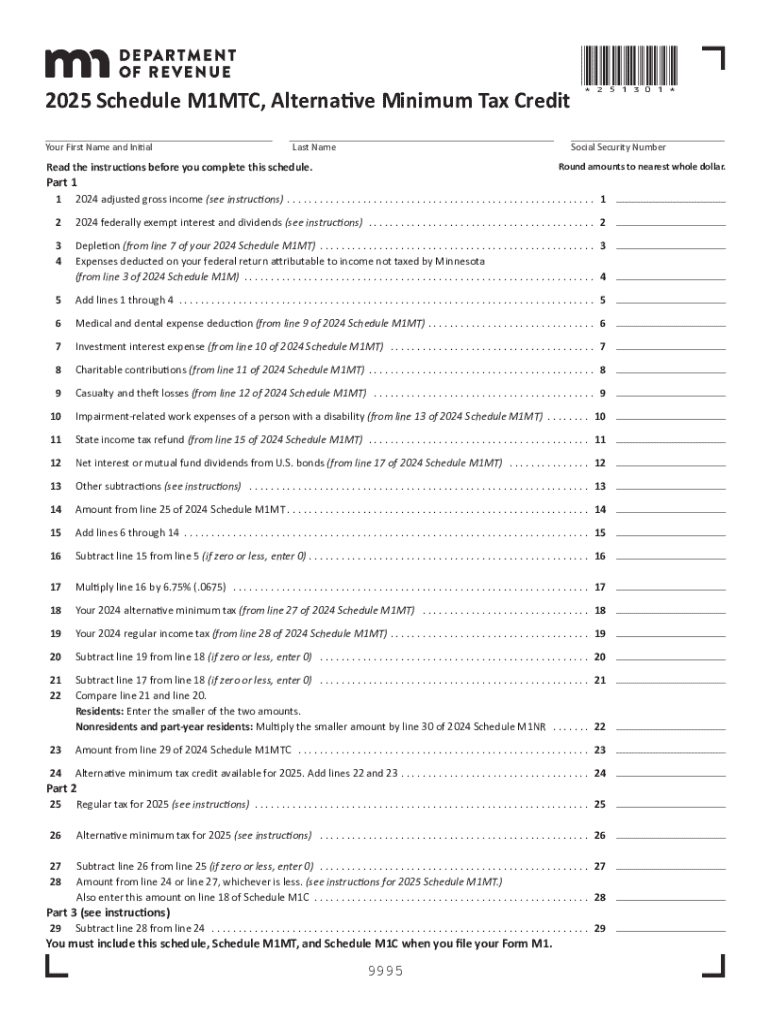
The 2025 Schedule M1MTC, also known as the Alternative Minimum Tax Credit Schedule, is a tax document used for calculating the Minnesota Alternative Minimum Tax (AMT). It helps taxpayers determine if they qualify for the AMT credit, allowing them to potentially reduce their overall tax liability. This form is tailored specifically for Minnesota residents who are subject to both state and federal tax regulations.
Key Functions
- Tax Credit Calculation: The primary purpose of this schedule is to calculate the AMT credit. Taxpayers may apply this credit to lower their tax burden.
- State-Specific Adjustments: Reflects adjustments necessary to comply with Minnesota’s state tax laws while aligning with federal tax regulations.
Relevancy
Individuals and businesses liable for AMT need this form to ensure compliance with Minnesota tax laws and to take advantage of any applicable tax credits.
Eligibility Criteria
Eligibility for using the 2025 M1MTC involves several factors based on income, deductions, and tax situations specific to Minnesota residents. Understanding these eligibility criteria ensures that taxpayers can effectively leverage available credits.


Key Considerations
- Income Bracket: Typically targets taxpayers with a higher income bracket subject to AMT.
- Tax Deductions: Consideration of specific deductions that trigger AMT and potentially qualify for credits.
- Previous Usage: Taxpayers who previously subjected to AMT are likely candidates for this form.
Steps to Complete the 2025 M1MTC
Completing the 2025 Schedule M1MTC requires careful attention to detail to avoid errors and maximize potential tax credits.
- Gather Necessary Documents: Collect all relevant financial documents, including previous tax filings and current income statements.
- Understand AMT Calculations: Familiarize yourself with the alternative minimum tax calculation methodologies as outlined in the accompanying instructions.
- Fill Out Personal Information: Enter your name, Social Security number, and other identifying details.
- Calculate Tentative Tax: Determine your tentative AMT using the state-specific formulas provided in the tax guide.
- Determine Tax Credit: Calculate eligible AMT credits based on the detailed instructions.
- Review and Submit: Double-check all entries for accuracy and submit the form as directed (online, by mail, or in-person).
Important Terms Related to 2025 M1MTC
Understanding specific tax-related terms facilitates accurate completion of the Schedule M1MTC.
- Alternative Minimum Tax (AMT): A parallel tax system that ensures high-income earners pay a minimum level of tax.
- Tax Credit: A direct reduction in tax liability, which can lower the amount owed to the state.
- Deduction: Specific expenses subtracted from gross income to determine taxable income.
- Tentative Minimum Tax: Preliminary calculation to determine potential AMT liability before applying credits.
How to Obtain the 2025 M1MTC
Securing the 2025 Schedule M1MTC involves simple steps, ensuring you have access ahead of tax season.
- Minnesota Department of Revenue: The most authoritative source, allowing for online download or physical copies.
- Tax Preparation Software: Many platforms, including TurboTax and QuickBooks, integrate these forms into their systems.
- Professional Accountants: CPAs can provide a copy and assist in understanding the form's specific requirements.
Filing Deadlines and Important Dates
Ensuring compliance with the Minnesota tax calendar is crucial for avoiding penalties.
- Annual Tax Filing Deadline: Coincides with the federal tax deadline, typically April 15, unless extended.
- Extension Request Deadline: If unable to file by the deadline, submit an extension request by this date.
- Amendment Filing: Deadlines for any amendments typically align with the original filing dates; consult state-specific guidelines.
Penalties for Non-Compliance
Failing to comply with the requirements of the 2025 M1MTC can result in severe repercussions.
- Financial Penalties: Penalties can include interest charges on unpaid taxes and additional fines for late filing.
- Legal Consequences: Long-term non-compliance could result in legal actions by the state.
- Credit Denial: Failure to file appropriately can lead to denial of applicable tax credits.
Digital vs. Paper Version
Choosing the right format for your needs can enhance your tax-filing efficiency.
- Digital Advantages: Online filing can streamline the process, offering easier revisions and quicker submissions.
- Paper Submissions: Preferred by those who need physical documentation; important for records but slower in processing.
Software Compatibility
- Tax Software: Platforms like TurboTax and H&R Block support electronic filings of the Schedule M1MTC, simplifying calculations and submissions.
- Integration: Check for compatibility with your chosen software to ensure a smooth filing experience.


