
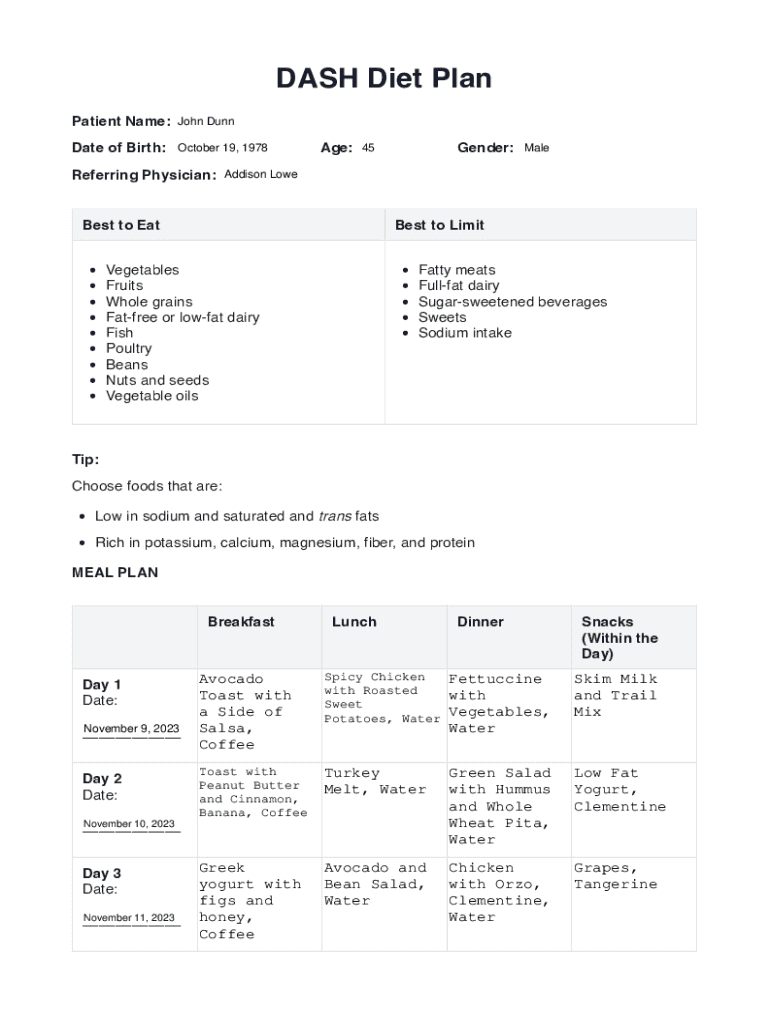







Definition and Meaning of the DASH Diet Plan
The DASH Diet Plan, which stands for Dietary Approaches to Stop Hypertension, is a nutritional blueprint developed to assist individuals in managing and reducing high blood pressure. It emphasizes the consumption of whole foods rich in nutrients such as potassium, calcium, and magnesium, known for their beneficial effects on heart health. By focusing on a diet low in sodium and saturated fats, the DASH Diet Plan plays a crucial role in maintaining cardiovascular health. Originally developed by the National Institutes of Health, this diet is backed by extensive research indicating its efficacy in reducing blood pressure levels as well as offering additional health benefits like lowering cholesterol.
- Nutritional Focus: Emphasizes fruits, vegetables, whole grains, lean proteins, and low-fat dairy products.
- Health Benefits: Known for reducing blood pressure, improving cholesterol levels, and lowering the risk of heart disease.
How to Use the DASH Diet Plan
Using the DASH Diet Plan involves integrating its core principles into everyday eating habits. Begin by gradually incorporating more servings of fruits and vegetables while reducing intake of foods high in sodium and unhealthy fats. It's essential to be mindful of portion sizes and carefully read food labels to ensure compliance with dietary goals. The plan also encourages regular meal timings and the inclusion of snacks that align with DASH principles.
- Gradual Implementation: Introduce new food groups weekly to ease transition.
- Portion Control: Pay attention to serving sizes and aim for balance.
- Reading Labels: Check sodium levels and nutrients when shopping.
Steps to Complete the DASH Diet Plan
Successfully following the DASH Diet Plan requires a structured approach. Begin by planning meals to ensure each food group is properly represented. Allocate specific days for grocery shopping and preparing meals in advance to minimize deviation from the diet. Additionally, track progress by monitoring blood pressure and other health metrics regularly.
- Meal Planning: Design a weekly meal schedule that incorporates all DASH food groups.
- Preparation: Prepare meals in batches and pre-portion them for convenience.
- Monitoring: Keep a record of dietary intake and health markers to track improvement.
Key Elements of the DASH Diet Plan
The DASH Diet Plan is built around several key elements that contribute to its efficacy. These include an emphasis on low-sodium food options, prioritizing nutrient-dense food groups, and ensuring a well-balanced intake of macronutrients. The plan suggests a preference for natural over processed foods, encouraging the use of spices and herbs over salt for flavoring.
- Low Sodium: Aim for no more than 2,300 mg of sodium per day, and even lower if possible.
- Nutrient-Dense Foods: Prioritize rich sources of potassium, calcium, and magnesium.
- Balanced Macronutrients: Include appropriate proportions of proteins, carbohydrates, and healthy fats.
Examples of Using the DASH Diet Plan
Real-world application of the DASH Diet Plan includes case studies where individuals have effectively lowered their blood pressure by adhering to the plan's guidelines. For instance, a middle-aged person with a history of hypertension could start by replacing processed snacks with fresh fruit and choosing lean proteins such as chicken or fish over red meats.
- Case Study 1: A 45-year-old male reduces his blood pressure significantly over six months by replacing high-sodium snacks with fruits.
- Case Study 2: A diabetic patient sees improved cholesterol levels after including more whole grains and vegetables in their diet.
Important Terms Related to the DASH Diet Plan
Understanding the terminology associated with the DASH Diet Plan is crucial for successfully adhering to its principles. Key terms include "hypertension," referring to high blood pressure, and "macronutrients," which are necessary nutrients needed in large amounts. Additionally, "sodium," "potassium," "calcium," and "magnesium" are critical compounds often discussed in the context of this diet.
- Hypertension: High blood pressure managed by DASH diet.
- Sodium Reduction: Key for achieving health benefits on the diet.
- Nutrient Balance: Proper intake of potassium, calcium, magnesium.
Eligibility Criteria for the DASH Diet Plan
Eligibility for the DASH Diet Plan primarily targets individuals with high blood pressure or those seeking to prevent cardiovascular disease. However, it can be adopted by anyone looking to improve their overall health through nutritious eating. It is particularly beneficial for those predisposed to heart conditions or those with a family history of hypertension.
- Primary Audience: Individuals with hypertension or at risk of heart disease.
- General Suitability: Suitable for all seeking a balanced, nutritious diet.


Versions or Alternatives to the DASH Diet Plan
Several variations of the DASH Diet Plan exist to cater to specific dietary needs, such as the low-sodium version, which further reduces salt intake for enhanced blood pressure control. Alternatives may include the Mediterranean diet, which shares similar principles but emphasizes different food sources like olive oil and seafood.
- Low-Sodium DASH: A stricter version focused on even lower sodium intake.
- Mediterranean Diet: Alternative emphasizing olive oil and fish, with similar health benefits.




