




01. Edit your form online
Type text, add images, blackout confidential details, add comments, highlights and more.

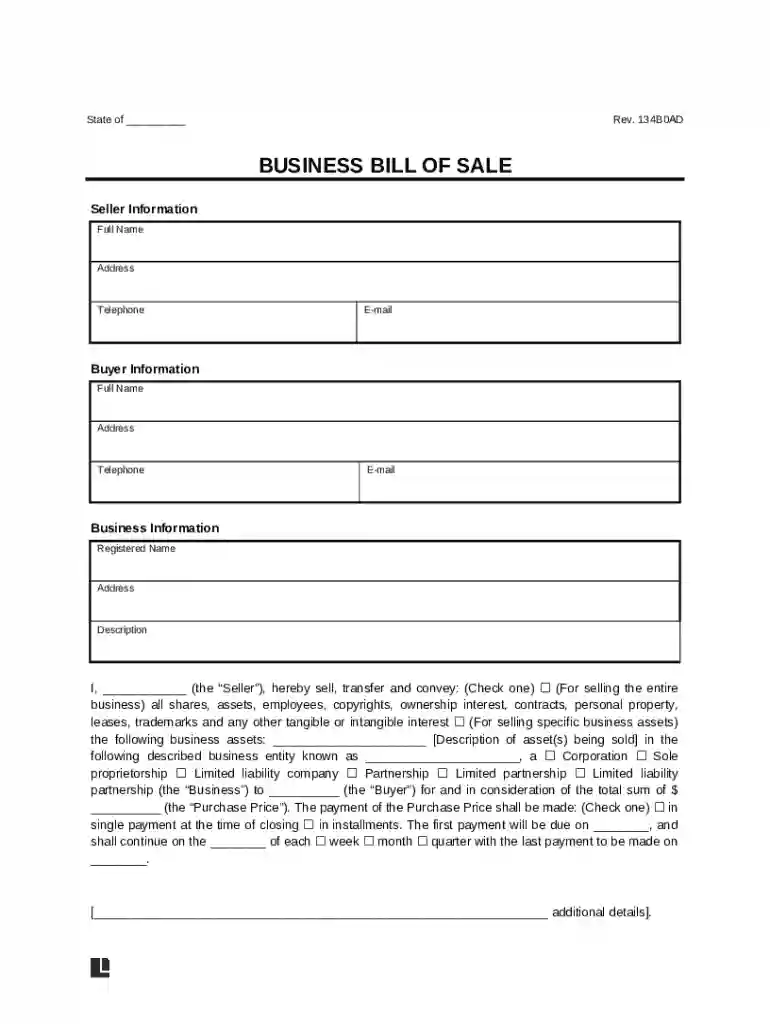
Type text, add images, blackout confidential details, add comments, highlights and more.

Draw your signature, type it, upload its image, or use your mobile device as a signature pad.

Send it via email, link, or fax. You can also download it, export it or print it out.
The Business Bill of Sale is a legally binding document that records the sale of a business entity or its assets. It formalizes the transfer of ownership from the seller to the buyer and includes details such as the purchase price, payment terms, and the description of the assets being transferred. This form is crucial in protecting both parties' interests, offering evidence of the agreement and the terms under which the sale was conducted.
Several critical components are integral to a Business Bill of Sale:
Seller and Buyer Information: Full legal names, addresses, and contact details. This identifies both parties and allows for clear communication during and after the transaction.
Business Details: Accurate description of the business or assets sold, including name, location, and any identification numbers or licenses required for operation.
Purchase Price Details: Clarity on the total sale price, including any deposits made or outstanding balances, and the agreed method of payment.
Payment Terms: Specifics about how and when payments will be made, such as lump sum or installment payments, and any interest applicable.
Warranties and Representations: Statements regarding the condition of the business and its assets, and any guarantees provided by the seller.
Utilizing a Business Bill of Sale ensures a smooth transition of business ownership:
Draft the Document: Start by gathering all necessary details about the business, the buyer, and the seller. Use an editable template to streamline the process.
Review and Modify Details: Ensure all information is accurate and up-to-date, including any unique terms outlined by the buyer or seller.
Sign the Document: Both parties must sign the document to make it legally binding. This can be done electronically to accelerate the process using platforms like DocHub.
Distribute Copies: Provide copies to both parties and any relevant third parties, such as legal or financial advisors.
Completing the Business Bill of Sale involves several steps:
Identify the Parties: Clearly name the buyer and seller involved in the transaction.
Describe the Business: Detail what is being sold, whether it is the whole business or specific assets. Include any necessary operational details.
Specify Financial Terms: Write out the sale price, payment schedule, and any interest terms under which the payments are made.
Outline Warranties: Include seller warranties and buyer representations so all parties understand their obligations.
Final Signing: Conclude by having both parties sign the document, ideally with notarized verification to enhance legal certainty.
This form is used by various parties involved in the sale or purchase of a business:
Business Owners: Those selling their business or business assets need a formal record of the transaction.
Buyers: Individuals or entities purchasing a business require this document for legal protection and clarity of ownership.
Legal Advisors: Attorneys often use this document to ensure compliance with legal requirements and to advise clients.
Financial Institutions: Banks might require a Business Bill of Sale when financing a business purchase.


Different states have specific regulations regarding business sales:
Licensing and Permits: Certain states might require specific licensing and permits for the sale to be valid.
Notarization: Some states mandate that a Bill of Sale be notarized to be enforceable.
Tax Requirements: State taxes might impact the structure of the sale or the obligations of the buyer and seller.
The Business Bill of Sale should adhere to applicable laws:
Compliance with State Laws: Ensure the sale respects all relevant state and federal regulations.
Enforcement: The document outlines the method of enforcement available if one party breaches the agreement.
Dispute Resolution: Include a section on how disputes will be handled, whether through courts, arbitration, or mediation.
Understanding key terms can clarify the document:
Assets: The tangible and intangible items being transferred, such as inventory, equipment, or intellectual property.
Consideration: The payment or compensation offered in exchange for the business or assets.
Due Diligence: The investigation carried out by the buyer to confirm the viability and legal standing of the business.
At DocHub, your data security is our priority. We follow HIPAA, SOC2, GDPR, and other standards, so you can work on your documents with confidence.


