







Definition & Meaning
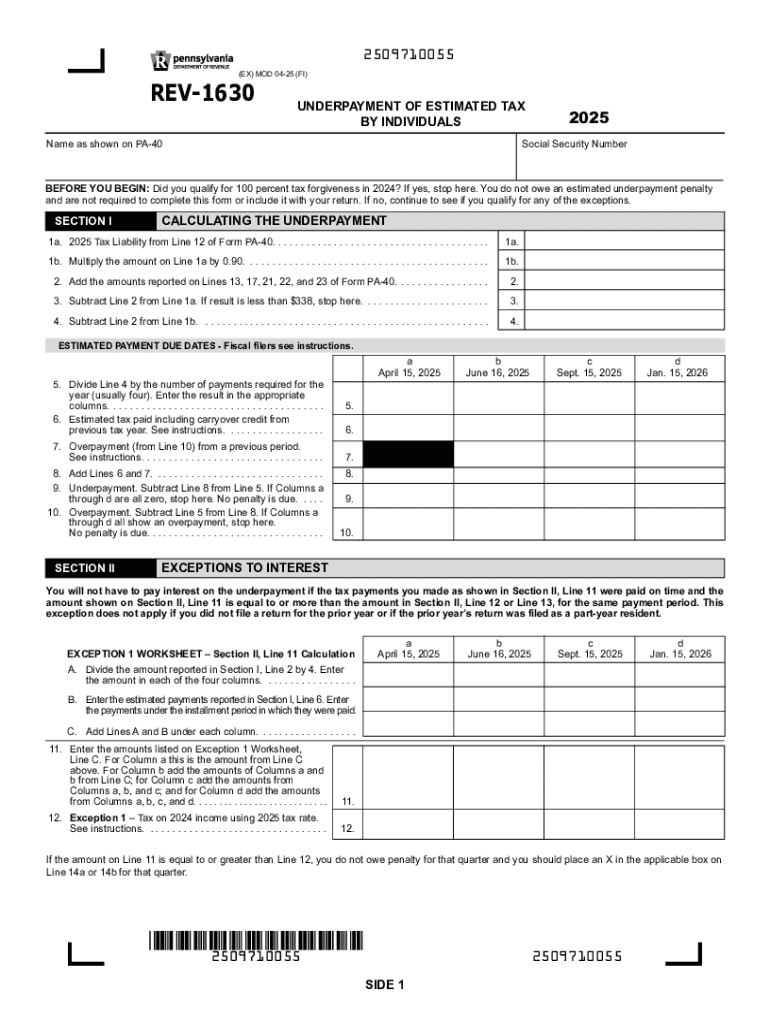
The Pennsylvania Underpayment of Estimated Tax Form is primarily used to determine if an individual taxpayer in Pennsylvania has underpaid their estimated taxes. This document plays a critical role in helping taxpayers calculate the deficiency in their quarterly estimated tax payments required by the Pennsylvania Department of Revenue. Failing to pay sufficient estimated taxes can result in penalties and interest charges. The form ensures taxpayers review their annual income projections and compare them to their actual tax liability, thereby avoiding potential financial penalties at the end of the fiscal year.
How to Use the Pennsylvania Underpayment of Estimated Tax Form
To use the Pennsylvania Underpayment of Estimated Tax Form effectively, taxpayers must first gather information about their total taxable income for the year. This includes wages, investment income, and any other sources that contribute to their annual earnings. The form requires taxpayers to divide their estimated tax liability by four to derive quarterly payment amounts. Based on the actual tax payments made, the form will help calculate whether there are any underpayments. In case an underpayment is calculated, the taxpayer can take corrective actions to adjust future payments to meet state requirements.
Steps to Complete the Pennsylvania Underpayment of Estimated Tax Form
-
Gather Financial Records: Assemble documents related to all income sources, tax payments, and credits claimed throughout the year.
-
Calculate Estimated Tax Owed: Estimate the year's tax liability based on expected income and potential deductions.
-
Compare to Payments Made: While the form assists in comparing the estimated payments against actual payments recorded over the year, this is crucial to identify underpayments.
-
Compute Penalty Amount: If any discrepancies arise, the form will help calculate the penalty based on the amount and duration of underpayment.
-
Adjust Future Payments: If necessary, adjust subsequent estimated payments to avoid further underpayment penalties.
Important Terms Related to Pennsylvania Underpayment of Estimated Tax Form
-
Tax Liability: The total amount of tax legally owed to the state of Pennsylvania.
-
Underpayment: Any deficit between the total tax liability and the sum of all estimated tax payments made.
-
Estimated Payments: Quarterly advance payments made throughout the tax year based on expected income.
-
Penalty: A fine imposed by the Department of Revenue for underpaying estimated taxes or if deadlines are not met.
Legal Use of the Pennsylvania Underpayment of Estimated Tax Form
The Pennsylvania Underpayment of Estimated Tax Form is grounded in state tax law, ensuring that individuals and businesses meet their tax obligations timely. By accurately employing this form, taxpayers can demonstrate due diligence in estimating and paying taxes. Using the form aligns with legal requirements set forth by Pennsylvania statutes, and it helps in potentially avoiding disputes or audits triggered by underpayments.
State-Specific Rules for the Pennsylvania Underpayment of Estimated Tax Form
Pennsylvania has unique regulations concerning estimated tax payments. For instance, the estimated tax requirement applies if a taxpayer owes over $4,000 in taxes beyond withholding for the year. Taxpayers are expected to pay at least 90% of the current year’s tax obligation or 100% of the prior year’s liability, whichever is smaller, to avoid penalties.
Who Typically Uses the Pennsylvania Underpayment of Estimated Tax Form
Self-employed individuals, retirees with significant investment income, and individuals with diverse income sources are most likely to require the use of this form. These groups typically face the greatest variability in annual income, demanding detailed estimation and planning for state tax payments.


Filing Deadlines / Important Dates
It is imperative for Pennsylvania taxpayers to make their quarterly estimated tax payments by the following deadlines: April 15, June 15, September 15, and January 15 of the subsequent year. These deadlines ensure payments are spread out over the year and align with the estimated tax payment schedule mandated by the state of Pennsylvania.
Penalties for Non-Compliance
If there is a failure to adequately estimate and pay taxes throughout the year, a taxpayer may incur penalties, which are calculated based on the underpaid amount and the length of time it remained unpaid. The Pennsylvania Department of Revenue uses an interest rate that changes annually, plus additional charges for any late estimated payments as laid out in state tax laws. Understanding these penalties is crucial to ensure compliance and financial planning throughout the year.




