
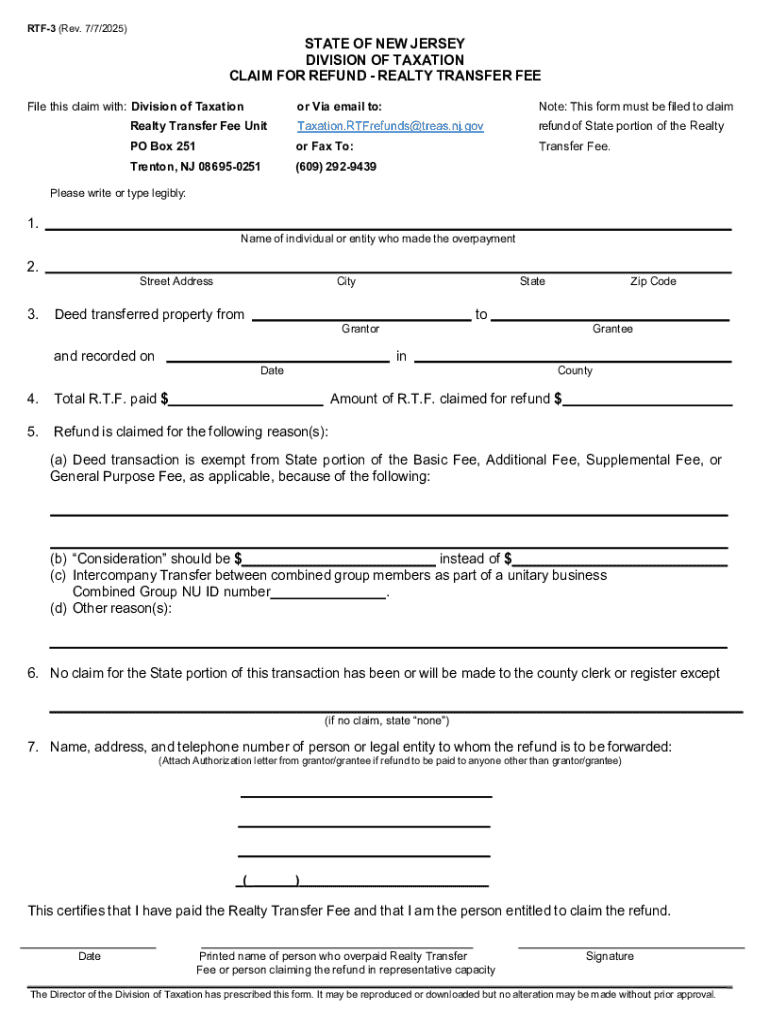







Definition & Purpose of the RTF-3 Form
The RTF-3 State of NJ Division of Taxation Claim for Refund - Realty Transfer Fee is a specific form used in New Jersey for claiming a refund on the realty transfer fee. This fee is typically associated with the recording of property deeds and transactions. The refund is relevant when the fee paid is found to be excessive or collected in error. Understanding this form is crucial for individuals involved in real estate transactions in New Jersey who are eligible for a refund.
- Realty Transfer Fee: A state-imposed fee on the transfer of real property that accumulates as a percentage of the transaction value.
- Claim for Refund: A process to recover overpaid taxes or fees, facilitated through the RTF-3 form for realty transactions.
How to Use the RTF-3 Form
To properly use the RTF-3 form, follow these structured steps to ensure accurate completion and submission for a successful claim:
- Obtain the Form: Access the RTF-3 form from the New Jersey Division of Taxation website or contact your local tax office to acquire a physical copy.
- Complete Personal Information: Fill out sections detailing your identity and contact information.
- Transaction Details: Provide specific details about the realty transaction, including dates and amounts involved.
- Reason for Refund: Clearly state why the refund is being requested, supported by transaction evidence.
- Submission: Submit the form along with necessary documentation either by mail or directly to the Division of Taxation.
Steps to Complete the RTF-3 Form
Filling out the RTF-3 form requires careful attention to both detail and specific instructions outlined by the NJ Division of Taxation. Here is a comprehensive guide:
- Step 1: Gather Information: Collect relevant documents that verify transaction details, such as sale deeds or tax payment receipts.
- Step 2: Fill Sections Diligently: Accurately complete all sections related to taxpayer information and realty transaction specifics.
- Step 3: Attach Documentation: Ensure all supporting documents, like proof of payment or prior fee calculations, are attached.
- Step 4: Proofread: Double-check all information for accuracy to prevent delays in processing.
- Step 5: Submit the Form: Deliver the completed form and attachments to the Division of Taxation via your chosen submission method.
Eligibility Criteria for RTF-3
Understanding eligibility is essential to determine if you qualify for a realty transfer fee refund:
- Excess Payment: You can claim a refund if you have paid more than the correct amount required.
- Error in Calculation: Eligibility applies if there is an error in the initial calculation of the fee based on transaction specifics.
- Exemptions: Transactions initially deemed non-exempt but subsequently identified as exempt can also qualify for refunds under this form.


Important Terms Related to the RTF-3 Form
Familiarize yourself with these essential terms to navigate the RTF-3 form process effectively:
- Deed: The legal document that signifies the transfer of property ownership.
- Exempt Transactions: Transactions not subject to certain taxes or fees, often due to specific criteria.
- Grantor and Grantee: The parties involved in the transfer of a deed, where the grantor transfers and the grantee receives.
- Consideration: The total value or money exchange involved in the property transaction.
Form Submission Methods
Submitting your RTF-3 form can be done through multiple channels, ensuring convenience and security:
- Mail Submission: Sending your completed form and documentation via postal mail to the designated Division of Taxation address.
- Online Submission: Check for available state portals where forms and documentation can be submitted electronically.
- In-Person Submission: Deliver the form and accompanying documents directly to a local taxation office.
Filing Deadlines & Important Dates
Timeliness is critical in the filing process:
- Refund Claims: Must be filed within a specific period post-transaction; usually, this is a year to ensure eligibility.
- Transaction Dates: Ensure all dates on the form match the original transaction events for accuracy during processing.
Penalties for Non-Compliance
Failure to accurately complete or timely submit the RTF-3 form can result in:
- Denial of Refund: Inaccurate or untimely claims may lead to a forfeiture of the refund opportunity.
- Fines and Interest: In some cases, incorrect submissions might incur fines or interest charges as penalties.
Key Elements of the RTF-3 Form
When handling the RTF-3 form, be mindful of these pivotal sections:
- Taxpayer Identification: Consists of personal details for verification.
- Transaction Information: Details about the property transfer, including dates and amounts.
- Claim Justification: A written explanation that supports the rationale for the refund request with necessary evidence.


