







Definition & Meaning
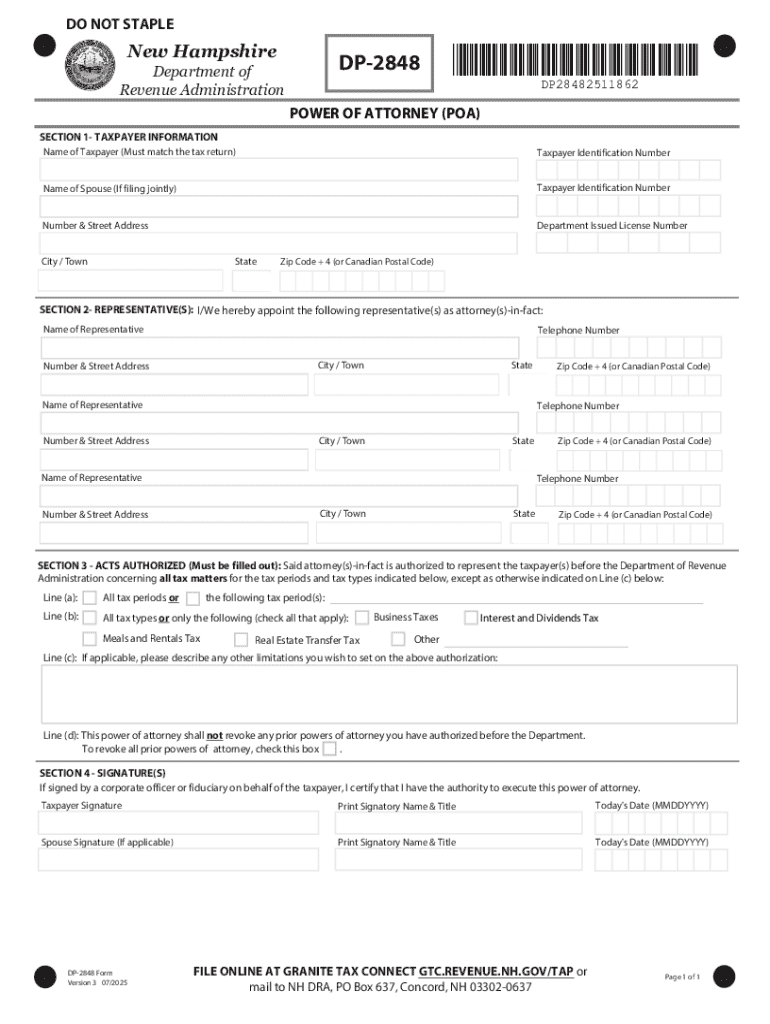
The New Hampshire Power of Attorney Form DP-2848 is a legal document used to authorize an individual to represent another person in matters involving the New Hampshire Department of Revenue Administration. This form allows a taxpayer to appoint a representative to perform certain actions on their behalf, such as discussing tax matters or receiving confidential information. The DP-2848 is essential for those who cannot personally handle their tax affairs and need someone to act with legal authority.
Key Features
- Authority Delegation: Enables a designated representative to act on behalf of the principal in tax-related matters.
- Confidential Access: Permits representatives to access sensitive tax information.
- Scope of Authority: Specifies the extent of powers granted, which can be limited or broad depending on the principal’s needs.
How to Use the New Hampshire Power of Attorney Form DP-2848
Using the DP-2848 form requires an understanding of its function and the roles involved. The form is typically utilized during tax preparation or when resolving tax disputes.
When to Use
- Tax Preparation: Engage a professional to prepare and file taxes.
- Dispute Resolution: Delegate authority to resolve audits or respond to tax notices.
- Information Access: Allow representatives to request copies of tax documents.
Procedure
- Fill Out the Form: Complete the taxpayer’s information, representative details, and list the specific tax years and matters involved.
- Sign and Date: Ensure both the taxpayer and representative sign and date the form.
- Submission: Submit the form to the New Hampshire Department of Revenue Administration, ensuring compliance with required protocols.
Steps to Complete the New Hampshire Power of Attorney Form DP-2848
Completing the DP-2848 form accurately ensures that the designated representative can act without delay.
Step-by-Step Process
- Section 1 – Taxpayer Information: Enter the taxpayer’s full name, address, and tax identification number.
- Section 2 – Representative Information: Provide the representative’s name, contact information, and relationship to the taxpayer.
- Section 3 – Types of Tax Matters: Specify the types of tax matters and tax periods involved.
- Section 4 – Authorization Limits: Indicate any limitations to the representative’s powers if applicable.
- Signatures: Obtain signatures from both parties, affirming their agreement to the terms outlined.
Important Considerations
- Accuracy: Double-check that all information matches that on file with the tax authorities.
- Completeness: Incomplete forms can delay processing or nullify the authorization.
Key Elements of the New Hampshire Power of Attorney Form DP-2848
Understanding the fundamental components of the DP-2848 helps ensure proper completion and usage.
Essential Components
- Personal Information: Identifiers for both taxpayer and representative.
- Scope of Authority: Clearly outlines the representative’s powers.
- Effective Dates: Defines the start and end dates of the authorization.
- Signatures: Legal consent via both parties’ signatures.
Practical Examples
- Tax Seasons: Appointing an accountant to handle annual filings and inquiries.
- Estate Management: Allowing a family member to manage final tax affairs after a loved one’s passing.
Legal Use of the New Hampshire Power of Attorney Form DP-2848
The DP-2848 confers legal authority under specific guidelines laid out by New Hampshire law and tax protocols.
Legal Aspects
- Validity: The form must be correctly executed and filed to be legally binding.
- Rights: Grants specific rights to the representative, who must act in the principal's best interest.
- Revocation: The principal can revoke the power of attorney at any time with a written notice.
Compliance and Exceptions
- Limited Powers: Forms can be restricted to certain actions if desired by the principal.
- Failure to Comply: Misuse of the form or failure to adhere to legal obligations can result in penalties.
State-Specific Rules for the New Hampshire Power of Attorney Form DP-2848
While the DP-2848 follows general principles of power of attorney, there are state-specific nuances to consider.
New Hampshire Regulations
- State Agency Involvement: Form uses are limited to interactions with the state's taxation department.
- Documentation: Requires documentation that complies with state authenticity standards.
Potential Variations
- Form Versions: Ensure the latest version is used to accommodate any regulatory changes.
- State Differences: Be aware of specific New Hampshire guidelines distinct from federal or other state forms.
How to Obtain the New Hampshire Power of Attorney Form DP-2848
Securing the form is an initial step in empowering a designated representative for tax matters.
Accessing the Form
- Online: Downloadable from the New Hampshire Department of Revenue Administration's website.
- In-Person: Available at tax offices or government buildings.
Instructions for Acquisition
- Visit the Website: Navigate to the tax department’s official site.
- Download the Form: Ensure you select the correct DP-2848 version.
- Print and Complete: Manually fill it out if digital submission isn’t possible.
By following these detailed guides and insights on the New Hampshire Power of Attorney Form DP-2848, users can navigate the complexities with clarity and confidence, ensuring smooth delegation of tax responsibilities.




