







Definition & Meaning
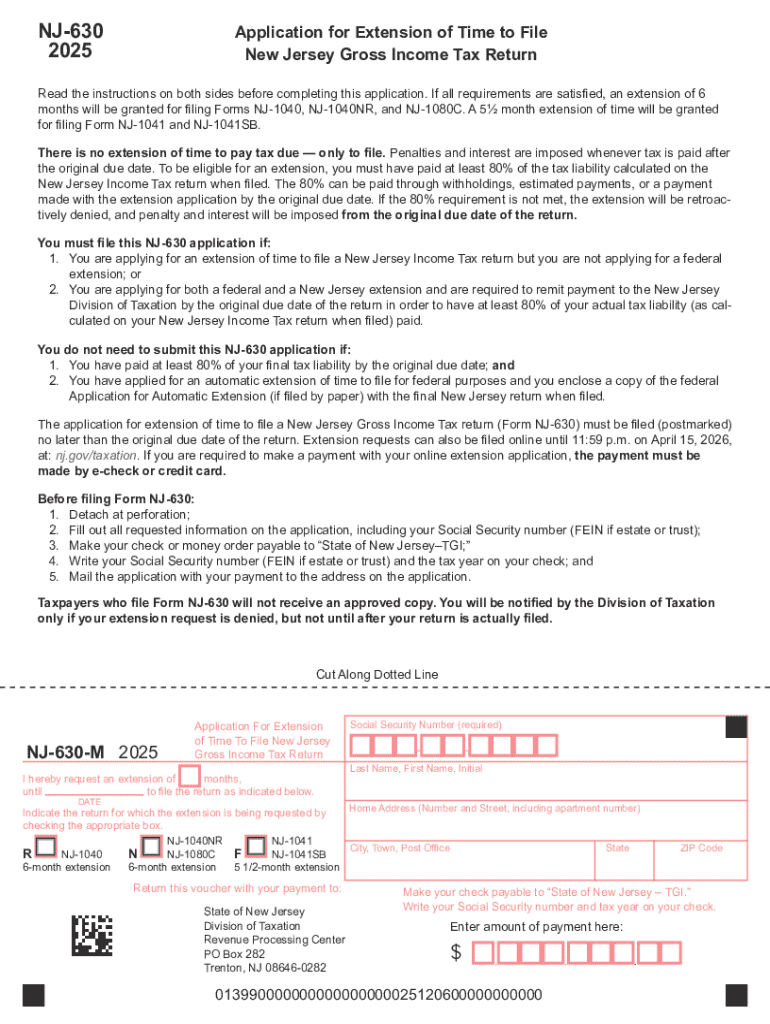
The NJ-630 Application for Extension of Time to File is a formal request submitted to the state of New Jersey to obtain additional time for filing a New Jersey Gross Income Tax Return. This form allows taxpayers to extend their filing deadline, providing them more time to gather necessary information and ensure accuracy in their tax submissions.
How to Use the NJ-630 Application for Extension of Time to File
To utilize the NJ-630 application effectively, taxpayers must determine their eligibility. This involves ensuring that all tax liabilities are paid by the original return due date, as the extension only applies to the filing date, not to the payment date. The form must be completed with accurate taxpayer details and financial estimates to be considered valid by the New Jersey Division of Taxation.
Steps to Complete the NJ-630 Application for Extension of Time to File
- Gather Necessary Information: Collect pertinent tax documentation including estimated income, deductions, and credits.
- Complete Taxpayer Information: Fill in personal details such as name, address, and Social Security Number (SSN).
- Calculate Estimated Tax: Provide an estimation of your tax liability and any payments made towards it.
- Submit the Form: Ensure the form is accurately filled out and submit it either electronically or via mail before the original due date.
- Pay Outstanding Tax: Make any required tax payments by the original due date to avoid penalties and interest.
Filing Deadlines / Important Dates
To maintain compliance with New Jersey tax laws, the NJ-630 form must be filed on or before the original due date of the tax return, typically April 15 for calendar year taxpayers. The extension, if granted, extends the filing deadline by six months, moving it typically to October 15.
Required Documents
- Copies of federal tax returns
- W-2 or 1099 forms reflecting income
- Records of any tax payments already made to the state
- Supporting documents for deduction and credit claims.
Form Submission Methods (Online / Mail / In-Person)
Taxpayers can submit the NJ-630 form using several methods:
- Online: Through the official New Jersey Division of Taxation website, offering a quick and efficient filing process.
- Mail: By sending the completed form to the address specified in the form instructions.
- In-Person: Available at designated New Jersey Taxation offices, though not commonly utilized.
Eligibility Criteria
Eligibility for the NJ-630 form requires taxpayers to have settled all their tax liabilities by the original filing due date. This extension is strictly for the submission of Form NJ-1040, not for the payment of taxes owed. Extensions are available to individuals, businesses, and fiduciaries meeting these conditions.


Why Should You File the NJ-630 Application for Extension of Time to File
Filing the NJ-630 can be beneficial for taxpayers who need additional time to accurately complete their New Jersey tax returns. It helps avoid penalties for late filing by granting a six-month extension while encouraging compliance with state tax regulations. However, taxpayers must remember that while the deadline is extended, all tax payments must be made by the original return date to prevent incurring interests or penalties.
Penalties for Non-Compliance
Failing to file the NJ-630 or not adhering to its requirements can result in penalties:
- Late Filing Penalty: If the taxpayer does not file the extension or return by the extended due date.
- Late Payment Penalty: Applied if tax dues are not settled by the original due date.
- Interest Charges: Accruing daily on any unpaid tax balances starting from the original due date.
Key Elements of the NJ-630 Application for Extension of Time to File
- Accurate Identification: Ensure all taxpayer identification fields are correctly filled.
- Estimated Tax Calculations: Present precise estimates of income and payments.
- Mandatory Payment: Include a payment for any taxes due not yet paid.
- Certification of Information: Verify the information provided under penalty of perjury.
Non-compliance or errors could invalidate the extension request, leading to potential fines and penalties, reinforcing the importance of accuracy and punctuality in submissions.




