
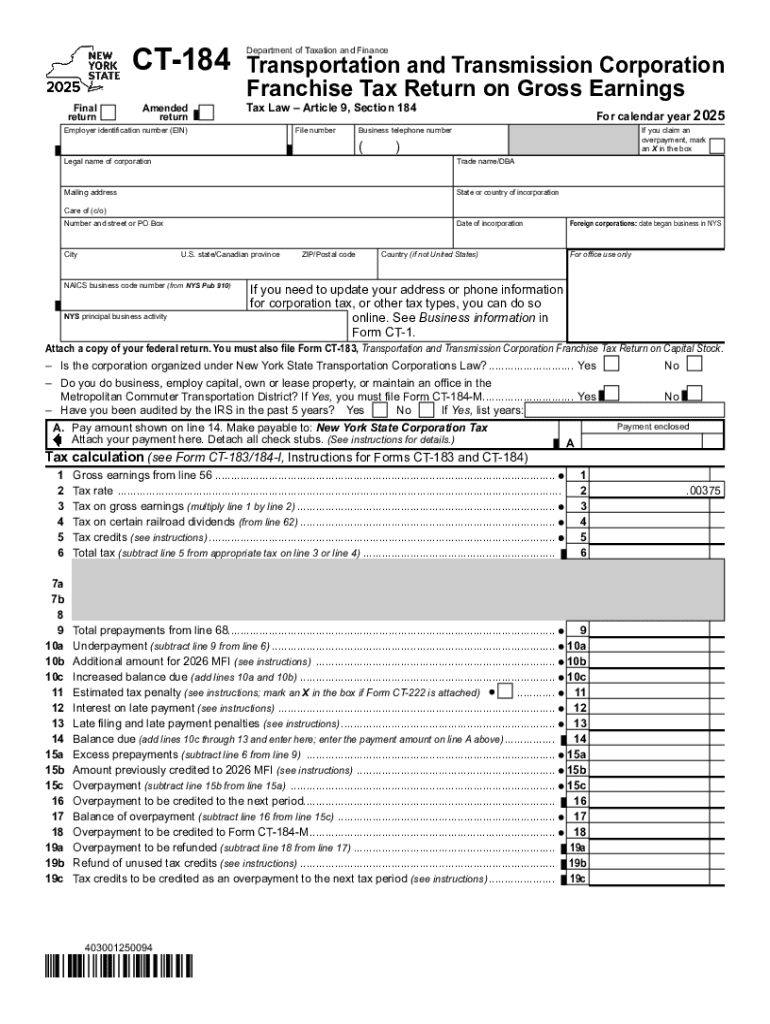







Definition & Meaning
The New York State Franchise Tax Return is a crucial document used by businesses operating within New York State to report and settle their franchise taxes. This tax is levied on corporations for the privilege of doing business in the state, rather than on income or profit. While the exact framework of the franchise tax can vary depending on the business's structure, the essential purpose of the form is to ensure that businesses contribute fairly to the state's revenue based on their operational presence and activities in New York.
Specific Considerations
- Applicable Corporations: This form typically applies to C corporations, S corporations, LLCs treated as corporations, and other business entities recognized by state law.
- Tax Basis: The franchise tax might be calculated based on parameters such as capital base, fixed dollar minimum, or business income base, depending on the relevant regulations and the type of business.
Steps to Complete the New York State Franchise Tax Return
Completing the New York State Franchise Tax Return involves several detailed steps to ensure compliance and accuracy. The following provides a structured approach to the filing process:
- Gather Required Information: Collect all necessary business and financial documents including financial statements, previous tax returns, and supporting schedules.
- Calculate Taxable Base: Determine the appropriate basis for assessing the franchise tax based on your entity type—this could include income, capital, or another relevant base.
- Fill Out Relevant Sections: Complete all applicable sections of the tax return, including income, deductions, credits, and net worth calculations.
- Review Deductions and Exemptions: Verify eligibility for any deductions or exemptions that might reduce your taxable base.
- Complete Schedules and Attachments: Attach any additional schedules or forms required for specific deductions, credits, or unique circumstances.
- Double-Check Entries: Carefully review all entries for accuracy, ensuring calculations align with provided instructions.
- Submit the Return: File the completed form according to New York State guidelines, which may include electronic submission or mailing a paper copy.
Key Components
- Taxpayer Information: Ensure that all identifying information is accurate, including the employer identification number and business address.
- Signature and Authorization: A responsible person, such as the business owner or an authorized tax preparer, must sign the return to affirm its accuracy.
Required Documents
Appropriate documentation plays a critical role in successfully filing your New York State Franchise Tax Return. Below are essential documents and records to have on hand:
- Income Statements and Balance Sheets: These provide a detailed overview of the business's financial situation and serve as the basis for many calculations on the return.
- Previous Tax Returns: Referencing prior filings can assist in maintaining consistency and providing historical context.
- Supporting Schedules and Forms: Such as Schedule K, for claiming specific tax credits or reporting additional data.
- Bank Statements and Financial Transactions: Helpful for verifying income and expense claims.
- Corporate Notes and Agreements: Especially important for C corporations and S corporations.
Filing Deadlines / Important Dates
Timely filing is essential to avoid penalties. The deadline for the New York State Franchise Tax Return is generally aligned with the federal tax deadline for corporations.
Deadline Details
- Standard Deadline: April 15 is often the deadline for calendar year filers, subject to change if it falls on a weekend or holiday.
- Extensions: Businesses can apply for an automatic extension to file the return, usually providing several additional months, but must pay estimated taxes by the original due date.
Business Entity Types (LLC, Corp, Partnership)
Understanding different business structures is critical, as each may have distinct filing requirements for the New York State Franchise Tax Return.
Types of Entities
- C Corporations: Typically taxed on their income base; they must file a separate return and pay taxes at the corporate rate.
- S Corporations: While profits are passed through to shareholders, the franchise tax is still applicable at the entity level.
- Limited Liability Companies (LLCs): Taxed either as corporations or partnerships, depending on their elected tax structure.
- Partnerships: Generally not subject to franchise tax but might need to file informational returns and comply with specific state injunctions.
Software Compatibility (TurboTax, QuickBooks, etc.)
Many businesses leverage tax software to streamline the filing process of their New York State Franchise Tax Return.
Compatible Software
- TurboTax and QuickBooks: These platforms offer features tailored to business needs, including step-by-step guidance and real-time help for filing state-specific forms.
- Sage and Xero: Cloud-based options that can export relevant financial data directly into the tax form templates.
Considerations for Use
- Integration: Ensure the software integrates seamlessly with your financial data systems for efficient filing.
- Updates: Regular updates are crucial to maintain compliance with New York’s dynamic tax laws.
Examples of Using the New York State Franchise Tax Return
Providing concrete examples can illustrate how different businesses interact with the New York State Franchise Tax Return.
Case Studies
- Tech Corporation in NYC: A large C corporation calculating its franchise tax based on its capital base due to high initial investment.
- Small Retail LLC in Albany: Elects to be taxed as an S corporation, thus passing income through to owners while still filing a franchise tax return.
Real-World Application
- Scenario 1: A company may choose to amend previous returns if discrepancies in reported net income arise due to accounting errors.
- Scenario 2: A business undergoing significant asset acquisition should ensure valuations align with New York State regulations to prevent understating franchise tax liability.
Penalties for Non-Compliance
Not complying with New York State franchise tax obligations can result in severe penalties, impacting business operations significantly.
Types of Penalties
- Late Payment: Interest at prescribed rates on unpaid taxes, leading to increased financial burden.
- Filing Omissions: A fixed dollar penalty for failure to file, which accrues over time.
- Underreporting: Additional scrutiny and potential audits from the Department of Taxation and Finance if tax bases or deductions are misrepresented.
Digital vs. Paper Version
Businesses have the option to file their New York State Franchise Tax Return digitally or via paper, each with unique benefits and limitations.
Digital Filing
- Benefits: Faster processing times, confirmation receipts, potential for immediate feedback on errors.
- Drawbacks: Familiarity with the software is crucial to prevent misfiling.
Paper Filing
- Benefits: Traditional approach that can be beneficial for businesses with complex returns requiring manual review.
- Drawbacks: Longer processing times, risk of form loss, and delays due to mailing.




