







Definition & Meaning
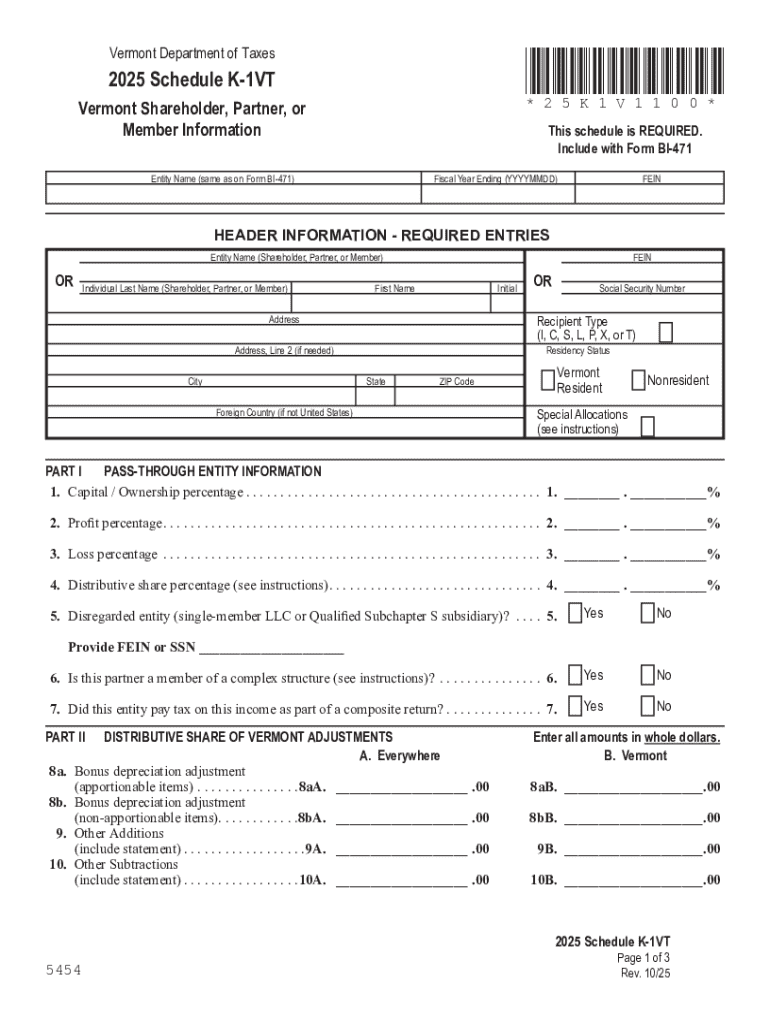
The 2025 Schedule K-1VT, Vermont Shareholder, Partner, or Member Information form, is a critical document used in the context of taxation for individuals involved in pass-through entities like partnerships, S corporations, or limited liability companies (LLCs) within Vermont. This form reports each stakeholder's share of income, deductions, credits, and other necessary tax-related information. It facilitates accurate filing of state taxes and underscores the requirement for transparency in financial dealings among shareholders, partners, and member entities.
How to Use the 2025 Schedule K-1VT
To effectively use the 2025 Schedule K-1VT, start by reviewing the specific sections allocated for the various income types, deductions, and credits. Ensure all income is properly reported, including both taxable and tax-exempt earnings. Follow these steps to navigate the form accurately:
- Review the Ownership Details: Confirm that the ownership percentage and basic identifying information are current and accurately reflect your stakeholder status.
- Income and Deductions: Enter all relevant income categories such as dividends, capital gains, and ordinary business income. Similarly, report eligible deductions that apply to your shareholder capacity.
- Credits and Other Incentives: Carefully document all applicable state tax credits or incentives that may lower your overall tax liability.
- Additional Attachments: Include any additional statements or documentation as specified within the instructions for complex allocations.
Steps to Complete the 2025 Schedule K-1VT
When filling out the 2025 Schedule K-1VT, follow a strategic approach to ensure every section is completed both accurately and comprehensively:
- Gather Necessary Documentation: Start with collecting all financial statements, prior-year tax returns, and the summaries provided by your entity.
- Enter Ownership Information: Accurately transcribe your personal and entity identifiers, along with percentage of ownership.
- Input Financial Data: Systematically enter income, deductions, and credits, cross-referencing financial records to ensure consistency.
- Review Calculations: Double-check for any calculation discrepancies, considering tax-exempt income and pass-through deductions.
- Consult Professional Guidance: If complexities arise, consult a tax professional to validate the correct completion before submission.
Who Typically Uses the 2025 Schedule K-1VT
Individuals required to utilize the 2025 Schedule K-1VT are generally those ingrained in joint business ventures that pass profits directly to stakeholders. This encompasses shareholders in S corporations, partners in partnerships, and members of LLCs that elect to be taxed at the entity level or as partnerships. These individuals must comprehend the input and implications of the K-1VT form to leverage tax efficiencies effectively.


Legal Use of the 2025 Schedule K-1VT
Legally, the 2025 Schedule K-1VT serves as an essential compliance document ensuring that Vermont state tax obligations are met in accordance with prevailing regulations. It ensures proper disclosure of earnings and losses to the state's Department of Taxes, aiding them in assessing tax dues accurately. It also underlines the statutory necessity for thorough financial transparency among involved parties.
Key Elements of the 2025 Schedule K-1VT
The K-1VT form is structured to capture a spectrum of financial information relevant to stakeholders. The key components include:
- Personal Identifiers: Taxpayer identification numbers and contact details.
- Income Breakdown: Detailed segments for different income categories, including passive and active earnings.
- Allocation Percentages: Ownership and share distribution percentages that influence individual allocations for tax purposes.
- Deductions and Credits: Sectioned areas for potential deductions and eligible Vermont tax credits.
State-Specific Rules for the 2025 Schedule K-1VT
Vermont's tax authority imposes unique stipulations regarding the Schedule K-1VT's completion and filing:
- Local Tax Codes: Specific deductions and credits may be applicable only within Vermont's jurisdiction.
- Filing Requirements: There are particular deadlines and filing frameworks exclusive to Vermont.
- Amendments and Corrections: Rules guiding amending past submissions should errors be identified after filing.
Filing Deadlines / Important Dates
The deadlines for submitting the 2025 Schedule K-1VT must align with both federal and Vermont state tax submissions:
- State-Specific Deadlines: Typically concurrent with Vermont’s state tax filing date.
- Extensions: Procedures exist for requesting deadline extensions, paralleling federal extension procedures; consultation with a tax advisor is advisable for this process.
- Timely Adjustments: Engage with any deadline changes announced by Vermont’s Department of Taxes, particularly during exceptional circumstances like natural disasters.
These sections provide a comprehensive guide for understanding and utilizing the 2025 Schedule K-1VT, ensuring stakeholders in Vermont's pass-through entities effectively manage their tax-reporting responsibilities.


