Definition & Meaning
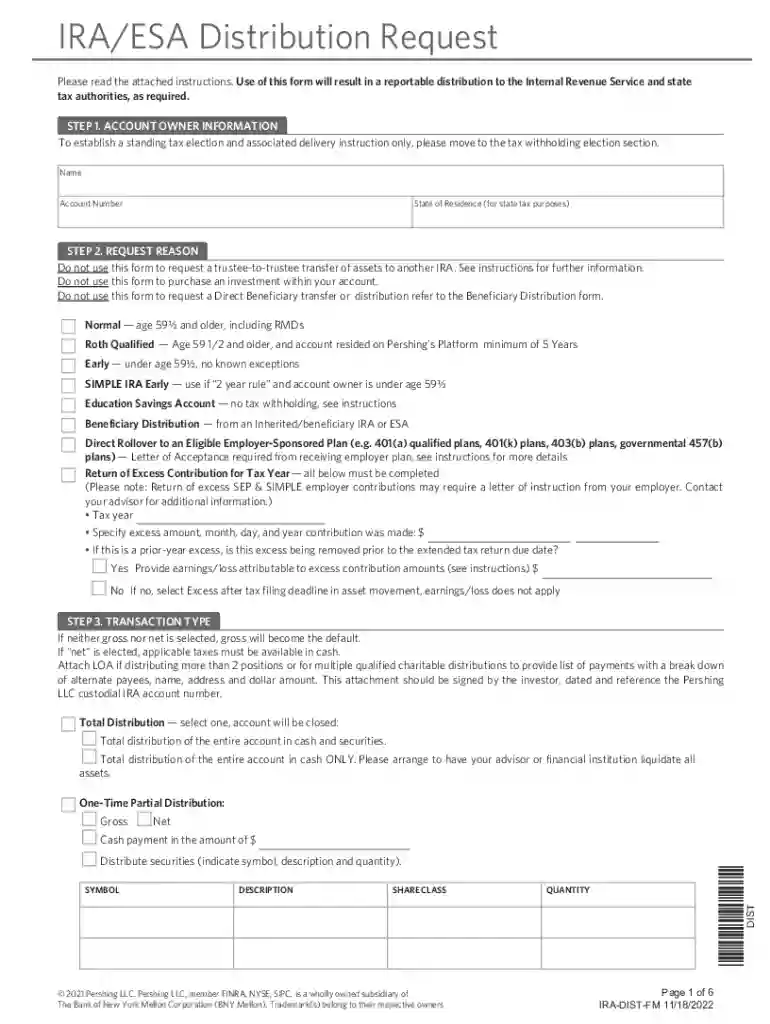
The IRA ESA Distribution Request Form serves as a means to request a reportable distribution from Individual Retirement Accounts (IRAs) or Education Savings Accounts (ESAs). This form is essential for withdrawing funds in compliance with federal regulations. Different types of IRAs include Traditional, SEP, SIMPLE, and Roth IRAs. ESAs are typically used for educational purposes, allowing beneficiaries to receive distributions for qualified expenses. Understanding this form's purpose is crucial for individuals aiming to manage their savings effectively.
Types of Accounts Covered
- Traditional IRA: Contributions typically tax-deductible, with distributions taxed as income.
- Roth IRA: Contributions made with after-tax dollars, offering tax-free distributions.
- SEP IRA: Aimed at small business owners and self-employed individuals, allowing tax-deferred growth.
- SIMPLE IRA: Designed for small businesses, with both employer and employee contributions.
- Education Savings Accounts (ESA): Tax-advantaged accounts for educational expenses.
Context and Usage
- Retirement Planning: Enables individuals to access funds for retirement while maintaining compliance with tax laws.
- Educational Expenses: ESAs facilitate funding education-related expenditures for beneficiaries, underscoring their importance in financial planning.
Steps to Complete the IRA ESA Distribution Request Form
Completing the IRA ESA Distribution Request Form consists of precise steps that ensure the requester provides the necessary information for processing. Steps include identifying account types, detailing beneficiary information, and specifying the amount and distribution method.
Detailed Instructions
- Identify Account Holder Information: Begin with personal details like name, address, and Social Security number.
- Specify Account Details: Indicate the type of IRA or ESA and the account number for reference.
- Determine Distribution Type: Outline whether it's a total or partial distribution, and specify the amount if partial.
- Select Payment Method: Provide bank details for direct deposit or choose a check to be mailed.
- Sign and Date: Affirm the information's accuracy by signing and dating the form to complete it.
Common Errors and Tips
- Double-Check Details: Ensure all identifying information is correct to avoid delays.
- Consult Tax Advisors: For complex situations, seek advice to avoid unexpected tax implications.
How to Obtain the IRA ESA Distribution Request Form
The form is accessible through various platforms, ensuring ease of access for account holders needing to initiate a distribution. Access methods include financial institutions, online downloads, or through advisors.
Obtaining Methods
- Financial Institutions: Contact your bank or brokerage firm offering IRAs or ESAs for copies of the form.
- Online Platforms: Visit institutional websites and download the form directly for user convenience.
- Advisory Firms: Financial or tax advisors can provide the form as part of their service offerings.
Digital vs. Physical Copies
- Digital: Available for electronic completion, facilitating ease of transmission.
- Physical: Can be provided by institutions if needed for signature or mailing preferences.
Common User Groups
- Retirees: Individuals accessing savings for living expenses.
- Students and Parents: Using ESAs for educational payments.
- Self-Employed Individuals: With self-managed retirement savings needing distribution.
Variations in Usage
- Educational Use: Withdrawals for books, tuition, or school supplies by ESA account holders.
- Retirement Needs: Funding daily living or healthcare costs after retiring from active employment.
Key Elements of the IRA ESA Distribution Request Form
Understanding the components of the form ensures all necessary parts are completed accurately, helping to prevent rejections or processing delays.
Essential Sections
- Personal Information: Information identifying the account holder for processing.
- Account Details: Type and specifics of the account from which funds will be withdrawn.
- Distribution Amount: Clear indication of the amount to be distributed.
- Payment Instructions: How the distributed amount should be delivered (check or direct deposit).
- Authorization: Signature verifying information accuracy and consent for processing.
Importance of Accuracy
- Timely Processing: Ensures funds are received without delay.
- Record Maintenance: Accurate records help during taxation or audits.
IRS Guidelines
IRS regulations dictate how distributions from IRAs and ESAs are treated, affecting how individuals complete this form to remain compliant.
Key IRS Rules
- Tax Implications: Understand different taxation for traditional vs. Roth IRAs.
- Early Withdrawal Penalties: Penalties may apply for distributions before retirement age, affecting the form.
Navigating Compliance
- Consultation: Professional advice is recommended to align with IRS expectations.
- Documentation: Proper record-keeping for all distributions provides defense against potential disputes.
Required Documents
Completing the withdrawal request necessitates supporting documentation to verify eligibility and ensure compliance with all legal requirements.
Necessary Documentation
- Identification: Government-issued IDs for identity confirmation.
- Account Validation: Statements or confirmations detailing account ownership.
- Proof of Need: For educational distributions, invoices or tuition statements.
Importance of Adequate Documentation
- Prevents Delays: Missing documents can lead to request postponements.
- Ensures Accuracy: Verifying each detail minimizes the risk of processing issues.
Form Submission Methods
Submitting the completed IRA ESA Distribution Request Form involves various channels, adapting to contemporary electronic preferences or traditional mail.
Submission Options
- Online Submissions: Using secure portals to upload the completed form.
- Mailing: Sending physical copies directly to the financial institution.
- In-Person Submission: Visiting branches or offices that handle financial forms.
Pros and Cons
- Online: Faster processing times with immediate confirmations but requires cybersecurity awareness.
- Mail: More reliable for individuals preferring physical documentation but slower.
- In-Person: Direct assistance available, providing a sense of assurance for uncertain filers.