







Definition & Meaning
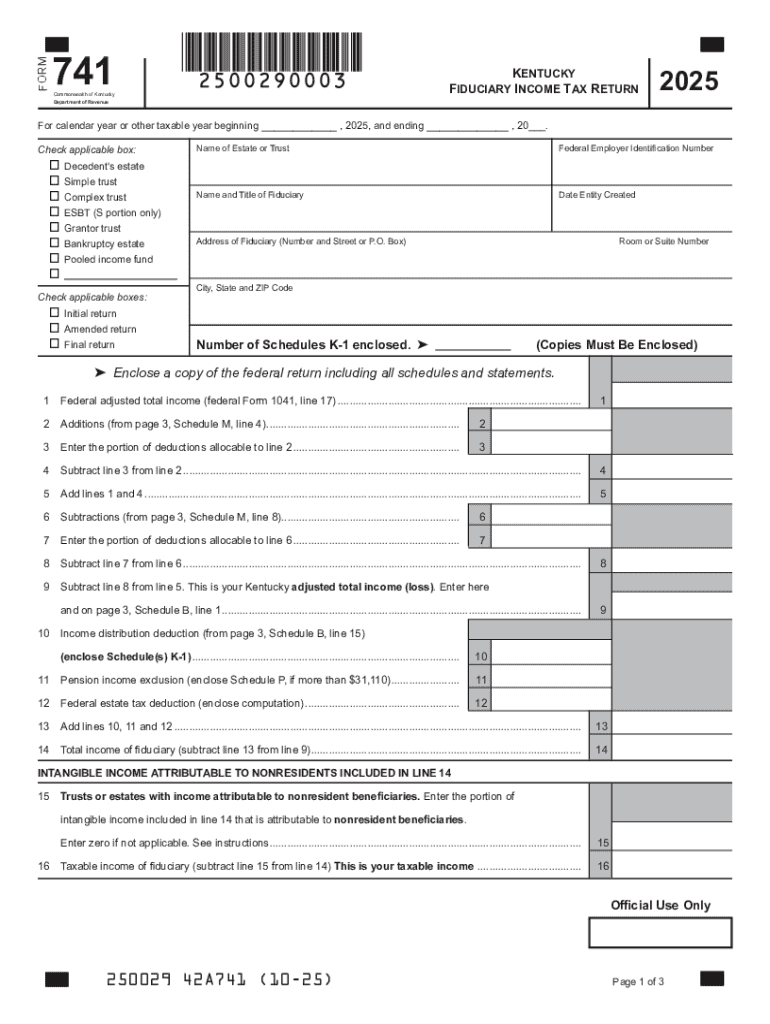
The "741 Kentucky FormSimple PDF Template" refers to a streamlined template designed for ease of use in filing fiduciary income tax returns in the state of Kentucky. It's designed to simplify the process of filling out form 741, which is the official fiduciary income tax return form issued by the Commonwealth of Kentucky's Department of Revenue. This form is critical for fiduciaries, such as trustees or executors, who must report income received on behalf of others.
Key Characteristics
- Purpose: Primarily used to report fiduciary income tax obligations.
- Audience: Primarily trustees, executors, and other fiduciaries managing estates or trusts.
- Simplicity: Designed to facilitate straightforward completion and submission.
Contextual Use
Fiduciaries utilize this form to ensure that all taxable income is properly reported to the state, thereby maintaining compliance with Kentucky tax laws. This tool is essential for managing the financial responsibilities of estates and trusts.
Steps to Complete the 741 Kentucky FormSimple PDF Template
Completing the 741 form involves several precise steps to ensure accurate submission. Below is a detailed guide to navigate this process effectively.
Step 1: Gather Required Information
- Personal Information: Collect details about the estate or trust, including names, addresses, and tax identification numbers.
- Financial Documents: Assemble all relevant financial statements that show income, deductions, and tax credits of the estate or trust.
Step 2: Fill Out Income Sections
- Input all income types, including dividends, interest, and capital gains.
- Ensure all figures are accurate and cross-reference with financial documents.
Step 3: Deduct Expenses
- Deduct all expenses related to the maintenance and management of the estate or trust.
- Include administrative fees, investment advisory fees, and any legal fees incurred.
Step 4: Calculate Tax Liability
Calculate the total tax liability based on the net income from the estate or trust. Use the tax tables provided in the form instructions to determine the exact amount.
Step 5: Verify Information and Sign
Ensure all data is correct and complete before signing. All fiduciaries involved should provide their signatures to validate the document.
How to Obtain the 741 Kentucky FormSimple PDF Template
Accessing the 741 Kentucky FormSimple PDF Template is an essential first step. The template is available from various sources, and obtaining it can be done through the following channels:
Online Download
- Official Website: Visit the Kentucky Department of Revenue website to download the form directly.
- Document Management Platforms: Platforms like DocHub offer the templates with tools for easy online editing and signing.
Physical Copies
- Tax Offices: Obtain a physical copy by visiting local tax offices or requesting one to be mailed.
- Professional Services: Accountants or tax advisors can also provide this form when assisting with fiduciary tax filing.
Prerequisites for Download
Ensure you have a stable internet connection and a PDF reader installed if downloading from an online source.
Important Terms Related to 741 Kentucky FormSimple PDF Template
Understanding key terminology is crucial for accurately completing and filing the 741 form. Below are several important terms:
Fiduciary
A fiduciary is an individual or organization managing assets or financial affairs for another party, such as a trustee or executor.
Gross Income
Refers to the total income from all sources before any deductions or taxes are applied, including dividends and interest.
Tax Deductions
Expenses that can be subtracted from gross income to reduce taxable income and, consequently, the amount of tax owed.
Trustee
An individual or organization assigned to manage assets for beneficiaries under a trust agreement.
Legal Use of the 741 Kentucky FormSimple PDF Template
Legal compliance is vital when using the 741 form to prevent potential penalties. This template facilitates compliance by ensuring accuracy and completeness in fiduciary tax reporting.
Legally Binding Submission
Filing this form correctly helps in fulfilling state requirements for estates and trusts. Adherence to guidelines ensures the fiduciary duties are legally met.
Compliance with State Laws
Complete form 741 ensures compliance with Kentucky's fiduciary income tax regulations. Missing or incorrect submissions can lead to fines or additional scrutiny.
Benefits of Compliance
- Avoids penalties for non-compliance.
- Fosters trust and transparency with the beneficiaries and tax authorities.
- Ensures precise accounting of the estate/trust's financial activities.
Filing Deadlines / Important Dates
Adhering to filing deadlines is essential to avoid penalties. The following outlines the timeline for filing the 741 form in Kentucky.
Key Deadlines
- Regular Tax Year: April 15 of the following year; aligns with the federal individual tax return deadline.
- Fiscal Year Filers: Due 4 months and 15 days after the fiscal year-end.
Extensions
Taxpayers can apply for extensions if additional time is needed to file. Request must be submitted before the original deadline, and interest may accrue on unpaid taxes.
Required Documents
A comprehensive set of documents is necessary to accurately file the 741 form. Having these documents ready ensures a smooth filing process.
Essential Documentation
- Income Statements: Documentation showing all income earned by the estate or trust.
- Expense Reports: Detailed reports of all deductible expenses incurred.
- Previous Tax Returns: Prior filings for comparison and accuracy in reporting.
Supporting Documentation
- Any additional information pertinent to unusual income sources or deductions.
- Documentation supporting the fiduciary's authority and identification.
Penalties for Non-Compliance
Failing to file or inaccurately reporting information on the 741 form can result in significant consequences.
Potential Penalties
- Fines and Interest: Monetary charges for late or incorrect filings.
- Legal Ramifications: Potential for increased scrutiny or audits by tax authorities.
Avoiding Penalties
- Maintain accurate records.
- Engage professional tax advisors for complex situations.
- Double-check all entries before submission to mitigate errors.




