






Definition & Meaning
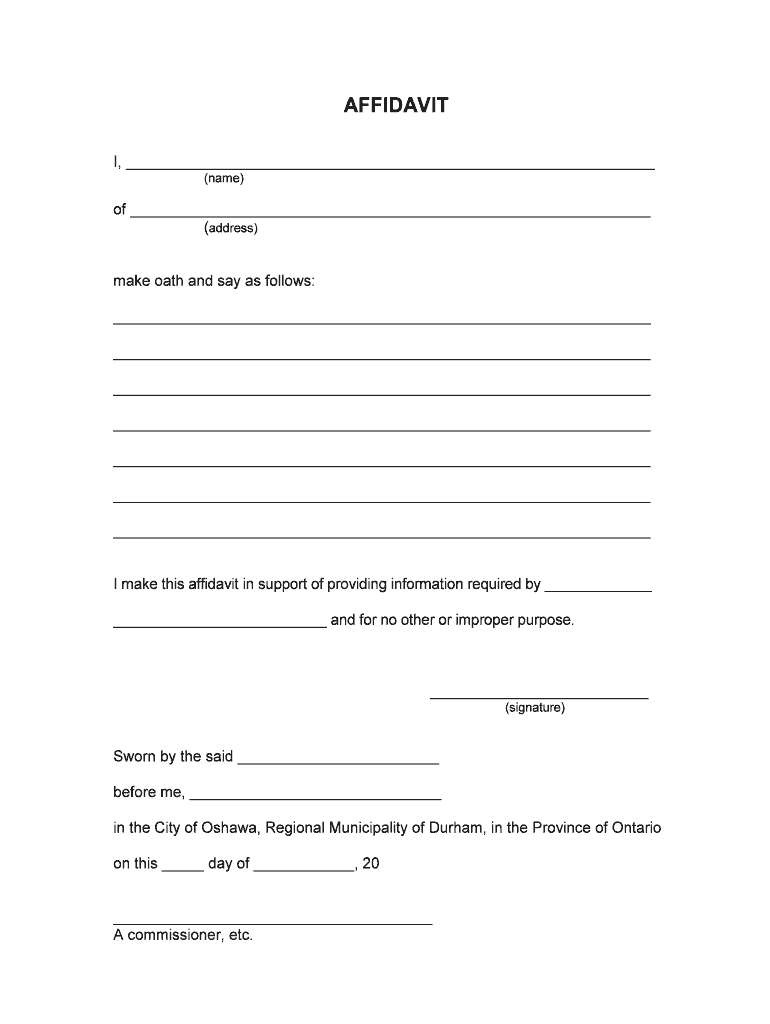
An affidavit is a written statement made under oath, certifying facts that the individual swearing or affirming the statement believes to be true. Within the context of the "AFFIDAVIT - Blank Form - Community Legal Clinic," an affidavit serves as a legal document used to assert truthful declarations supporting various legal proceedings. Typically, this form is utilized in situations where formal verification is necessary to address matters within community legal clinics. It ensures that information being presented is both accurate and sworn, thus holding legal significance in the U.S. legal system.
How to Use the AFFIDAVIT - Blank Form - Community Legal Clinic
To effectively use this affidavit blank form, one should begin by thoroughly reading and understanding the form instructions provided by the community legal clinic. Follow these essential steps:
- Fill Personal Details: Enter the name, address, and contact information of the individual completing the affidavit.
- Statement of Facts: Clearly outline the facts or assertions you are affirming. This section often requires a chronological account of events or a description relevant to your legal matter.
- Sign Before a Notary: The affidavit must be signed in the presence of a notary public, who will then notarize the document, confirming its legality.
Using the form properly ensures your statement holds credibility within legal contexts.
Steps to Complete the AFFIDAVIT - Blank Form - Community Legal Clinic
Completing the affidavit form correctly involves the following process:
-
Prepare Your Information:
- Gather all necessary details you intend to swear or affirm.
- Ensure you have correct names, dates, and events as these are crucial to forming a valid statement.
-
Complete the Form:
- Use clear and concise language.
- Avoid using jargon or ambiguous terms.
- Each paragraph should contain a single assertion to reduce confusion.
-
Review and Edit:
- Proofread for any errors or inconsistencies.
- Ensure all necessary sections are completed.
-
Notarization:
- Take the completed form to a notary public.
- Provide valid photo identification.
- The notary will oversee the signing and apply their seal.
Key Elements of the AFFIDAVIT - Blank Form - Community Legal Clinic
An affidavit typically includes several critical components:
- Affiant’s Information: The name and particulars of the person making the affidavit.
- Statements of Fact: Clearly detailed assertions that the affiant affirms are true.
- Signature and Date: The affiant must sign the document with the date it was executed.
- Notary Section: Includes space for a notary to authenticate the affiant's signature with their seal.
These elements establish the form’s validity, ensuring it meets legal standards.
Legal Use of the AFFIDAVIT - Blank Form - Community Legal Clinic
Affidavits are utilized for diverse legal purposes:
- Court Proceedings: Used as evidence in trials and hearings.
- Administrative Services: Useful in obtaining government services or responding to legal notices.
- Financial Declarations: Statements of income or assets in legal financial proceedings.
Adhering to legal guidelines when creating an affidavit ensures it is valid and can be upheld in legal settings.
Important Terms Related to AFFIDAVIT - Blank Form - Community Legal Clinic
Understanding key terms enhances comprehension of affidavit usage:
- Affiant: The individual who swears to the affidavit.
- Notary Public: An official authorized to authenticate signatures.
- Oath/Affirmation: A pledge of honesty or truthfulness.
- Perjury: Lying under oath, considered a serious offense.
Grasping these terms will assist in effectively utilizing and interpreting affidavits.
Who Typically Uses the AFFIDAVIT - Blank Form - Community Legal Clinic
Several groups commonly use this affidavit form:
- Individuals: For personal legal matters such as estate declarations or family law issues.
- Legal Professionals: Lawyers aiding clients in drafting affidavits for cases.
- Community Legal Clinics: Assisting low-income individuals with legal documentation needs.
These parties rely on affidavits to present verified information within legal frameworks.


State-Specific Rules for the AFFIDAVIT - Blank Form - Community Legal Clinic
While affidavits are generally recognized across the United States, specific requirements may vary by state:
- Notarization Laws: Some states may have additional requirements for the notary process.
- Form Customization: States might require state-specific language or clauses.
- Filing Procedures: Different procedures for submitting affidavits to legal bodies.
It's crucial to consult local legal resources or a legal professional to comply with state-specific mandates.
Penalties for Non-Compliance
Failing to adhere to affidavit guidelines can lead to significant consequences:
- Rejection: Inaccurate affidavits may not be accepted in legal proceedings.
- Perjury Charges: Deliberate falsehoods can result in penalties, including fines or imprisonment.
- Legal Repercussions: May adversely affect the outcome of related legal matters.
By ensuring precise and truthful information, you safeguard yourself against these potential penalties.