







Definition and Meaning
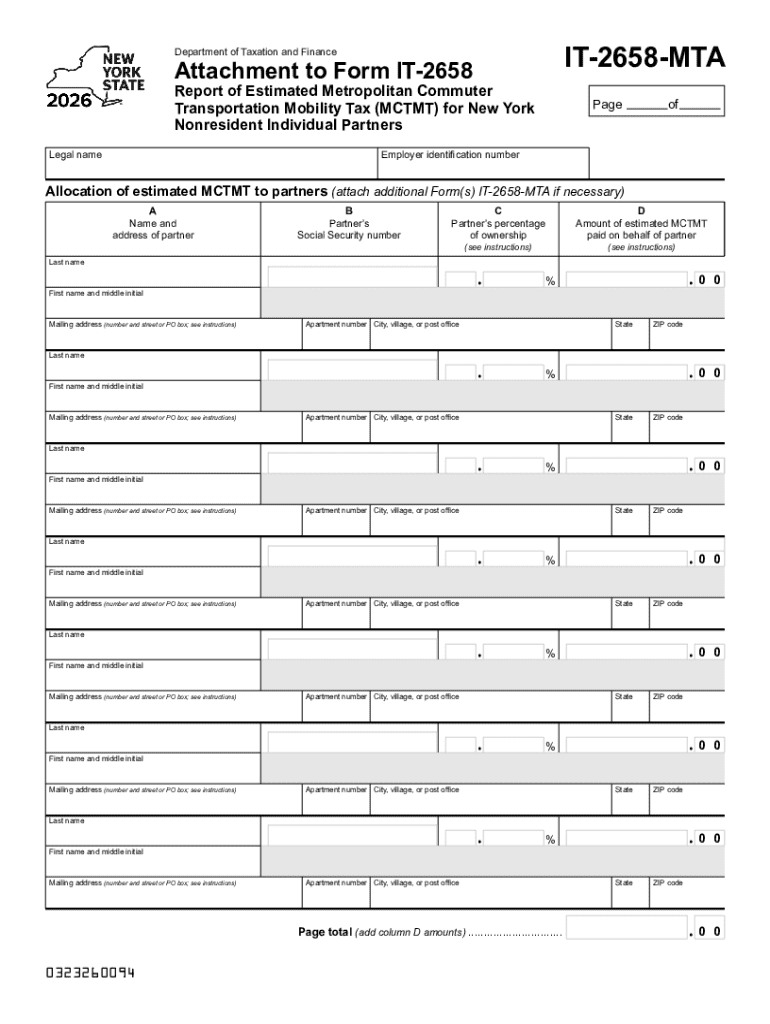
The Metropolitan Commuter Transportation Mobility Tax (MCTMT) is a tax imposed on certain employers and self-employed individuals engaging in business within the Metropolitan Commuter Transportation District (MCTD) in New York. This tax primarily funds the commuter transit systems that operate in the metropolitan region, aiding in maintaining and developing public transportation infrastructure. The "current period" refers to the tax filings for the ongoing fiscal year, ensuring that businesses are up-to-date with their obligations and timely in their contributions.
How to Use the MCTMT Forms
To utilize the MCTMT forms effectively, it is imperative for filers to understand the specific requirements of each section within the form. The forms guide you through calculating the appropriate tax based on earnings and business operations within the MCTD. Ensure that each category is accurately filled with the correct financial data, reflecting the revenue figures needed to compute the MCTMT obligations correctly. Notably, the form facilitates adjustments for any credits or exemptions applicable by law, allowing businesses to ensure compliance efficiently while optimizing their tax liabilities.
How to Obtain the MCTMT Forms
Obtaining the MCTMT forms can be done through several avenues. These forms are accessible online via the New York State Department of Taxation and Finance website, where filers can download the necessary documents for their tax submissions. Physical copies can be requested at local tax offices across New York for those preferring paper submissions. Additionally, many accounting software platforms integrate with tax resources to download these forms directly, streamlining the process for those utilizing digital financial management tools.
Steps to Complete the MCTMT Forms
- Gather Financial Information: Collect financial records detailing earnings and business activities within the MCTD.
- Calculate Taxable Income: Follow the form instructions to compute your taxable earnings relevant to the MCTMT.
- Complete Sections Diligently: Fill out every applicable section of the form, ensuring accurate and thorough data entry.
- Apply Credits and Exemptions: Identify eligible credits and exemptions and incorporate them into your calculations.
- Review and Verify: Double-check all entries for completeness and correctness before submission.
- Submit and Retain Copies: Submit the form through the preferred method (online, mail, or in-person) and retain copies for your records.
Key Elements of the MCTMT Forms
- Personal Information: Identifiers such as business name, type, and contact details.
- Income Details: Sections dedicated to detailing income that falls within the MCTD.
- Tax Rate Application: The system for applying current tax rates relevant to gross income.
- Adjustments Section: Fields to detail any applicable credits, deductions, or exemptions.
- Payment Information: Specifications for how to remit taxes owed, whether via check, transfer, or electronic funds.
- Declaration and Signature: Critical for authenticating and finalizing the form submission.
IRS Guidelines and State Specific Rules
While the IRS provides overarching guidelines for tax compliance, the MCTMT forms fall under specific state regulations managed by the New York State Department of Taxation and Finance. This department offers detailed instructions and resources to navigate the complexities of the MCTMT. It's crucial for businesses operating in the MCTD to stay informed of these state-specific rules to maintain compliance and avoid any penalties associated with incorrect filing.
Filing Deadlines and Important Dates
The filing period for MCTMT typically coincides with the state's fiscal year deadlines. It's essential for filers to be aware of the quarter-end dates and the associated due dates for MCTMT submissions. This ensures timely filing and prevents any late fees or penalties that could be incurred from non-compliance. Regular updates from the Department of Taxation and Finance or a trusted CPA can provide reminders for these critical deadlines.
Penalties for Non-Compliance
Failure to accurately complete and submit the MCTMT forms by the designated deadlines can result in significant penalties. These can include financial fines, interest on unpaid taxes, and potential legal actions depending on the severity of the non-compliance. Businesses should prioritize compliance with MCTMT requirements to avoid these adverse outcomes and maintain good standing with the state's tax authority. Regular audits and professional tax advice can help mitigate risk and ensure adherence to all applicable laws.
Business Entity Types
The MCTMT notably applies to various business entity types that operate within the MCTD, including Corporations, Limited Liability Companies (LLCs), Partnerships, and sole proprietorships. Each type may have particular filing requirements or exemptions, making it essential for business owners to consult with professionals or refer to state guidelines to ensure they adhere to the correct regulations based on their business structure. Understanding these distinctions aids in the accurate completion and filing of the MCTMT forms.




