






Definition & Meaning
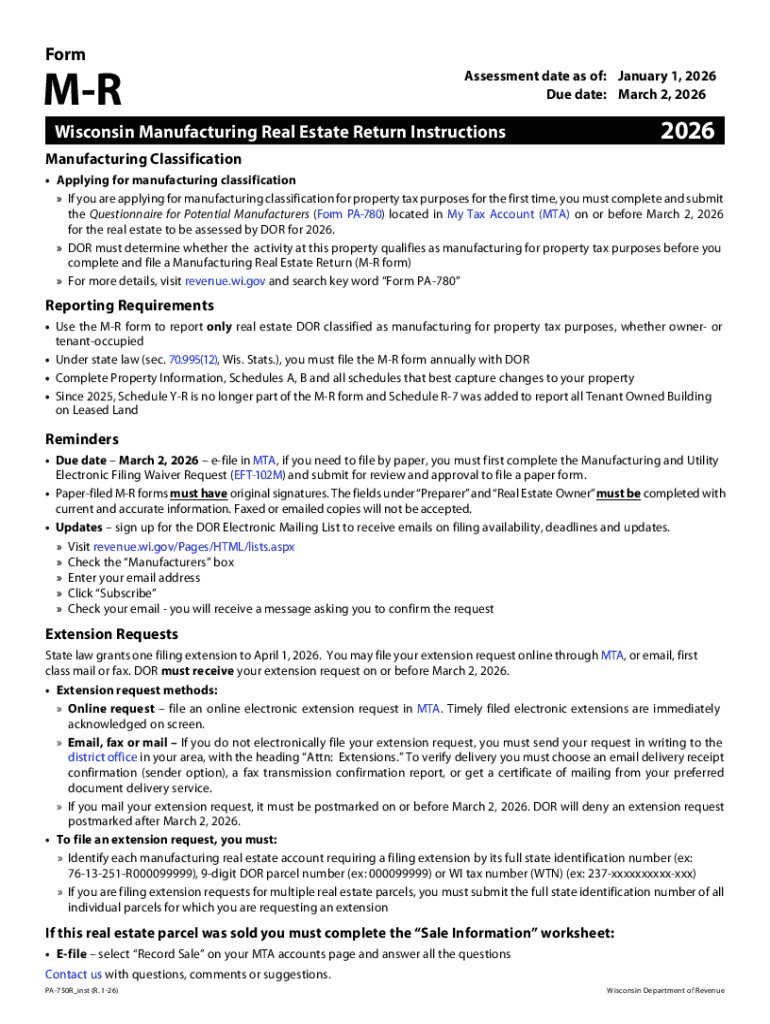
The Wisconsin Manufacturing Real Estate Return is a vital tax form used by manufacturing organizations within Wisconsin to report real estate holdings and related property tax obligations specific to their operations. This document helps ensure compliance with state tax regulations by categorizing and evaluating real estate assets used for manufacturing purposes. It serves as a tool for state taxation authorities to assess property value and determine the right tax due.
Importance of Accurate Classification
- Manufacturing Classification: Proper classification impacts tax liability. Misclassification can lead to audits or penalties.
- Property Valuation: Accurate reports affect assessed property value, influencing tax assessments.
Steps to Complete the Wisconsin Manufacturing Real Estate Return
Completing the Wisconsin Manufacturing Real Estate Return requires attention to detail. Here is a structured guide:
- Review Personal Property: Detail every asset used in manufacturing, including land, buildings, and equipment.
- Submit Current Property Value: Provide up-to-date valuations for all items.
- Complete Each Section: Ensure every area of the form is filled out to avoid delays.
- Verify Information: Double-check for accuracy before submission.
- Attach Required Documentation: Include appraisals and financial data that support reported figures.
Common Errors to Avoid
- Omitting crucial details such as property location or asset type can lead to processing delays.
Important Terms Related to Wisconsin Manufacturing Real Estate Return
Understanding key terminology ensures accuracy in reporting:
- Assessed Value: This refers to the determined value of a property for tax purposes.
- Depreciation: The decrease in asset value over time is factored into tax calculations.
- Exemption: Certain properties might qualify for tax exemptions, reducing their taxable value.
Examples & Clarifications
- Depreciation Example: Machinery purchased for $100,000 might depreciate by $10,000 annually, affecting reported valuations.
Filing Deadlines / Important Dates
Meeting filing deadlines is crucial to avoid penalties:
- Assessment Date: January 1, 2026
- Due Date for Submission: March 2, 2026
Penalties for Missing Deadlines
Failure to file on time may result in fines or additional interest charges on outstanding taxes.
Legal Use of the Wisconsin Manufacturing Real Estate Return
This form holds legal significance:
- Tax Assessment: Determines property tax owed based on reported data.
- Compliance: Non-compliance has legal repercussions, including audits.
State Rules Compliance
Adhering to Wisconsin's state-specific property tax rules is crucial for legality and accuracy.
Required Documents
Submission of certain documents ensures the validity and accuracy of the return:
- Property Appraisals: Official evaluations of property value.
- Purchase Receipts: Documentation of property and equipment acquisitions.
- Depreciation Schedules: Records of asset depreciation.
Document Organization Tips
- Digital Storage: Utilize cloud platforms for document storage and retrieval, allowing easier organization and submission.
Software Compatibility
The Wisconsin Manufacturing Real Estate Return can be completed using various software tools:
- Tax Software: Programs like TurboTax and QuickBooks offer features to streamline data entry and submission.
- Form Compatibility: Ensure software is updated to accommodate the latest form versions.
Benefits of Digital Submissions
- Efficiency: Digital submission can be quicker and more accurate, reducing the risk of errors through automated checks.
Business Types That Benefit Most
Certain types of businesses see significant advantages from accurate and timely submissions:
- Large Manufacturers: Substantial property holdings necessitate precision in reporting to maximize tax efficiency.
- Small Scale Operations: Smaller manufacturers can also prevent unnecessary expenses with careful documentation.
Real-World Application
- Case Study: A medium-sized furniture manufacturer accurately reports their assets, resulting in substantial tax savings through applicable exemptions and deductions.
This comprehensive guide provides essential details about the Wisconsin Manufacturing Real Estate Return, covering everything from definitions to completion steps, ensuring businesses comply with state tax requirements effectively.