




01. Edit your form online
Type text, add images, blackout confidential details, add comments, highlights and more.

Type text, add images, blackout confidential details, add comments, highlights and more.

Draw your signature, type it, upload its image, or use your mobile device as a signature pad.

Send it via email, link, or fax. You can also download it, export it or print it out.
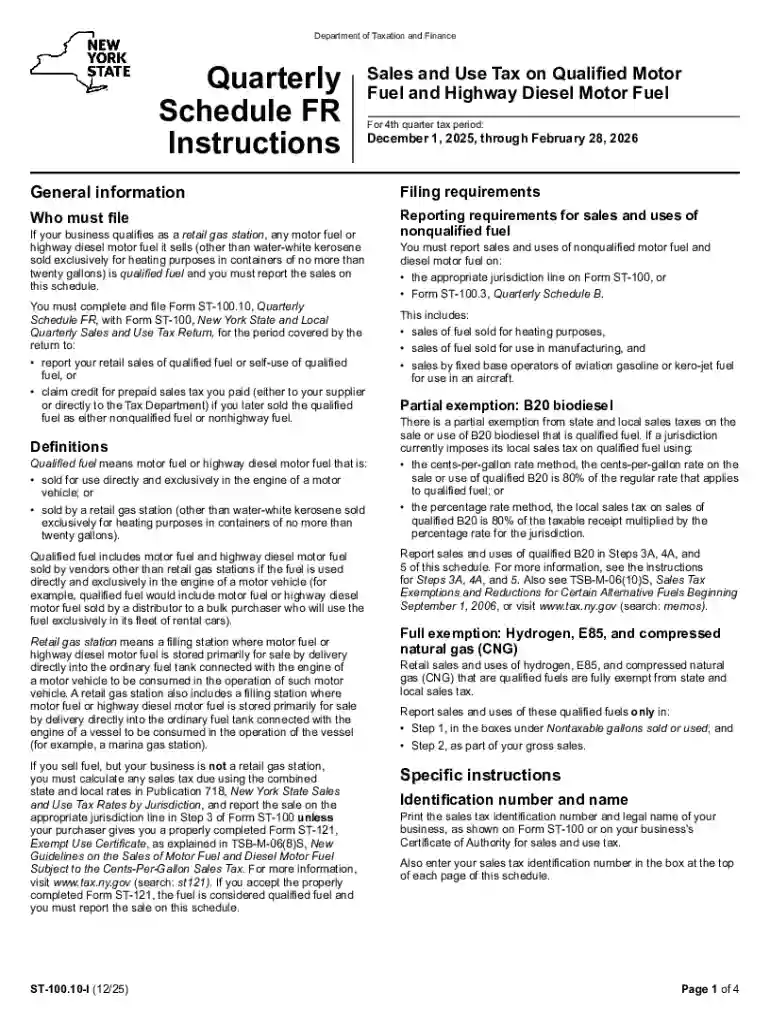
The New York Quarterly Sales and Use Tax on Motor Fuel is designed to ensure the proper collection of taxes on motor fuel sold or used in New York State. This tax applies to both qualified motor fuel and highway diesel motor fuel, capturing all fuel transactions within the state for the specified quarterly period. By meeting these tax obligations, entities contribute to state revenue, which supports infrastructure and public services.
Gather Necessary Documentation:
Calculate Total Sales:
Complete Relevant Fields:
Review and Verify Details:
Submit the Form:
Entities involved in the sale, distribution, or use of motor fuels in New York State must file this tax form. This includes:
Non-compliance with the New York Quarterly Sales and Use Tax on Motor Fuel regulations can result in significant penalties. Legal obligations include:
Failing to file or error in reporting can lead to:
New York has unique regulations influencing the application and calculation of sales and use taxes on motor fuels:
These sections and subsections collectively provide comprehensive coverage of the New York Quarterly Sales and Use Tax on Motor Fuel, delivering detailed insights and actionable information.
We've got more versions of the New York Quarterly Sales and Use Tax on Motor Fuel form. Select the right New York Quarterly Sales and Use Tax on Motor Fuel version from the list and start editing it straight away!
| Versions | Form popularity | Fillable & printable |
|---|---|---|
| 2025 | 4.4 Satisfied (49 Votes) | |
| 2024 | 4.3 Satisfied (54 Votes) | |
| 2023 | 4.5 Satisfied (42 Votes) | |
| 2022 | 4.9 Satisfied (38 Votes) | |
| 2021 | 4.8 Satisfied (57 Votes) | |
| 2020 | 4.3 Satisfied (129 Votes) | |
| 2020 | 4.4 Satisfied (204 Votes) | |
| 2019 | 4.4 Satisfied (75 Votes) | |
| 2019 | 4.3 Satisfied (258 Votes) | |
| 2018 | 4 Satisfied (44 Votes) | |
| 2018 | 4.3 Satisfied (105 Votes) |
At DocHub, your data security is our priority. We follow HIPAA, SOC2, GDPR, and other standards, so you can work on your documents with confidence.


Jan 29, 2026 Subtract the New York State motor fuel or diesel motor fuel excise tax from your purchase price. Multiply the result by the number of gallonsRead more
Mar 11, 1983 NY does not exclude items from our exempt status (other than motor fuel or diesel motor fuel), so if you follow the instructions above, sales tax on all your purchases should be exempt in NY. Note that GW sales tax exemptions cannot be used for personal purchases. If you have any questions or concernsRead more
Hospitals, volunteer fire companies, and volunteer ambulance services exempt from sales tax may claim exemption on the purchase of motor fuel by using. Form FT-Read more


